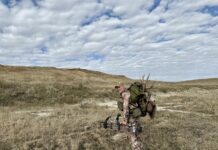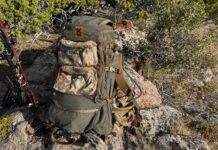






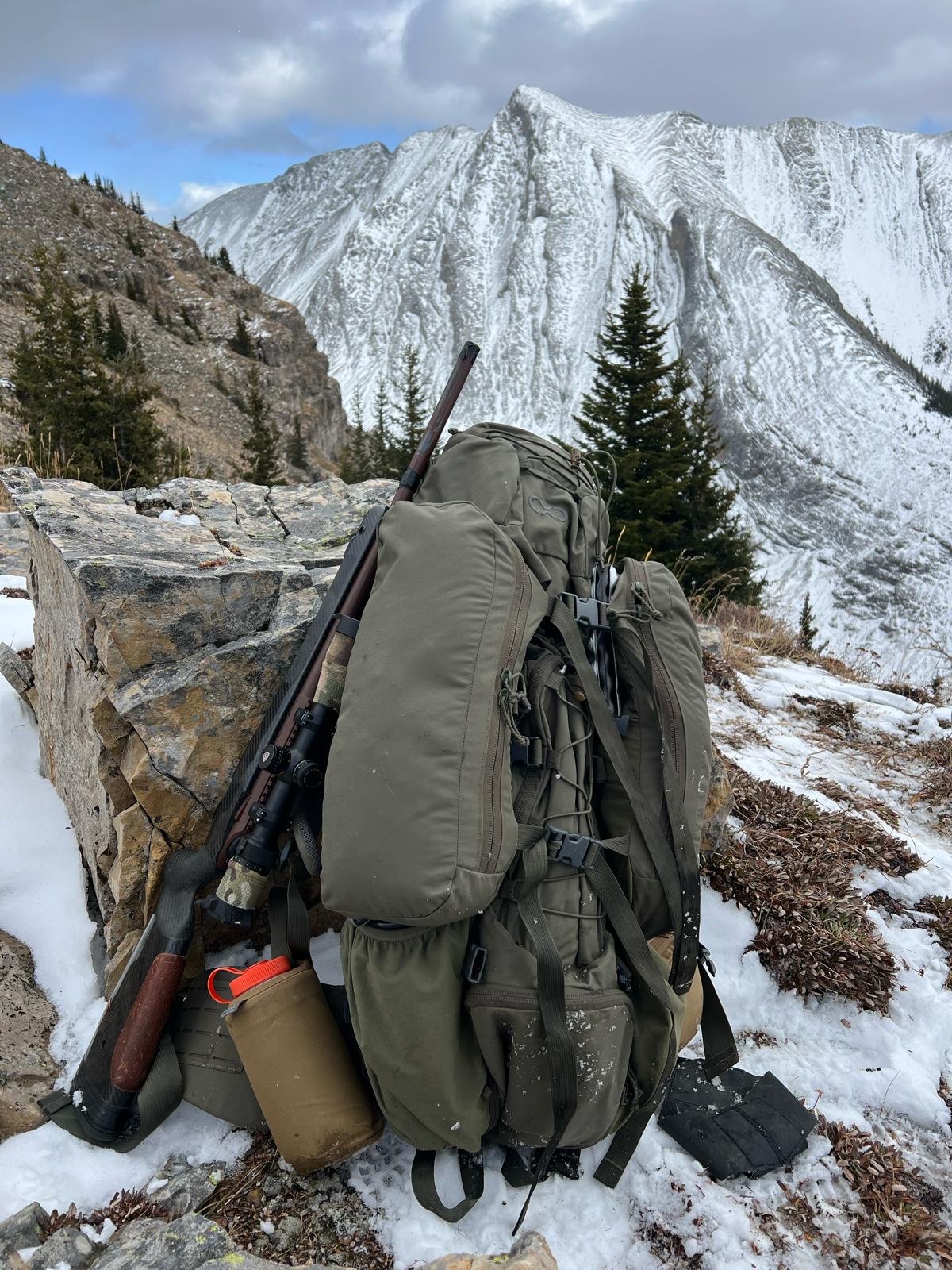
This is my review of the Teratorn pack bag, which I purchased earlier this year at full price. After looking at the market and my needs, I knew I wanted a K4 frame but with the modularity and design approach of the Stone Glacier R3 bag with wings. The reasons for this are plenty, but mostly stem from a combination of previous experience with other bags and my particular needs/preferences as primarily a sheep and late-season elk hunter here in western Canada.
Teratorn Backpack Review
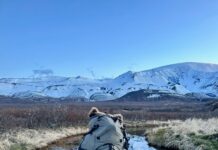
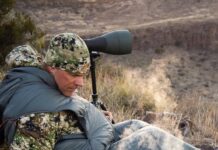
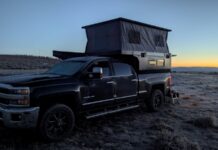
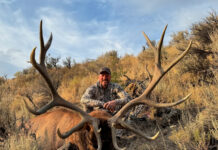
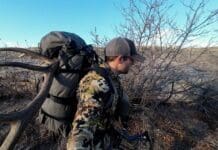
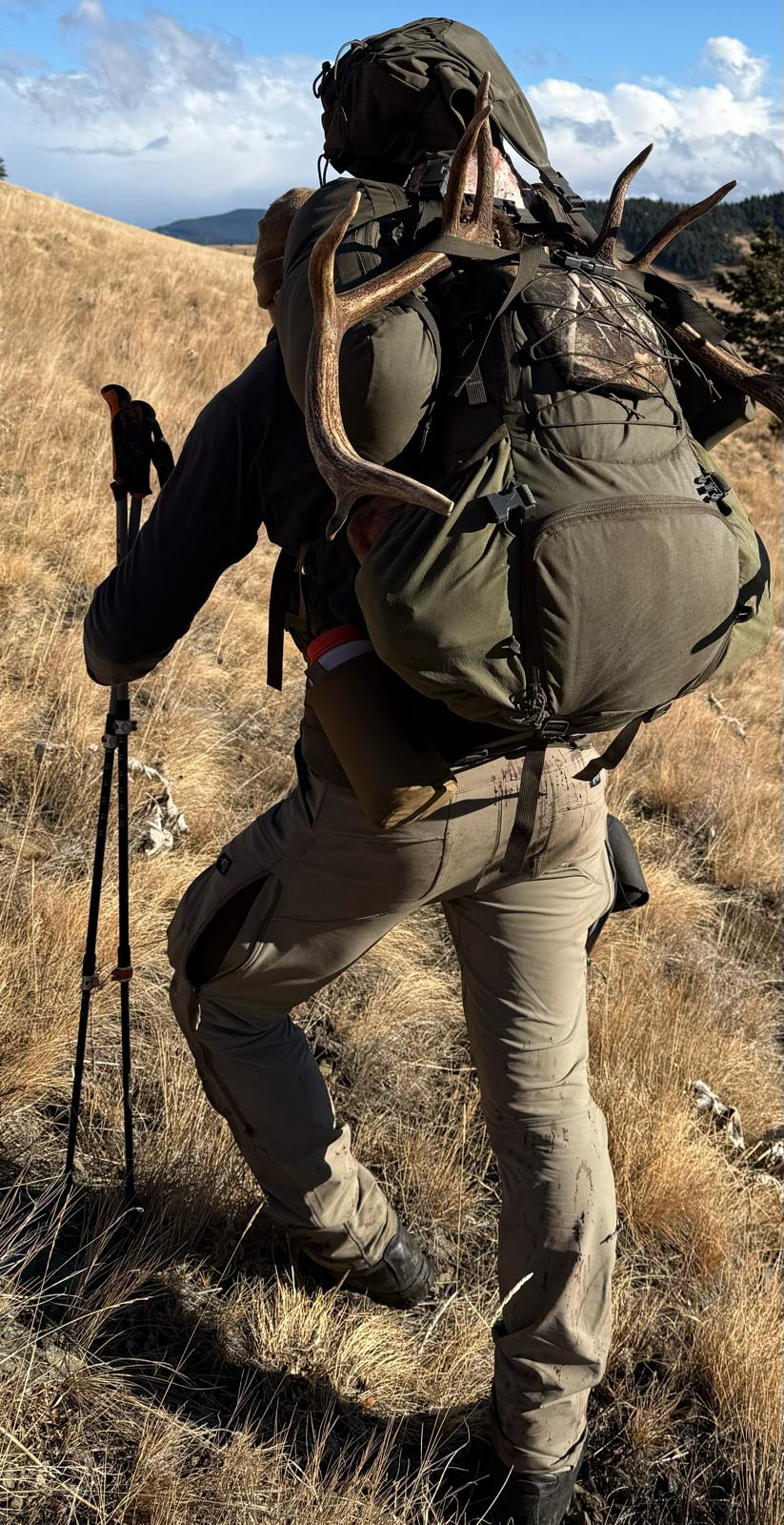
I used the Teratorn for approximately 40 days in the field this season, ranging from fully loaded for an extended sheep hunt to strapped down for an ultralight day mission out of a truck base camp. I am primarily a spot-and-stalk hunter, spending most of my time either hiking up to high points or glassing from them. This means heavy use of tripods, cold-weather insulation, and optics. This season, the weather ranged from 70 degrees to 0 degrees (converted to Fahrenheit for my friends south of the border), with winds over 50km/h on many days (you’ll have to convert that one!) In total, I packed out two bull elk with the bag, with the max load being in the 150-170lb range. Given my time with the bag, I feel like I’ve got a good understanding of how the Teratorn performed in the field for my use case.
Why I Chose the Teratorn
To start, I guess it’s important to go over my reasoning and thought process for choosing the Teratorn over so many other bags on the market. Most bags consist of a main bag with accessory pockets stitched to the width of the main bag internally, externally, or both. This is the common approach to premium hunting-oriented bags on the market, with the exception of the Teratorn and maybe a couple of others. The fundamental issue with this approach is that your main bag capacity typically competes directly with the exterior accessory pouch capacity to varying degrees. This competition typically means you need to be particular about your packing, in terms of arrangement and consistency, if you’re going to use the bag’s capacity and maximize accessibility.
Other Designs and Their Compromises
Designers realize this and seem to (from my perspective at least) try to mitigate this in one of two ways. One is to enhance usability by using stretchy material for the exterior accessory pockets. In my experience, this material is prone to wear and tear and is now, by default, the first-line material directly exposed to branches, rocks, and everything else. The stretchy material is generally a compromise that doesn’t really work as intended, either, as it doesn’t have the capacity to really be all that convenient – except for small items.
The second is that designers employ oversized external accessory pockets, usually made of the same fabric as the main bag. This works, sometimes quite well, but also has compromises. It makes the pack less streamlined, scalable, and compressible as the pockets can’t be tucked away. In this case, much like the former, rarely are the pockets large enough for the common items backpack hunters need.
The Solution
The Teratorn addresses most of these issues by having “wings” instead of pockets. These are self-contained, entirely separate from the main bag, large enough to accept most items with little fuss, made of the same durable material as the main bag, and can be tucked out of sight when not in use. They do all this while avoiding a significant increase in weight. As a whole, they are not perfect, but in my view, they have fewer shortcomings than either large accessory pockets or stretch accessory pockets attached to the main bag.
Teratorn Design Approach
The wings are the standout feature of the Teratorn, but the same design approach that culminated in the wings also informs other parts of the pack, including the shock cord.
Shock Cord For Quick Stashing
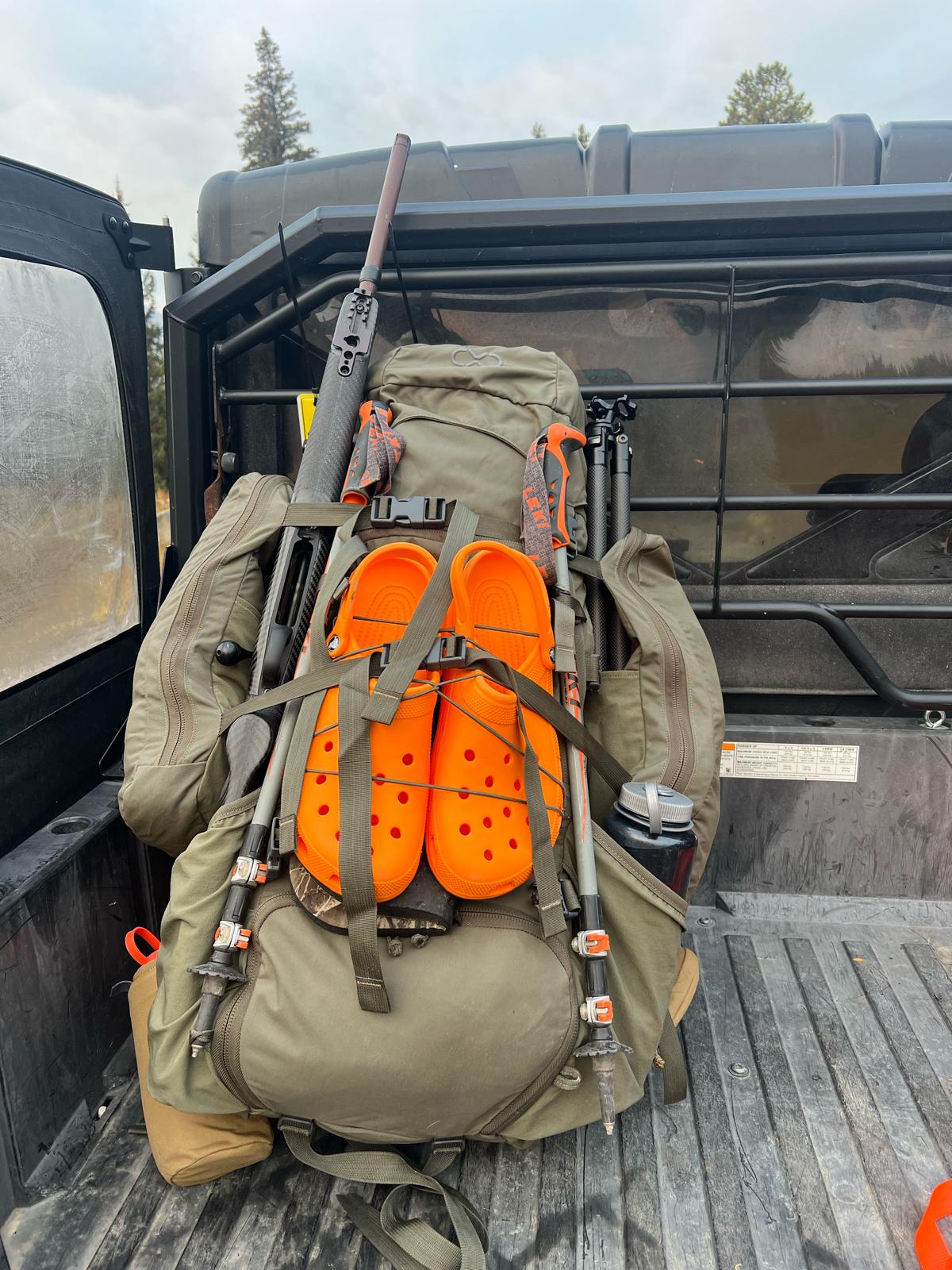
I’ve heard people complain about it, but others say they like it. Initially, I thought I would just remove it as I was not warm to the idea of having every other branch attempt to tag along with me as I moved through the subalpine. Additionally, I do not use a shooting bag on top of my pack, as it seems clunky and I’d rather just shoot off the main bag for the sake of being efficient (though I understand why others might feel differently).
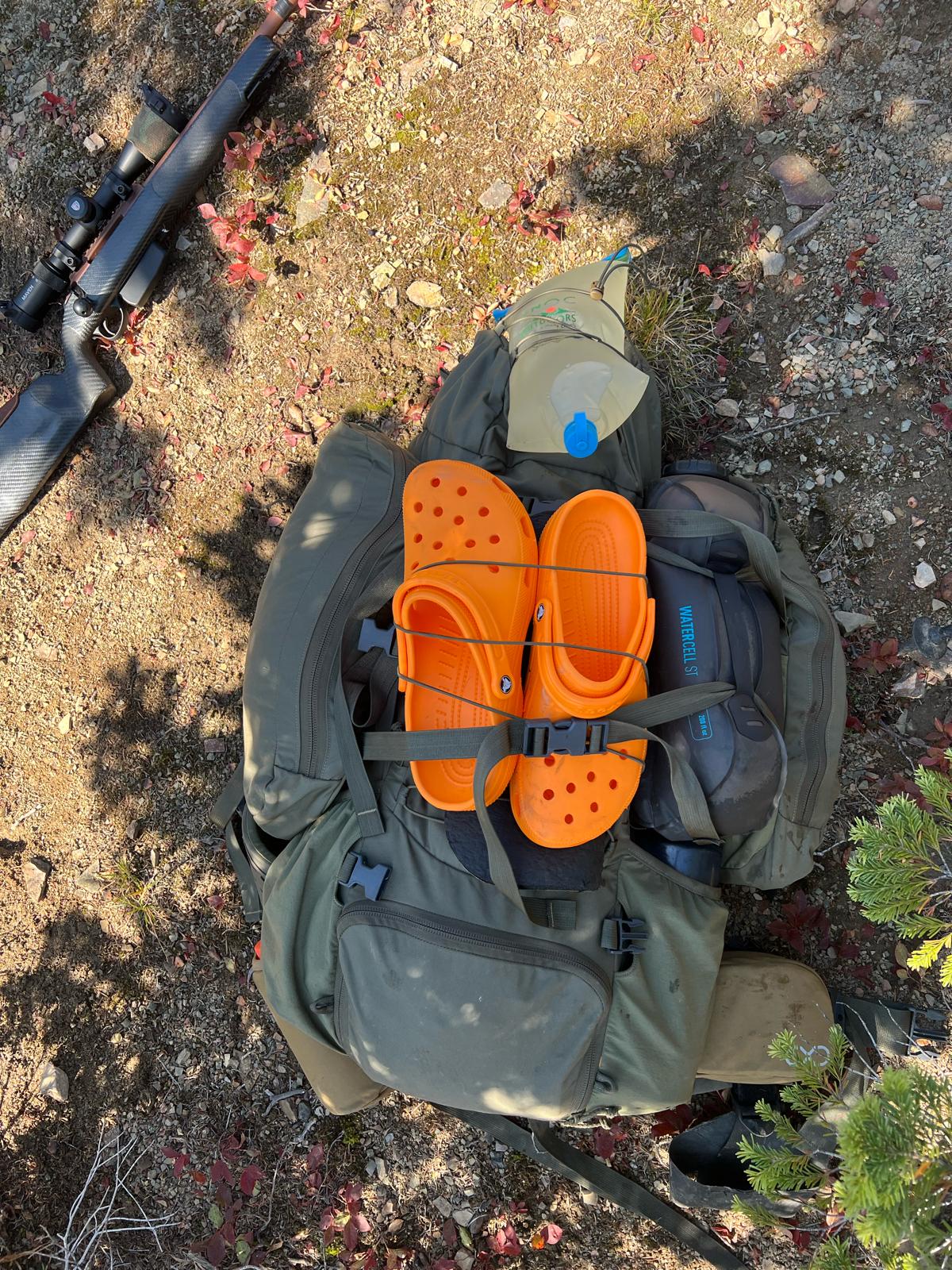
However, after using it quite extensively, it’s grown on me, and most of my initial concerns turned out to be non-issues. Firstly, it compresses and securely attaches items without competing with the main bag – completely independent of the bag’s measured capacity. While the attachment is not as secure as a zippered pocket, it has more contact points than a strap/buckle, while being far less annoying and much faster to use.
Where The Shock Cord Really Shines
If you need to up and move quickly without leaving any of your stuff behind, the shock cord is invaluable. If you have a full load but need to stop and fill bladders on the way up to sheep camp, you can easily use the shock cord for this. Most importantly, it’s easy to remove and replace. Destroy it, stretch it, or fray part of it after a day of still hunting through timber? No big deal. You can replace it yourself, and at no point does this process require a shipping label. It’s not perfect, but neither are stretch pockets or straps. The shock cord on the Teratorn is arranged in a way that allows for a high degree of convenience in keeping items attached to the pack while preventing the bag from becoming covered in straps, which is a major issue with modern hunting bags and leads me into my next point.
Efficiency Is Key
By the end of day one of the season, I’m usually tired of messing with multiple straps and buckles to gain full access to the main bag… or even to cinch down my glassing pad. By day three or four, I notice myself begin to forego putting those extra pieces of insulation on immediately, as I would rather suffer silently (for a few minutes at least) than deal with pulling the main bag apart. I’ll admit this is largely laziness on my part, or maybe it’s the optimist in me thinking I’ll see a legal animal within a couple of minutes of sitting down. Regardless, it’s a problem for me, and I’ll bet it’s something a few of you notice, too.
The Teratorn doesn’t completely address this issue, but it removes a significant portion of the frustration I feel and is objectively more user-friendly – for my lazy self at least. If you’re the type that completes a compulsive Tetris ritual every time you pack your bag, limit yourself to two dehydrated wet wipes per day, and pluck excess bristles out of your toothbrush, you probably don’t relate to what I’m saying, and the Teratorn probably isn’t your pack.
Designed for Late Season Hunting
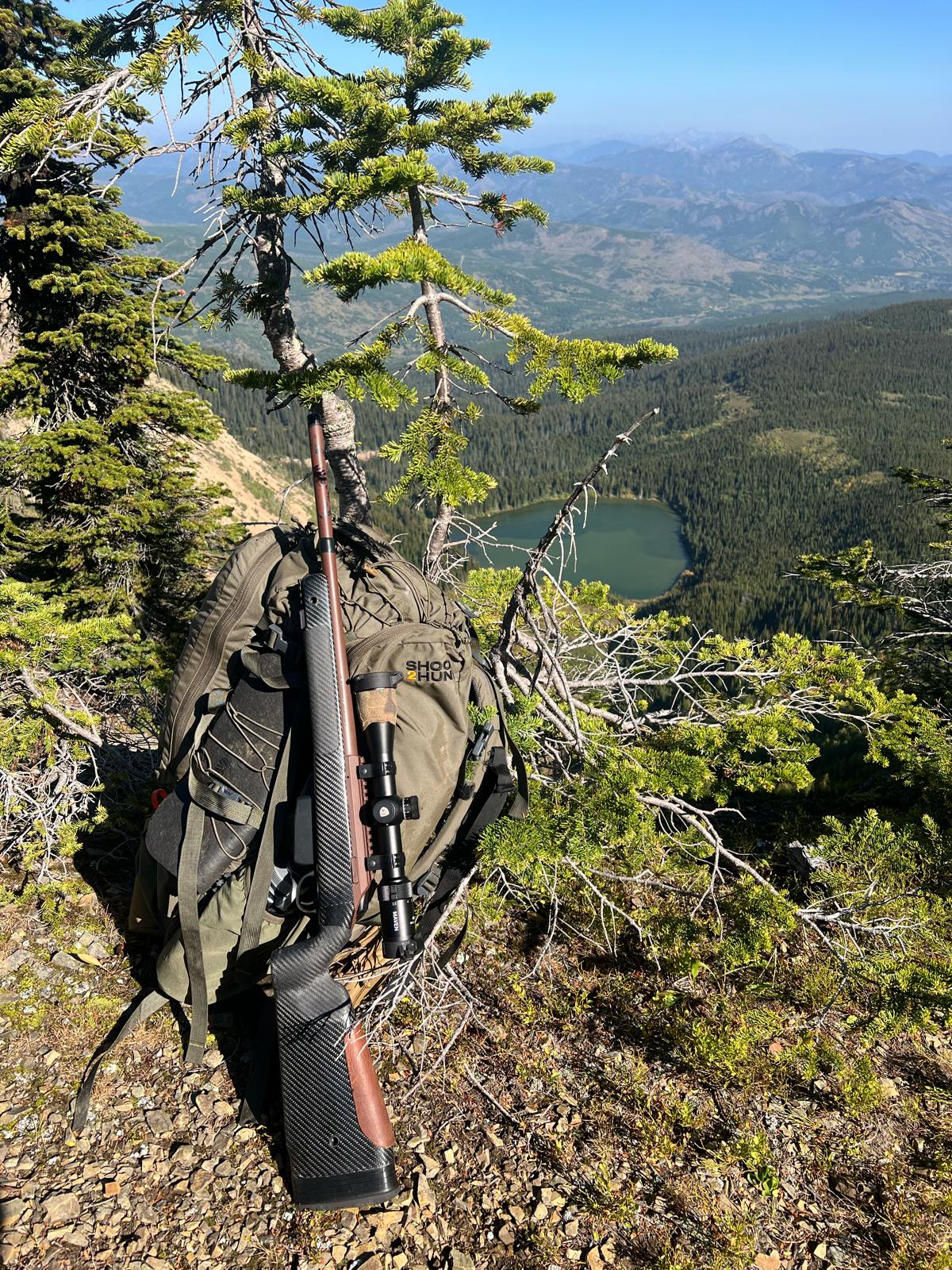
Those who hunt in real cold (ie, below 20°f) know how annoying it is to constantly be unpacking and repacking the main bag at stops or glassing points. Straps, zippers, and yard sales go from being inconvenient to almost painful to deal with. Cold amplifies otherwise minor annoyances to the point where it forces you to notice design flaws.
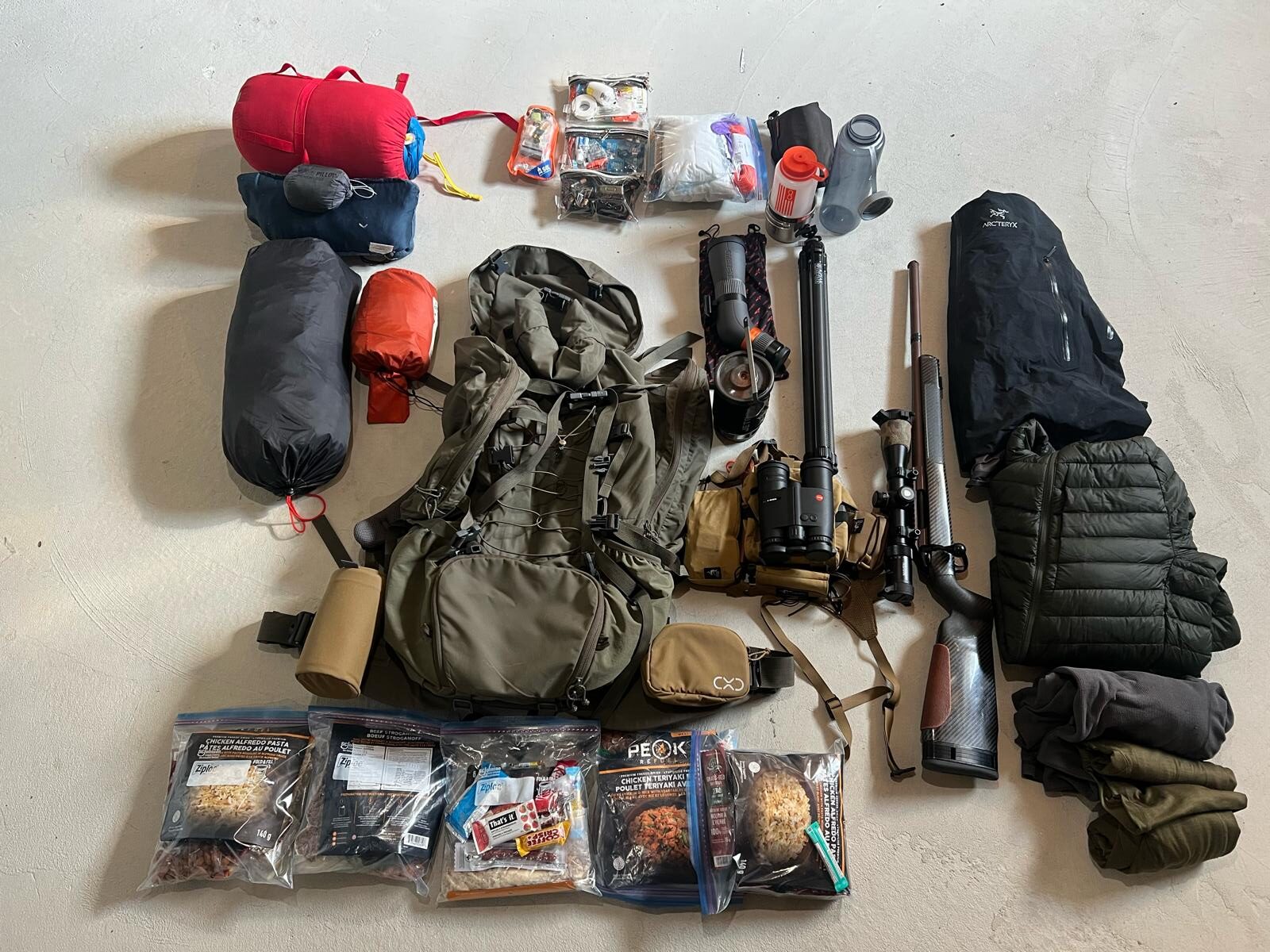
Further, hunting in true cold typically means having an emergency shelter, and for me, that means bringing a sleeping bag, even on day trips, as a last resort in the event things go sideways. The Teratorn features a dedicated sleeping bag compartment that keeps the sleeping bag isolated from the main compartment. This compartment can hold both the bag and a small emergency shelter without issue, and the peace of mind I get from being able to conveniently pack it is worth it. It also makes packing correctly and distributing the load throughout the bag much easier. However, if you have no use for the sleeping bag compartment, it can be removed to increase the main bag’s size. While we’re at it, the main bag is fine. There’s nothing special about it, aside from saying that it works as intended and can accommodate a five+ day hunt without issue.
Lid and Side Pouches
Given that we’ve discussed the main bag, wings, and how the design works in use, I think it’s important to briefly touch upon the lid and side pouches. To keep it brief, the lid is excellent. Zero sag, almost no flop, and a large enough main compartment to fit a Jetboil along with a day’s worth of food. On top of this, there is a smaller compartment that can hold quick-access miscellaneous items, such as a backup headlamp, first-aid supplies, or TP.
The side pouches are excellent, especially when paired with the belt Nalgene holder and accessory pouch. I place my primary drinking Nalgene in the holder, then add a tourniquet, snacks, and a few other things to the accessory pouch. This frees up space in the stretch pockets, so on one side, I typically place the bottom half of a tripod/gloves, then tuck the upper portion of the tripod inside the wing. On the other side, I place a 1L Nalgene bottle inside and have never had to worry about losing it, as the depth of the pocket fully secures it. Overall, the pockets are deep and comfortably accommodate what I need, without any concern about losing things due to their size.
Designed for Field Shooting
Knowing that the Teratorn is geared toward the Rokslide audience, I would be remiss not to discuss the pack as a field-shooting implement. I shot my bull elk this year at 650 yds while prone with a rifle resting on the Teratorn, which is farther than I would have liked. However, it happened quickly, with only a small window of time, and I don’t remember much beyond when I checked my natural point of aim; the rifle was immediately stable.
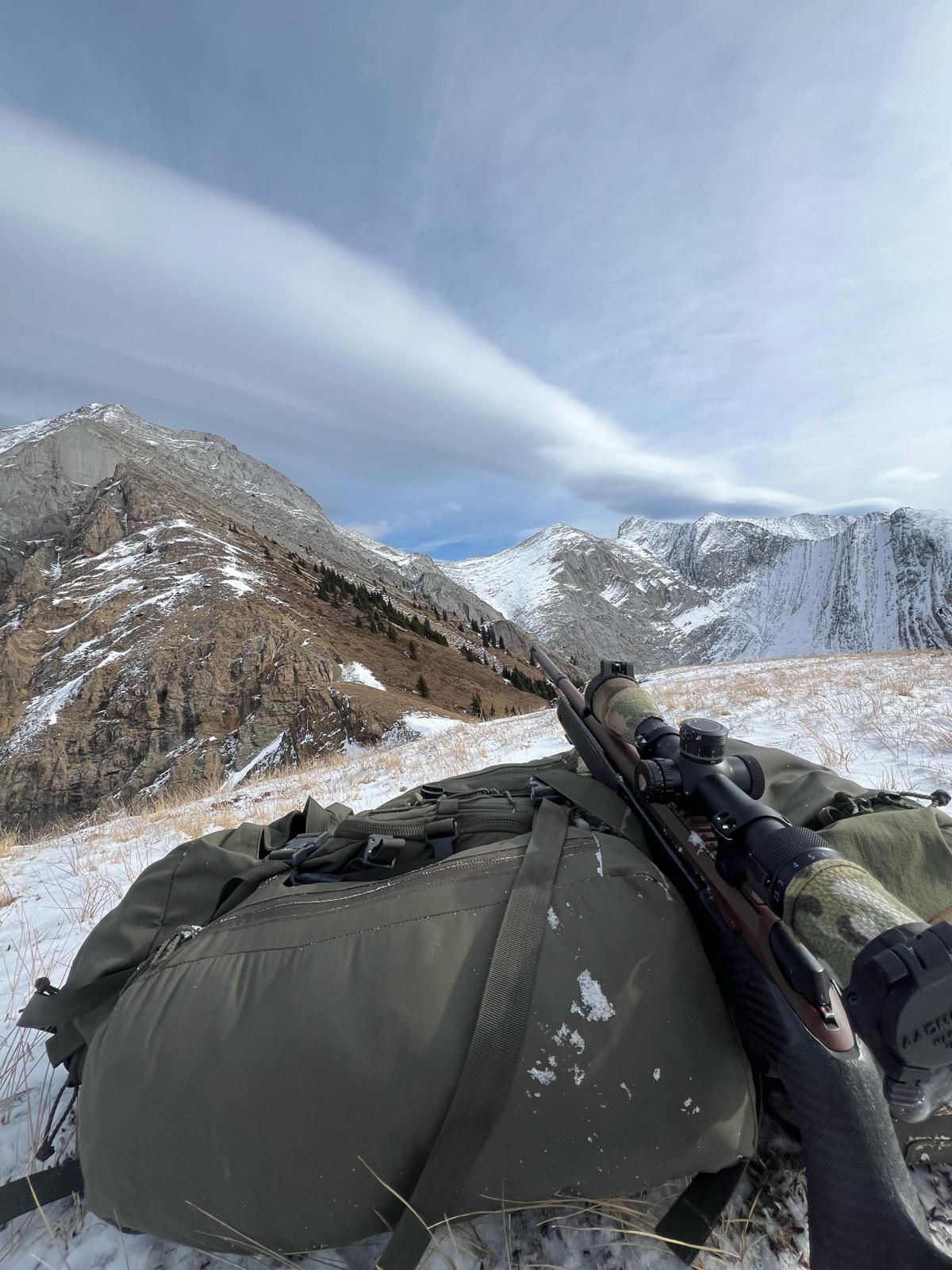
This is consistent with my experience shooting from the Teratorn in practice, prone. I don’t carry a shooting bag or leave one attached to my bag, as I don’t want the weight. However, the wings (if filled) extend the rifle’s total supported length and increase stability. This is a minor positive in the days of tripods and Arca clips, but for me it does matter, as I am a field shooter first and foremost.
Worth mentioning as well is that if a shooter needs or wants to get higher on the gun from the prone, the pack can be flipped on its side and, if filled, the wings provide quite a bit more height, which I have found is useful if shooting at angles from the prone.
What I Don’t Like
The only real gripe I have with the Teratorn is a by-product of my favorite feature on it – the wings. To illustrate this, I’ll tell a quick story. On one occasion in October, my brother and I hiked up to a ridge to reach a large bowl. Aside from the game trail we used to get up, the area around the bowl was all old burn mixed with regrowth, making it nearly impossible to move through.
Unfortunately, when we decided to head back down the game trail that evening, we saw a large boar grizzly moving up towards our location. To avoid a near-certain confrontation, we decided we had no choice but to bail over the back side of the ridge – through the burn.
We started moving, and I quickly realized we maybe should have taken our chances with the grizz. For example, moving 10 feet horizontally usually meant scaling 5-7 feet worth of logs vertically. I remember thinking that if one of us slipped and broke a leg, it would take days to get us out. It was easily the nastiest burn/blowdown I have ever been in, and at points, we just started laughing at how absurd it was.
However, at this point, we were committed, and that’s when I started realizing how annoying the wings were when moving through tight brush. They seemed to have caught every branch, and I was noticeably slower than my brother as a result. Regardless, we eventually reached a clearing and made our way onto a different trail well after dark.
Back at camp, I assessed my gear for damage and found that, even though my shirt and pants were torn, the Teratorn had no rips or punctures. The wings might have been annoying in the tight brush, but being made of the same material as the main bag paid off. I tell that story because I would not have moved through that kind of terrain unless I had been forced to. Regardless, things happen, and it’s good to know that while the wings do decrease your ability to move through really thick blowdown, the pack is not going to be torn to pieces in the process.
With all of this being said, I’m not sure this is even a real problem, as in retrospect I could have avoided it by simply repacking the items in the wings into the main bag and tucking the wings away. However, it is something to keep in mind if you are going to be bushwhacking with a fully loaded bag.
Another Potential Downside
Speaking of fully loaded, one thing to keep in mind with the Teratorn is that the significant capacity could easily lead to overpacking. This is a primary reason to my understanding that Exo generally recommends the K4 5000 over the 7200 for the vast majority of people, despite the relatively minor weight difference and compressibility of the 7200, as people tend to fill the bag they have.
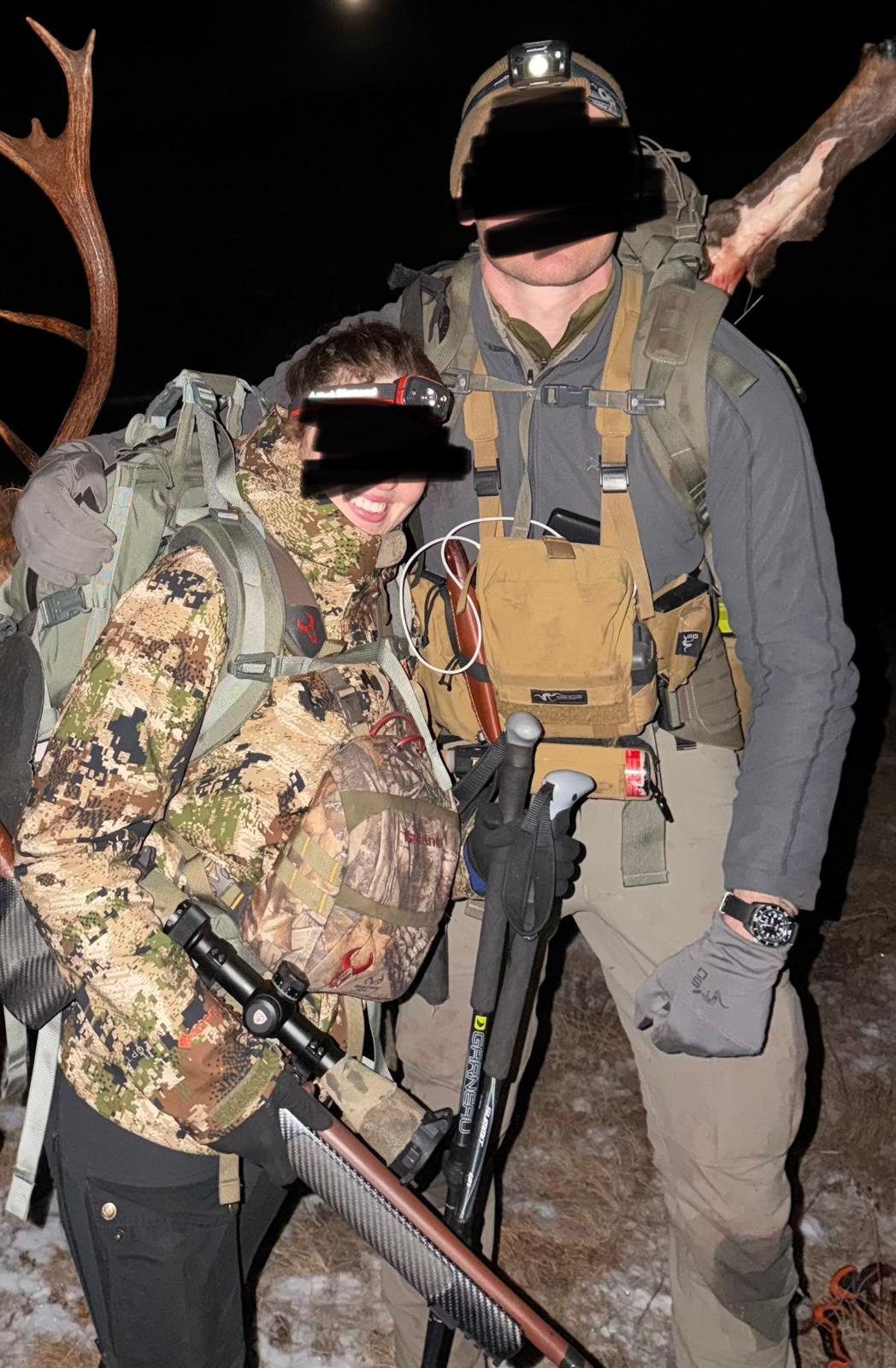
Now, in the late season, much of this space is going to be filled with lightweight insulation, so it doesn’t apply as much, which makes sense as this is what the bag’s suited for. I prefer the extra space that lets me strip down my insulation layers and secure them in my bag in seconds, without messing with the main bag at all. As mentioned earlier, this makes the transition from glassing to moving very quick and reduces the chance of losing something. That said, folks hunting early season and in moderate climates need to stay disciplined and be wary of overpacking, as it’s easy to do with this bag, especially if you don’t have the general fitness level to support overpacking.
To Wrap Things Up
If someone said the primary strength of the Teratorn is the K4 frame and its functionality as a high-capacity bag for later-season hunts, I would agree. For all the reasons listed previously, it is a well-designed bag that addresses most of the annoyances of overly strappy bags on the market and can be used in a no-fuss manner.
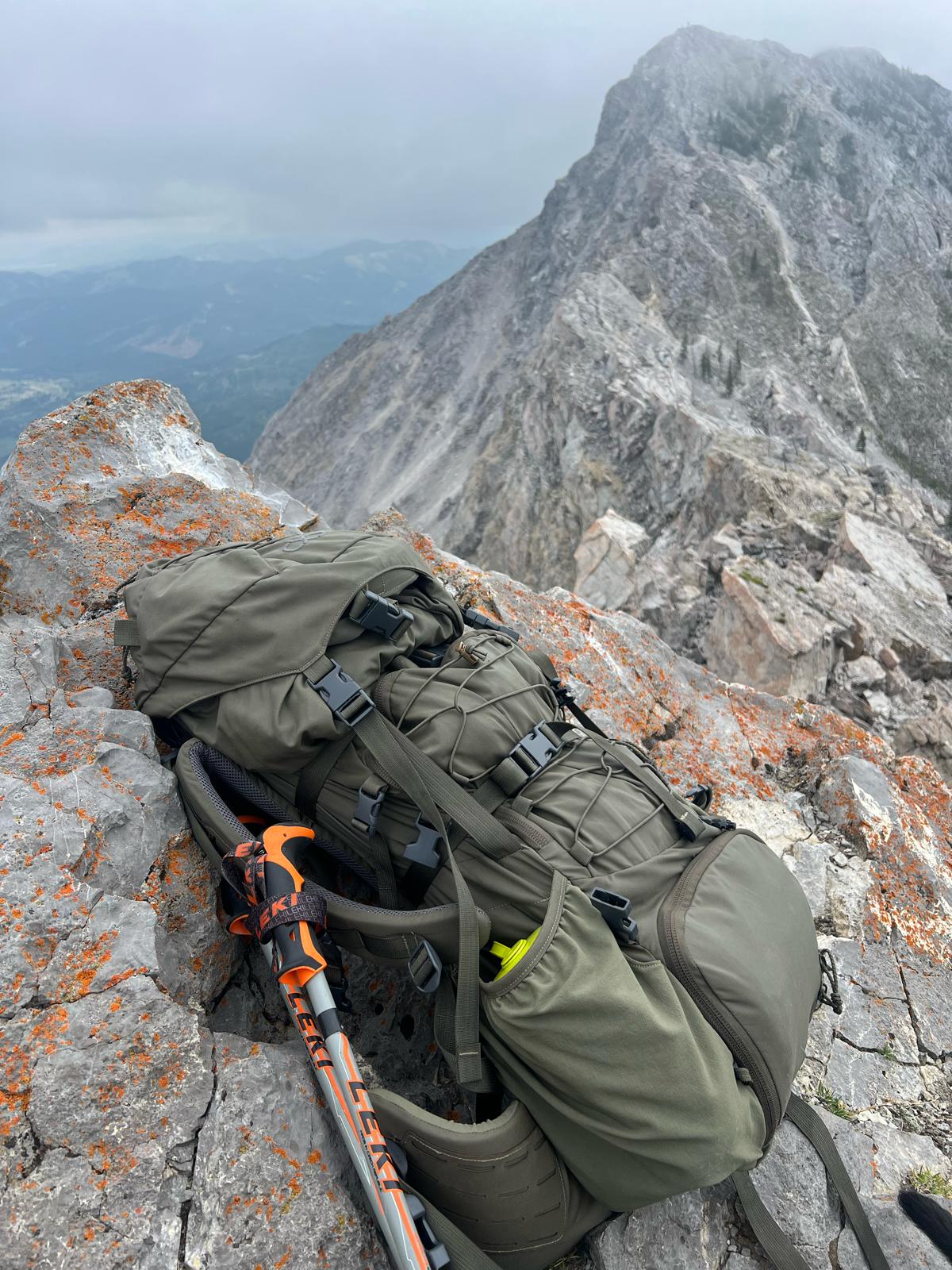
It’s fast, convenient, and comfortable in use. Exo has built an excellent frame with the K4, and the Teratorn complements it well. However, despite later seasons being its forte, the bag could be a one-and-done deal for everything, from 12-day trips in late November to a quick-rip day hunt in September. I’ve sat on a few summits now with the Teratorn in a daypack configuration in early September and was pleasantly surprised by how well it compressed. The wings can be folded between the frame and the rear of the bag and go completely unnoticed. It’s not the best pack for this use – but it works.
Overall A Winner
All in all, this is a bag for folks who want the high performance of the K4 frame with a forgiving, convenient, and scalable bag geared towards later-season hunts. The wings are done right, and the lid is the best in the business.
It’s not necessarily the best bag for everyone, but it’s the right bag for many, including myself. Personally, I don’t see myself switching to anything else for a long time, and based on how well this thing has held up, I don’t think I’ll have to. Thanks, Exo and S2H, for bringing this thing to market. Order yours here.
Comment or ask Zach questions here.
Check out our full catalog of pack reviews here.