DIY Wyoming Pronghorn Hunt
The buck never gave me the time to settle. In wide-open Wyoming country, the wind pushed hard, distance shifted by the second, and there was nowhere to hide. When he finally stopped, I rushed it. The rifle cracked, and he bolted untouched.
I scrambled to reload, already behind. He stopped again – another shot, another miss. This time he stretched the gap, angling over the next rise. We went after him, covering ground as fast as we could, hoping for one more chance.
When it came, it came fast. I dropped to the ground, steadied as best I could, and found him head-on. The crosshairs settled on his chest. I fired.
Dirt kicked up. The buck was gone.
I lay there empty, out of ammo, 1,700 miles from home – realizing I had just unraveled my first public land hunt.
Let’s Back Up
A week earlier, my dad and I were loading his truck in Alabama, gearing up for a hunt we had only seen in videos. Checking and rechecking our gear, we wanted to be sure nothing was forgotten. As we headed to the airport, I knew there was no turning back. This hunt would be the best we have ever had; we just did not know it yet.
Day One
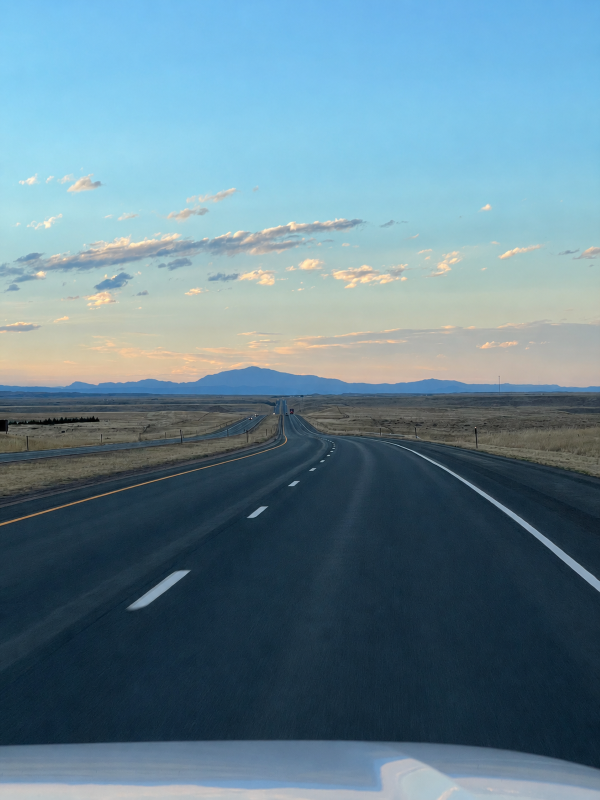
Opening morning was surreal. With no guide or help, we headed into our unit, our only scouting being the maps we had read beforehand. This day would be a scouting day. We had one week to harvest a pronghorn, and nothing would be holding us back. This day was filled with driving through the unit, marking the pronghorn we saw on public land from the road, and obtaining a clear path to how we would hunt the rest of the week.
Day Two
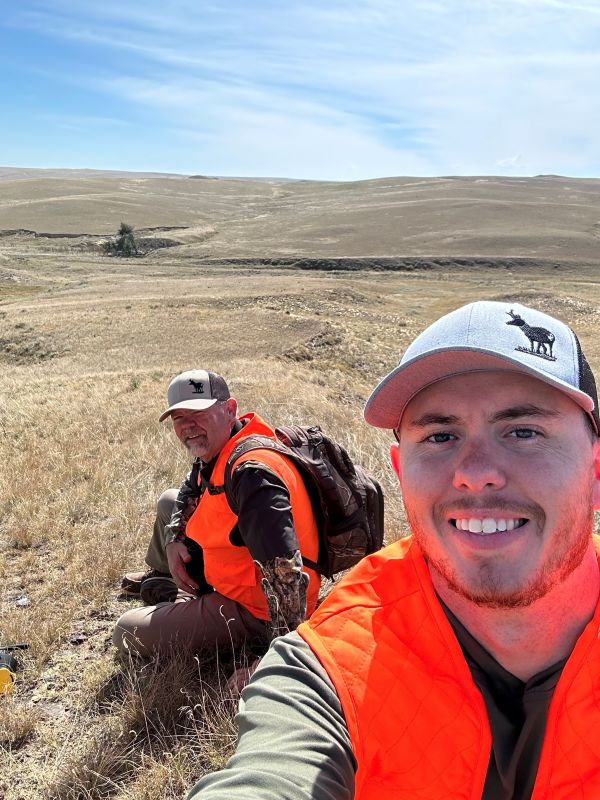
This is where the fun begins. We rise before the sun, fighting the wind and cold. We follow our GPS coordinates and park on the side of the road on a sliver of public land. The first mile-long hike was underway. In the brisk air, we take off, trying to get to our glassing point before sunrise, not knowing that this hike would be our first setback.
Once we arrived at our destination, we were met with flooded boots from the morning dew. Both of us wore what we thought were waterproof boots. I guess we were wrong. We fought it all morning until we finally decided to head back to town to a small boot store in hopes they had waterproof boots in our size. We came out of the boot store victorious and spent the rest of the afternoon glassing sub-par bucks and a lot of does.
Day Three
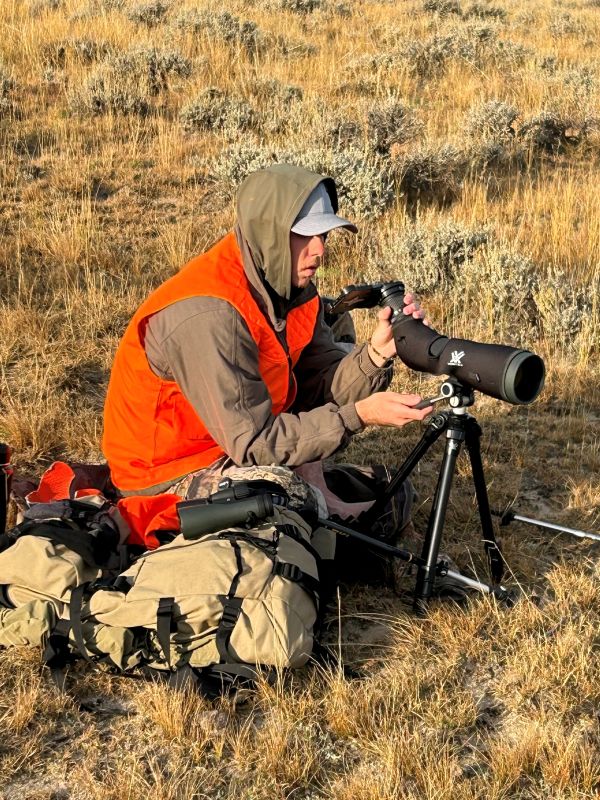
One of the worst days I have had hunting. It’s the day I traveled 1,700 miles from home to miss my first-ever western big game animal not once, but three times. We worked our way to the northern edge of the unit, as far as public access would allow. After parking, we moved into unfamiliar country, easing through rolling terrain until we spotted a group of does feeding on public land. We closed the distance carefully – one rise, then another – until we were in position, prone behind the last bit of cover. As we glassed for a buck, one appeared suddenly, slipping through the does at less than 100 yards. He was moving fast.
The wind was howling, adrenaline hit, and there was no time to think. I settled behind the rifle and waited for his movement to slow. When he did, I rushed it. The shot broke – and missed clean. I worked the bolt as fast as I could. The second shot came even quicker than the first. Another miss. This time, he ran, putting multiple ridges between us. We follow him, leaving everything but my rifle behind. As we catch up to him, we hit the ground, hoping he didn’t see us running in his direction. I fought to control my breathing, settled the crosshairs on his chest, and took the shot. Missed…again. Three chances gone in seconds. Out of bullets and confidence, I walked back to my gear with my head down. It felt like I had just blown my one opportunity – and possibly the entire hunt.
Day Four
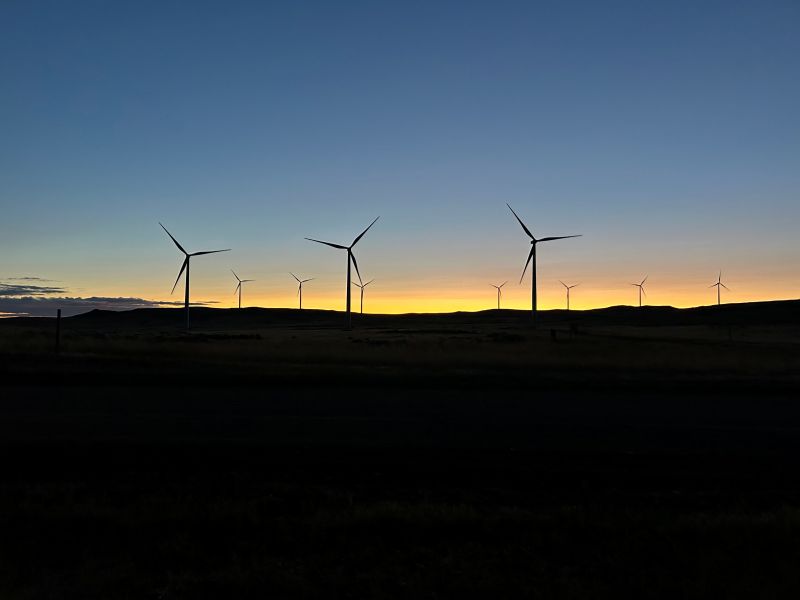
Reset day. I wanted to forget the place where I just missed my first pronghorn buck, so we went to another part of the unit. The plan was simple: hike in, glass, and slow everything down.
The hike alone reminded us how different this hunt was. Nearly three miles through rough terrain just to reach a vantage point. By the time we sat down to glass, we had already been pushed physically. We eventually spotted a herd, including the biggest buck we’d seen all week – but they were on private land. We watched for hours as they fed, hoping they would drift our direction.
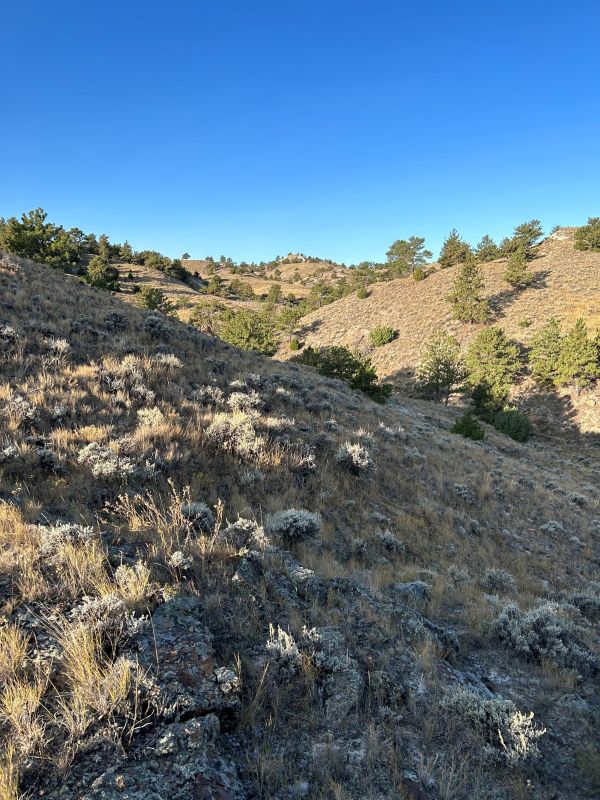
Late in the day, a doe finally started our way, bringing the herd with her. They closed the distance to 300 yards, but the buck held the high ground. He was sky-lined. After the previous day’s mishaps, I wasn’t going to force anything. I stayed behind the rifle and waited for a better shot opportunity. The wait was met with a doe spotting us and the herd disappearing over the ridge and relocating into another county. We tried to chase after them, but they were long gone. We decided it was best to head back to the hotel and plan for the next day.
Day Five
This is a day that I will remember for the rest of my life. We decided to go to the same place where I missed the buck. It was accessible, held pronghorn, and, most importantly, gave us our best opportunity to harvest an animal. We arrived before daylight as usual and began hiking in, methodically, at first light. I would move ahead to the next rise, glass, then signal my dad forward once things were clear. After several iterations, I got lucky.
Peaking over the rise, I catch movement. A buck. As soon as I saw him, I dropped to the ground and immediately signaled my dad ahead by throwing my hands over my head like a bad game of Charades. When he arrives, we make a plan to backtrack a few hundred yards and set up from a different angle. Arriving at the new location, we noticed the terrain offered no cover. Our only option was belly crawling to the top of the rise. We drop our things and slowly make our way to the top, making sure not to spook the pronghorns that are feeding ahead.
The first buck I spotted stayed out of range, working the private land boundary away from us. As he left our sight, I noticed movement in a drainage below us, about 400 yards away. It was another buck. All I could see were his horns rotating back and forth as he scanned the horizon for predators. With nowhere to go, I reached for my phone and started studying my maps. He is on private with no visible markers showing me the boundary. For nearly two hours, I lay prone and studied my maps, deciding where he would need to get to take a shot.
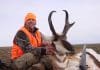
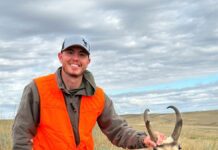
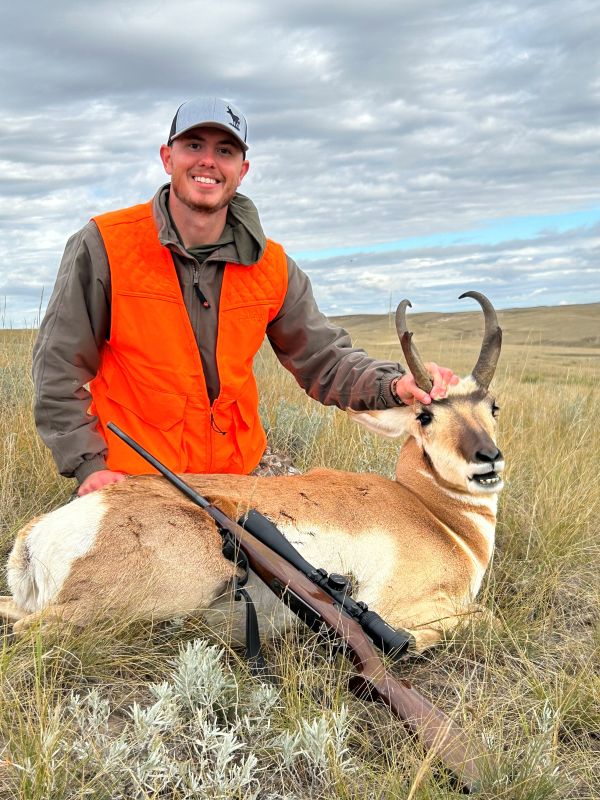
Finally, it happened. A doe next to him stood up. She began feeding toward the spot I picked out. As she was headed in that direction, the buck stood up and followed her. I settled behind my rifle, eased in the scope, and waited. He finally reaches that spot and stops. I gather my breath, take aim, and squeeze the trigger. BANG! The gun goes off, and pronghorn run off, but not the buck. My dad, who is behind me, is watching with his binoculars. He sees everything. Bullet hit, legs fold, head flies back, and body drops, never to move again. I did it.
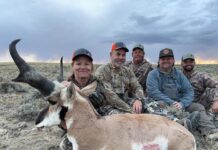
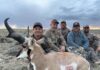
We celebrated and called our family back home to tell them what we just accomplished before heading to the buck. We just completed something we had only dreamed about before. A successful Do-It-Yourself, public land, western hunt completed by two hunters from Alabama. It meant a lot to us and will probably go down as the best hunt of our lives.
Comment or ask Noah questions here.