











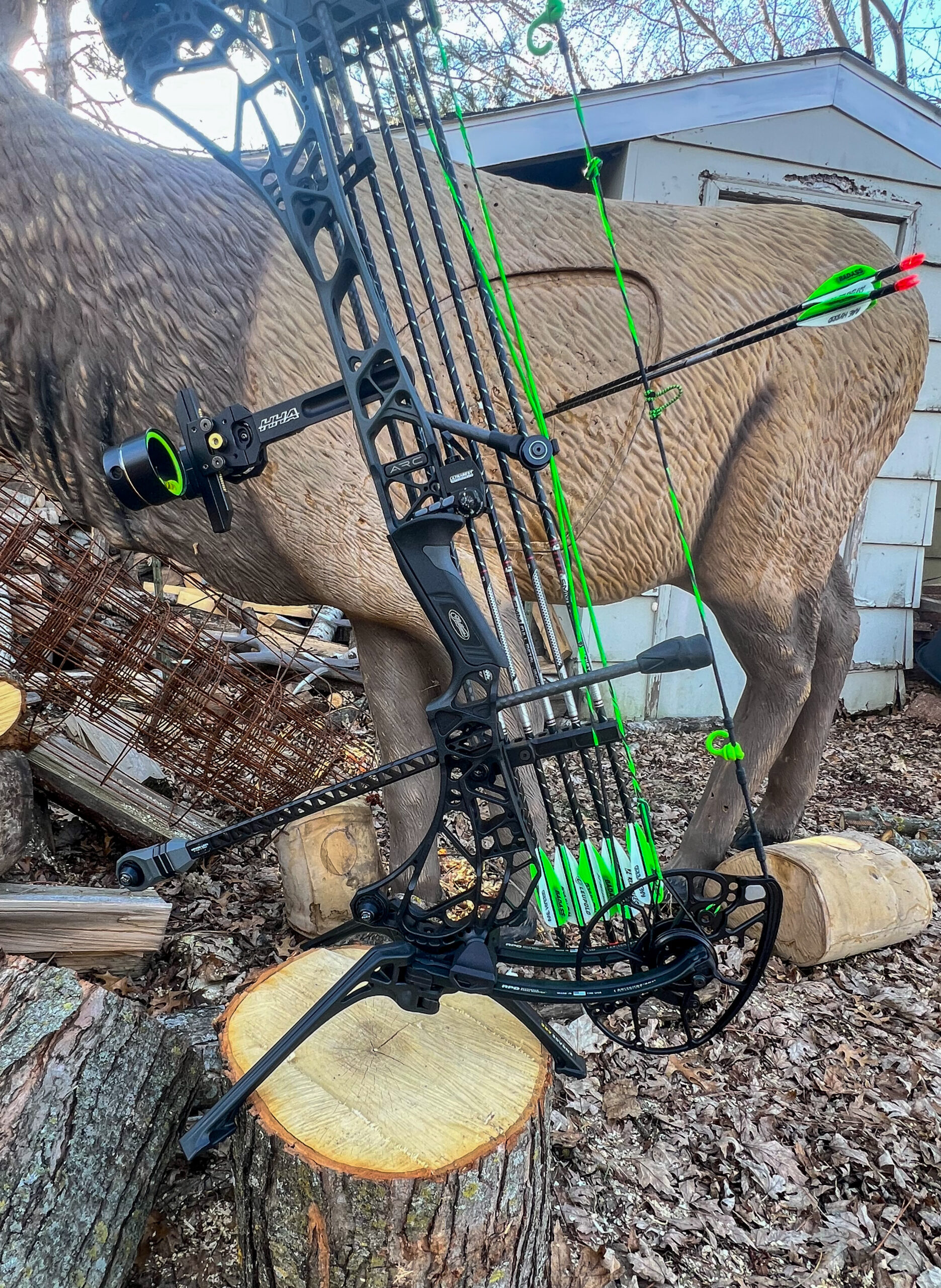

Overview and first impressions
Last year I did not review the Mathew’s LIFT X, but you can find the previous year’s review of the LIFT here. This year’s ARC platform is a step forward in the design, with new riser geometry, a second‑generation SWX cam, and revised limb geometry intended to deliver a blend of speed, stability, and tunability across hunting setups. The ARC, like most past years’ offerings, is available in two lengths: the ARC 30 (compact, maneuverable, and the one I chose to review) here and the ARC 34 (longer, more stable) here. Mathews touts this line as their most advanced riser and cam package to date.
Design and build quality
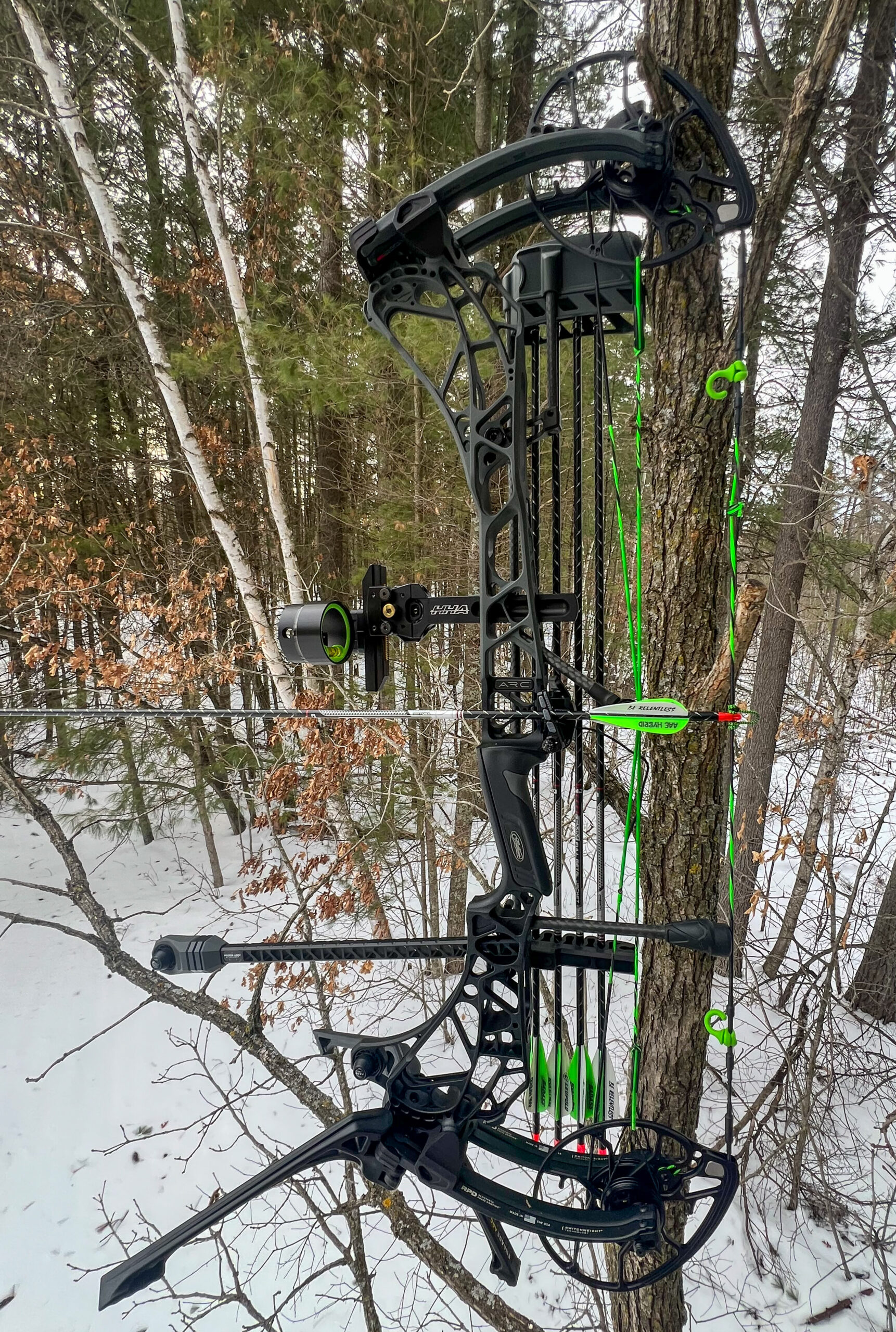
Mathews kept the ARC clean while packing in subtle engineering changes. The riser is more refined: it’s lighter in hand than some previous Mathews platforms, yet still rigid where it needs to be. The limb pockets and limb angle were reworked to keep energy transfer efficient at full draw, and Mathews’ perimeter weight technology on the SWX‑2 cam aims to preserve velocity without sacrificing forgiveness. Fit and finish are exceptional, as to be expected; paint, machining, and tolerances are all consistent with what we’ve come to expect from high end archery companies. They did launch “Kodiak”, as a new color this year. It is available in solid, or Fade to Black.
What Looks Different
The riser geometry is optimized for balance and reduced hand shock. Utilizing 5-axis machines and specialty cutters, they have been able to cut weight, and maintain rigidity where needed. This is the second generation SWX-2 cam which is showing a new perimeter weight for better speed retention and cam balance. It’s also boasting a completely new limb and cup design, to work in harmony with the new limb pattern, increasing efficiency across an array of hunting setups.
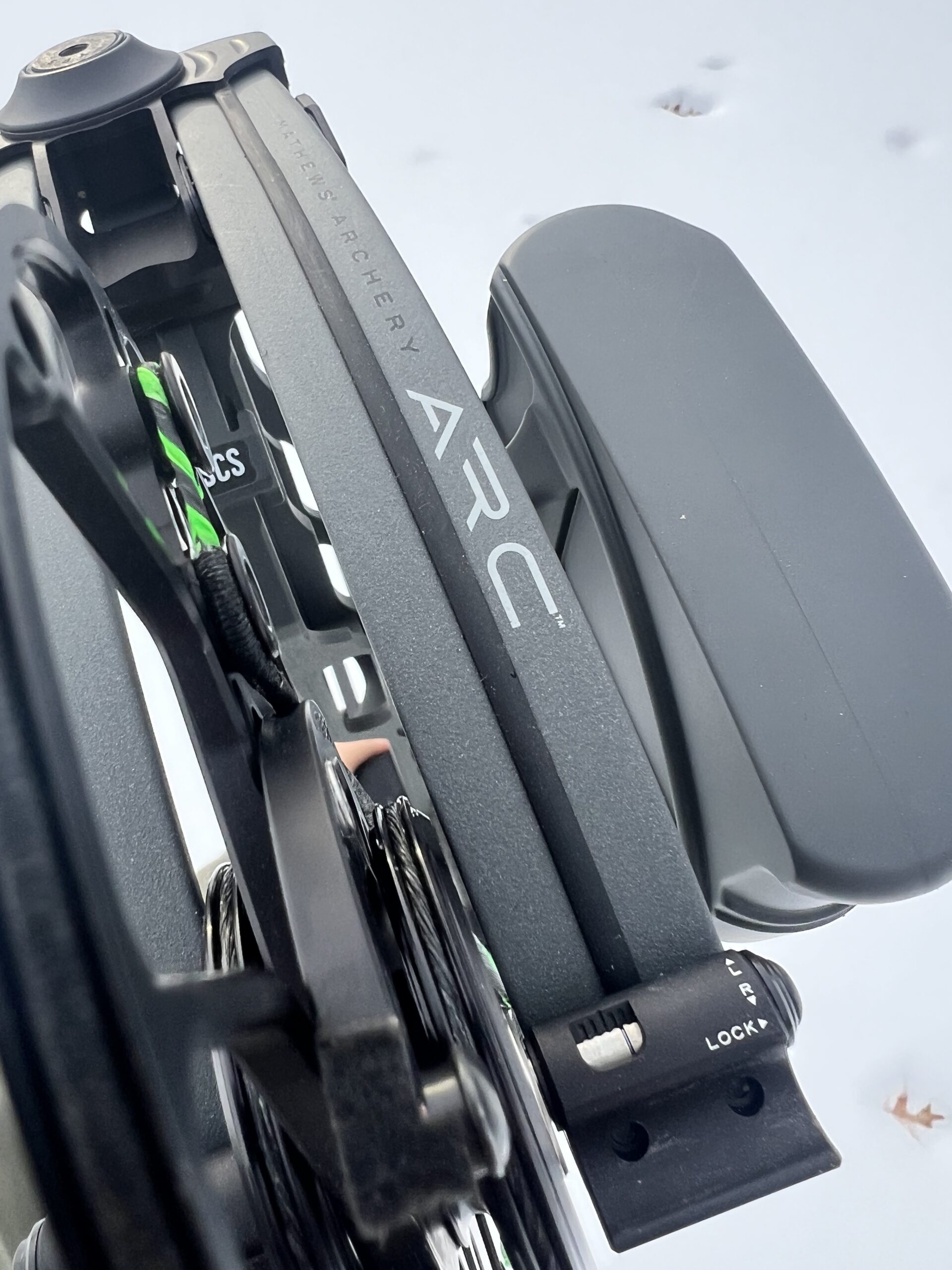
The ARC features a revised limb angle that is noticeably less aggressively past-parallel compared to the Lift models. This new, less extreme angle helps the limbs move more vertically, improving efficiency and contributing to a smoother, less harsh draw cycle compared to the steeper design of the LIFT X.
Draw Cycle and Shooting Feel
The ARC’s draw cycle is where Mathews’ engineering shines. The SWX‑2 cam produces a smooth, progressive draw that settles into a solid back wall with minimal vibration. I’ve found the back wall to be more solid on the ARC 30, than the LIFT, but the valley is almost non-existent. It will keep you honest for sure, and I found out the hard way….more than once. On the range, in the tree, or in the mountains, the bow tracks exceptionally well; it’s easy to get the sight pins on target and hold there without the twitchiness some high‑energy bows exhibit.
The limb shift tuning system (one of Mathews’ no‑press tuning features) makes lateral tuning straightforward, which reduces time at the press and simplifies field adjustments. I can’t say enough good things about the Mathew’s LST, in my opinion, one of the biggest innovations in the archery world in recent years. I really like the draw feel and the way this bow “aims” — a really nice combination of balance, cam timing, and riser stiffness.
Performance: Speed, Noise, and Forgiveness
Mathews boasts the ARC retains velocity where other platforms lose it, and testing shows the platform produces competitive FPS numbers for its class while maintaining a forgiving shot feel. In Redneck terms, that means we get a bow that’s fast enough for modern hunting distances but quiet and smooth enough to be comfortable in the stand and hand. Noise and vibration are well controlled; the redesigned limb cups and perimeter cam weighting contribute to a soft and quiet release, while allowing for a stable follow‑through. Chronograph numbers will vary by setup, but the ARC’s real advantage is consistency: it holds speed across different arrow weights and hunting configurations better than many older designs.
Tuning, Setup, and Maintenance
I love to tinker, but Mathews has continued to lead the way making bows that are friendly to the archer who wants to spend less time at the press. The ARC’s limb shift technology and cam design reduce the need for heavy-handed tuning; I’ve done many setups, and have been able to make quick and easy adjustments on the range, and I’m getting almost perfect paper tuning every time. The bow is compatible with standard accessories and follows Mathews’ history with integrated rests, sights, stabilizers and quivers, so swapping gear from an older Mathews rig is straightforward. For archers who like to tweak, the perimeter weight system and cam timing offer meaningful adjustments, but you won’t need to be a tech wizard to get excellent performance out of the box.
New for this year
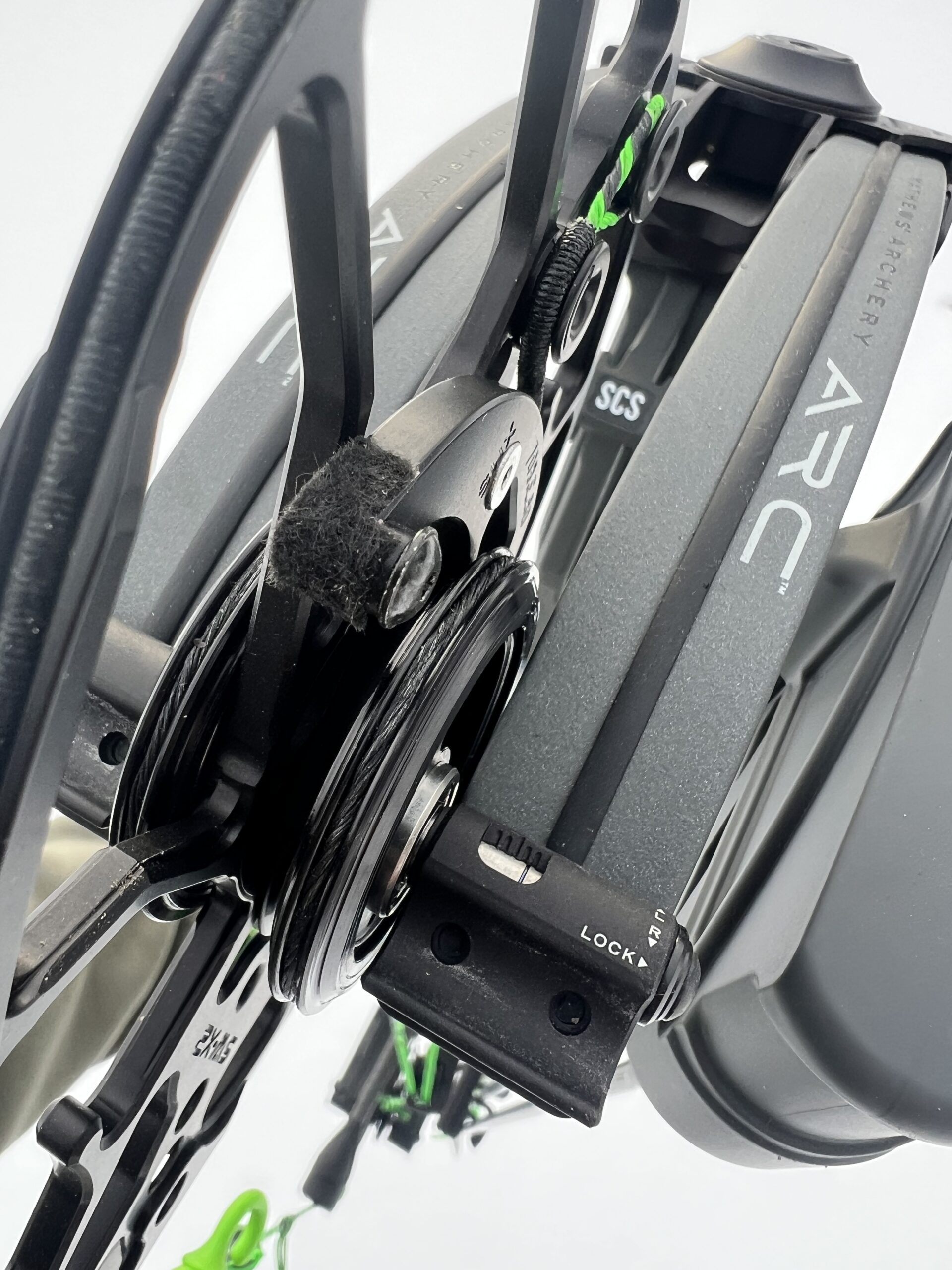
Now built directly into the riser, the new Silent Connect System eliminates the need for a separate SCS anchor that was attached to the bow. Lighter and fully integrated, every ARC will be made compatible with Mathews’ SCS accessories including the Defender Series String Protector, SCS Bow Sling, and the SCS Bow Rope.
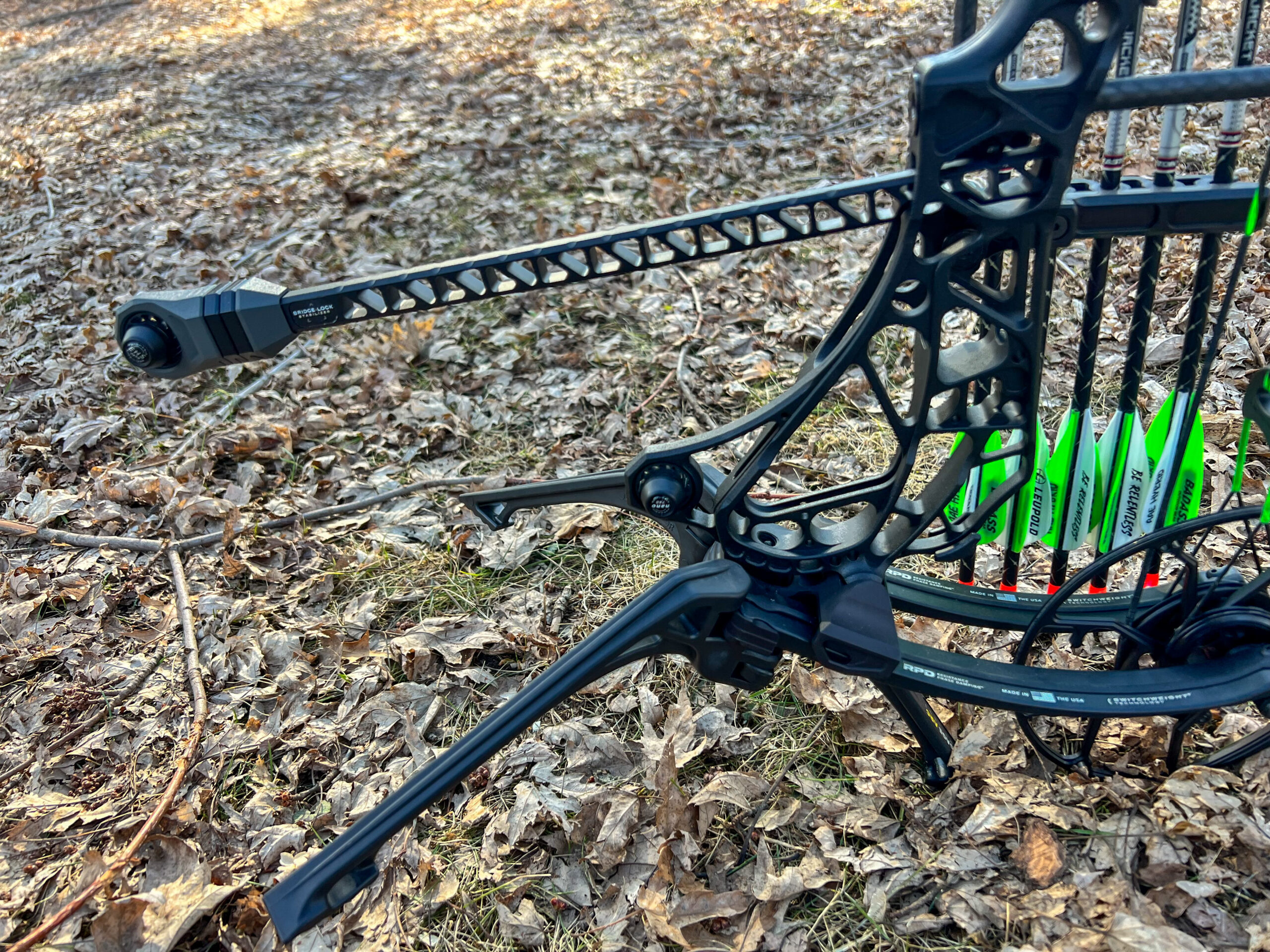
A new accessory this year is the Bridge-lock stabilizer featuring an integrated 7-degree downward angle designed to lower the bow’s center of gravity and improve pin float control for a steadier shot. This stabilizer is explicitly designed to integrate directly into the riser of compatible Mathews bows. This gets a big thumbs up from me.
The SWX-Z is a new optional module option that provides an even smoother, less aggressive draw cycle than the standard mod. It will be a little less touchy on the back wall and slightly slower.
Field Use and Hunting Performance
In the stand, in the blind, or on the Mountain, the ARC’s compactness (especially the ARC 30) is a real asset. The shorter axle‑to‑axle makes it easier to draw in tight quarters, hump around the mountains, and to swing while in the tree. The ARC 34, by contrast, shines when you want steadier holds for longer aiming windows or when you’re dialing in longer shots. Both models are built with hunting in mind: they balance speed, forgiveness, and quiet operation. The bow tracks well with broadheads and maintains point‑of‑impact consistency across hunting setups, in part to its ease of tunability. In my testing over the last few years, the Match strings that come stock on the Mathew’s bow, are high end. They will “settle” some in the first 150-200 arrows, but then they are locked in. There is no need to consider anything else.
Pros and Cons
Pros:
Good speed and above average stability, without compromises. The draw cycle is refined. Smooth, comfortable, and repeatable. Very easy tuning with Limb Shift Technology and cam design, with the high-end build quality that Mathew’s has been known for.
Cons:
This isn’t an inexpensive rig. It’s definitely positioned at the high end of the market. While the LST and cams are very easy for basic and mid-level tuning, getting every bit of performance and options may require more than basic experience. Weight can add up quick on this rig depending on accessories, becoming heavier than an ultralight hunting rig.
How It Compares to the LIFT X and other Mathews Models
I personally thought this year that the flagship might be a complete rebuild. Although the ARC is a fair leap from the LIFT/LIFT X, it’s not a complete reinvention. Mathews kept the successful elements of the LIFT series (user‑friendly tuning, solid back wall) and refined the riser, cam, and limb geometry to improve stability and velocity retention. I think that the ARC feels more “at home” on target and slightly faster in real‑world setups, while still offering the same Mathews DNA that many shooters appreciate. If you’re coming from an older Mathews platform, the ARC will feel familiar, but noticeably improved in aim and efficiency.
Who Should Buy the ARC?
Dedicated hunters who want a premium, all-around hunting bow that balances speed, comfort, quietness, and forgiveness. Archers upgrading from older platforms who want more stability and easier tuning, without a steep learning curve. Anyone who values high out-of-the-box performance, and are willing to pay for a top tier build and finish will be happy with this upgraded bow.
If you’re a casual target shooter on a tight budget or you prioritize the absolute lightest possible setup for long treks, there are lighter & less expensive options. For most serious hunters, though, the ARC’s combination of handling, speed, and tunability push it towards the top–if not the top–of the “buy-this” list.
Final Thoughts
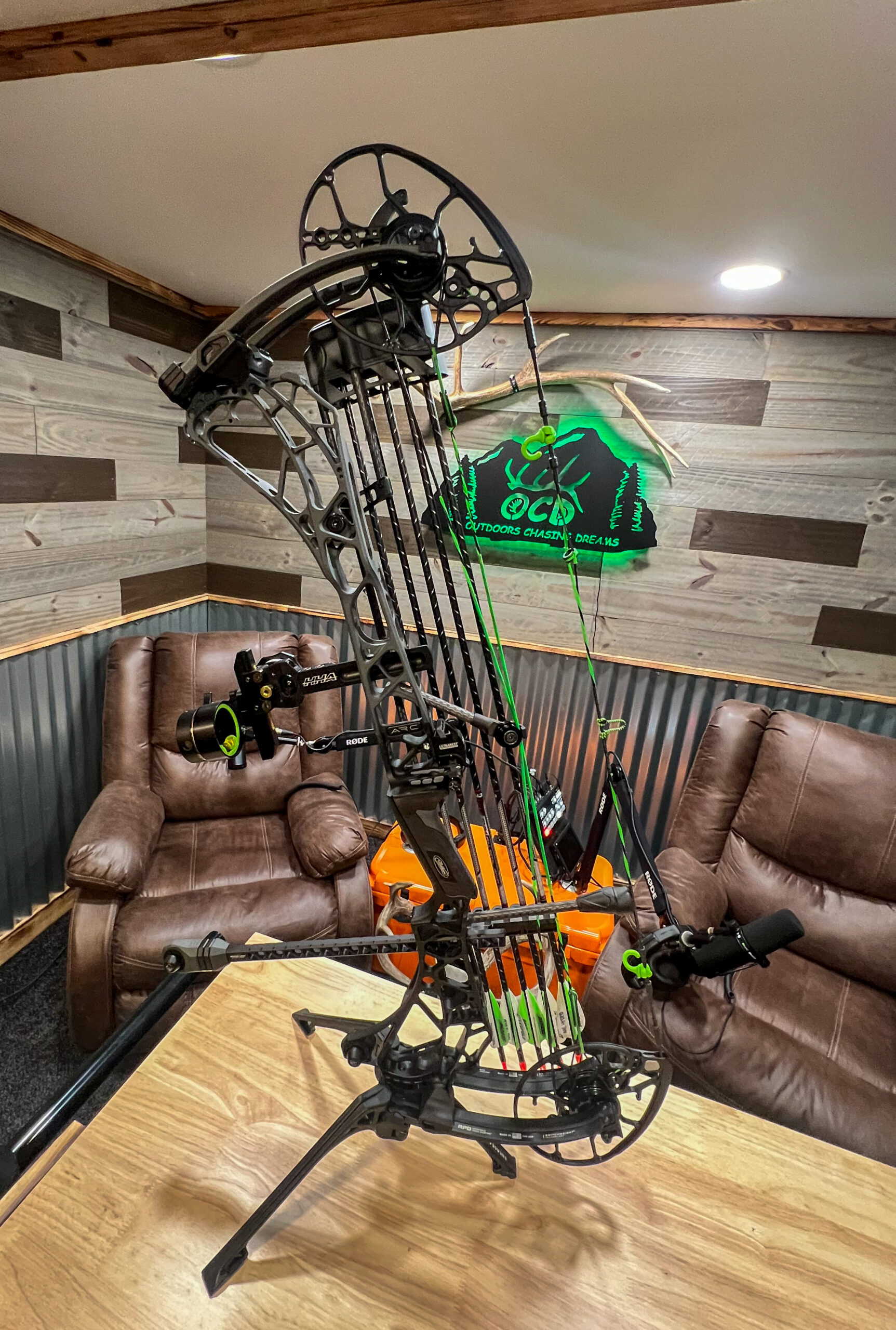
The Mathews ARC is a well engineered hunting platform that refines what Mathews does best: smooth draw cycles, intuitive tuning, and a “feel” (or would that be lack of feel?) at the shot, like no other. The ARC 30 and ARC 34 give clear choices for maneuverability versus stability, and the SWX‑2 cam with perimeter weighting delivers a modern balance of speed and forgiveness. For those who want a bow that performs reliably in the field and reduces the time spent with tuning, the ARC is an excellent option — albeit at a premium price point. If you value a bow that aims as much as it shoots, the ARC deserves a close look. I would head to a shop and get one in your hands, and then, as you should all know by now, go to Mathews Bow Builder here and customize your new rig. My final thoughts….“It draws nicer, aims better, shoots quieter, and vibrates less than your current rig.”
Comment or ask Les questions here.