



Leica PRS 5-30x56i Field Review
Test Platform
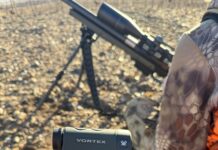
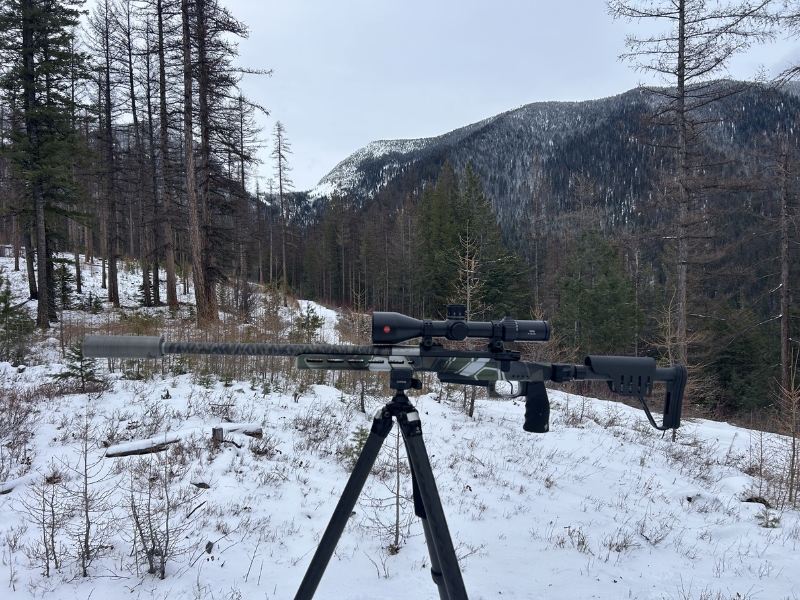
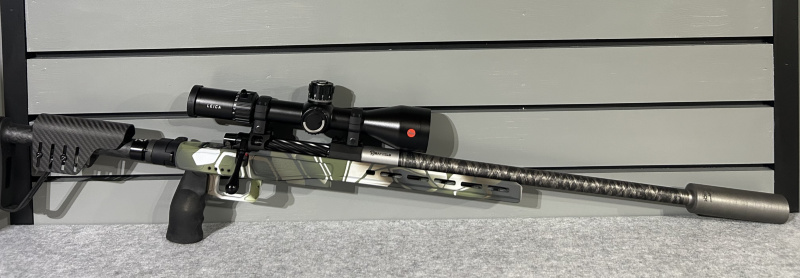
- Rifle: Kelbly Nanook 7PRC
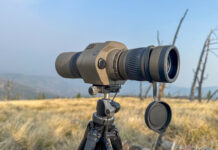
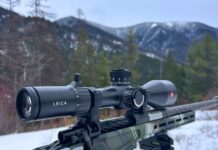
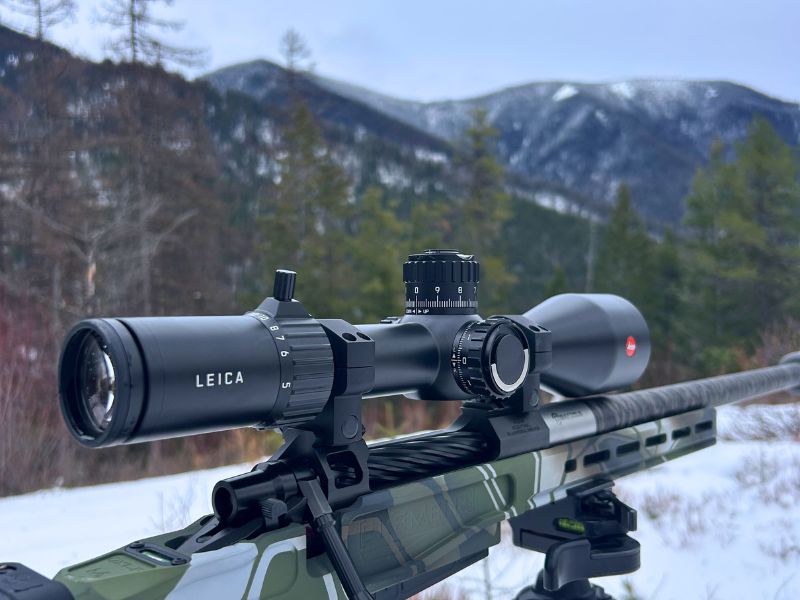
- Scope: Leica PRS 5-30x56i
- Reticle: Ballistic (MRAD)
- Chassis: XLR magnesium 4.0
- Barrel: Preferred Barrel Blanks, 1:8 twist Carbon Fiber 21”
Test Conditions
- Total rounds fired: ~650
- Max verified distance: 1,260 yards
- Miles covered in the field: ~350
Environmental conditions: Fall rain, winter snow, sub-freezing temps
Hunting use: Wolf hunts in Montana
This review was not conducted over a weekend range trip. Spanning an entire hunting season, a high round count suppressor test, and finishing with winter wolf hunts, the 5-30×56 on my 7PRC saw extended and hard use.
Leica is globally recognized as being “alpha glass” pertaining to binos. For decades their product lines have been, and remain at the top. On the riflescope side, they are not as well known—at least not to the majority of western backcountry hunters.
Their PRS line has been proven in competitions, and I wanted to see how it would stack up in the Rocky Mountains of Montana and Idaho.
Having experience field testing optics going back to the 90’s—when my platoon took Unertl 10x scopes, pounded tent stakes with them, and ran freeze-function testing in sub-zero temperatures— to today where I have settled on a functional, end-user field review in actual conditions.
My methodologies do include drops, but not to be confused with the well-defined gold standard Rokslide drop tests we have all come to rely on. My objective is to give the scope a full season of use with enough range time and round counts to expose any potential failures, weaknesses, and/or performance issues.
Scope and Setup
After a clear conversation about what “hard use” would entail, Leica confidently sent me the 5-30x56i with the ballistic reticle, which is a mil-based reticle, and matching 1/10 mil adjustments in elevation and windage. They comped me the scope but understood, per Rokslide’s policy, I get to say what I want when giving feedback.
The 56mm objective lens helps maintain brightness and image clarity, particularly when running the scope at higher magnification. The layout of the reticle is clean and basic, not busy and cluttered.
For shooters familiar with other MRAD reticles, the ballistic reticle will feel closest to the Nightforce MIL-C. The posts are shorter and the lower half of the reticle is more open, so the scope naturally lends itself to dialing elevation and holding for wind.
Initial zero and setup was done in 5 rounds by removing the bolt and dialing the scope to match the boresight picture with the naked eye.
The turrets and zero stop function on this scope are different from most, as it uses flip-up toggles to loosen the exposed caps for adjustment. It is a fast and functional design which requires no tools, other than the allen key for zero stop, which resides inside the windage turret housing under the toggle cap.
Setting the zero stop is a standard 3-allen key collar that is dropped to the base and rotated until the tooth rests against the turret stud. More on this later.
Controlled Range Testing
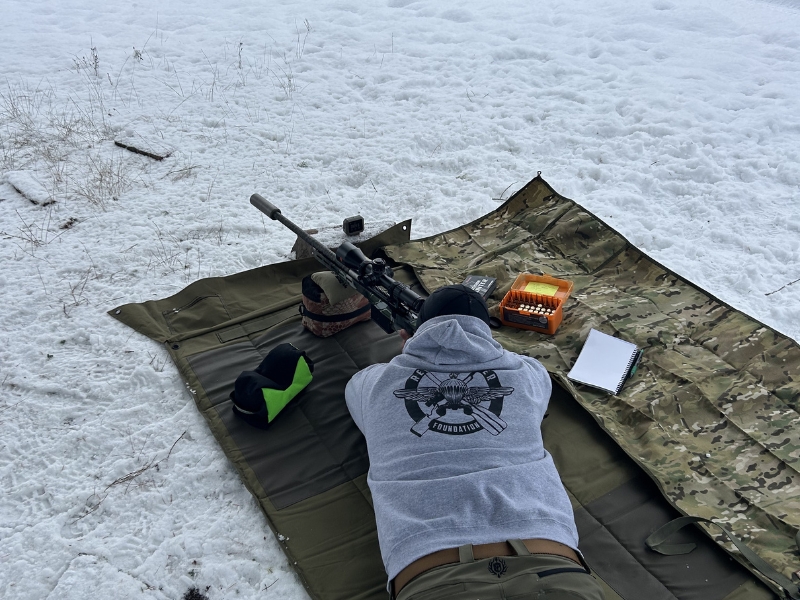
The initial range trip, after zeroing, I performed strings of fire at 654 yards and 1143 yards. This was done to verify tracking and click adjustments on an already proofed rifle and custom handloaded ammunition. Tracking and click adjustments were correct, with impacts matching the elevation solution at both distances.
Durability Testing
At this point, the durability portion began. The rifle was strapped to my EXO pack on the outside just as it is for hunts, and also riding shotgun in the side-by-side. It accompanied me on weeks of scouting, trapping and rides in the mountains that exceeded 350 miles. Bouncing, rattling and tipping back and forth was the norm.
Second range trip targets were engaged at 980—or so I thought they were. A ride downrange resulted in the dreaded “no impact, no idea” situation.
After verifying proper elevation solution and environmentals, a trip back to kindergarten at 100 yards took place. Without even hitting paper I knew there was an issue.
Turns out, the zero stop ring was loose—as in freely spinning on the stud. The turret itself had not moved, but the collar had shifted enough that the stop no longer indexed at true zero.
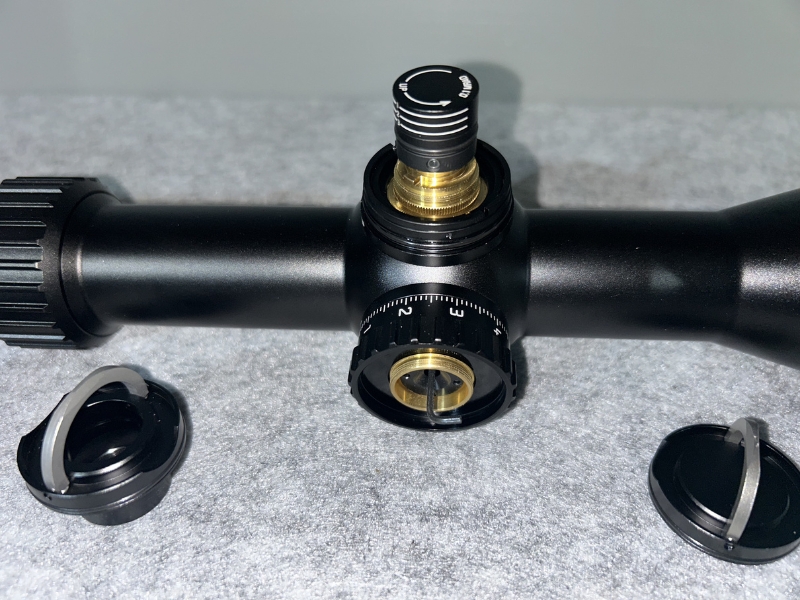
Back to the bench, referenced the manual—which does not include any torque specs, nor does the video put out by Leica—I re-zeroed and tightened to a past snug position as equally as I could.
Frustrated by the loss of custom handloads, but relieved this happened at the range and not on a hunt, I resumed evaluations.
Next range outing shots were verified at distances out to 1260.
I then proceeded to conduct holdovers on targets out to 650 yards without dialing. The mil holdovers were true and accurate. The wind calls throughout the shoot were no greater than 0.8 holds and effective as well.
In fairness, the zero-stop failure may be contributed to my hesitation to crank down on it, I’ll never really know. The exact verbiage per the Leica manual is “Don’t use too much force!” This is why torque specs are needed on precision equipment!
Leaving the range with confidence restored made for a good day.
Optical Performance
- Spotting shots were possible with this scope, but became limited at higher mag ranges.
- The reticle is usable on 5x in thick cover, but is harder to pick up quickly in low light.
- Target resolution was great to 1k yards, targets beyond were visible but not as sharp.
- Excellent mirage readability due to precise parallax adjustment.
- Edge-to-edge clarity is very good, along with a very forgiving eye box.
- Unknown range estimation using the mil formula was performed out to 800 yards successfully.
Field Use
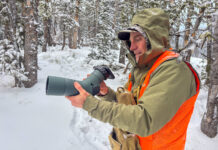
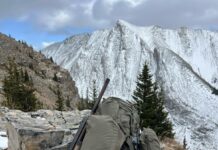
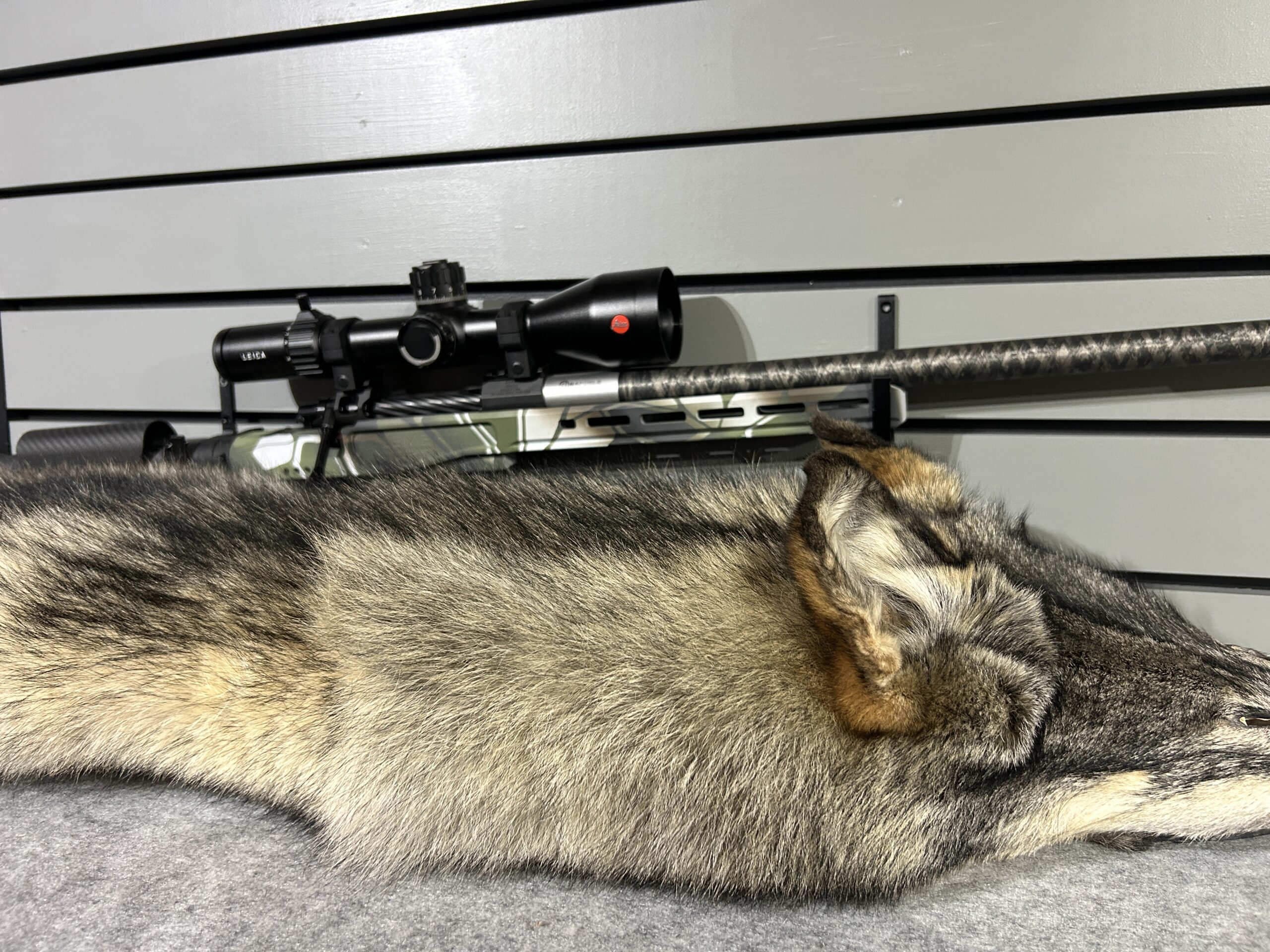
This scope was along on several wolf hunts in the high country, where snow was either falling, blowing, or ever-present on everything.
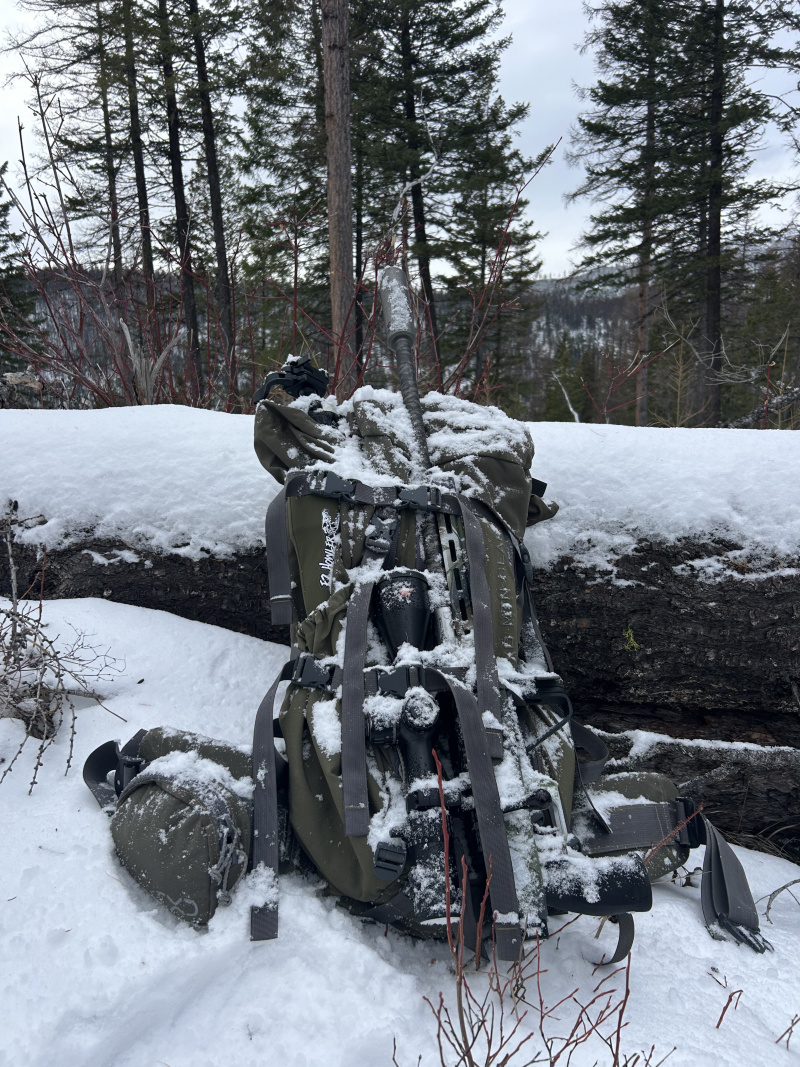
Several times with the rifle strapped to my pack while climbing, I fell, and the eyepiece—with no scope cover—became stuffed with snow. A quick wipe of a gloved finger and no worse for the wear, I was able to make a 756-yard shot across the canyon from my tripod on a large male. The 56mm objective helped maintain brightness and a clear sight picture, which was crucial in the waning light engagement on a predator who rarely stands still.
Hits
- Low light ability
- Tracking and return to zero
- Mil adjustments are tactile and firm
- Durability and function
- Edge to edge clarity, clean reticle
- Reading mirage for wind calls is excellent at all ranges due to tight and precise parallax adjustment
Misses
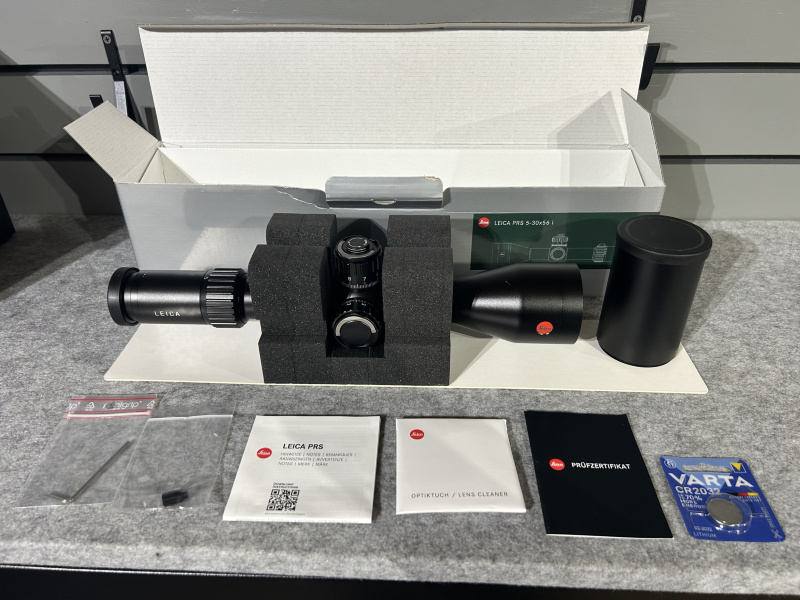
- Scope caps=garbage. They do not stay on, are flimsy and I lost them first trip out. This class of optic should come with better caps, or none at all.
- Instruction manual — have to scan an image to then input your specific product, then download manual. Requiring a smartphone and service not conducive to many places out west, a printed copy in English should be in the box.
- No provided torque specs for zero stop, as covered in detail earlier.
Final Thoughts
After a full season of hard use, the Leica PRS 5-30x56i proved itself to be a serious long-range aiming device. Optically, the scope performed well. Image quality and target resolution are solid, and once the zero stop was properly secured, tracking and return to zero were consistent, reliable, and repeatable.
In actual field use and extended range shooting, the scope performed exactly as a purpose-built long-range optic should.
This scope is intended for shooters who want a clean mil-based reticle to routinely dial and engage targets well past typical hunting distances.
Comment or ask Dave questions here.