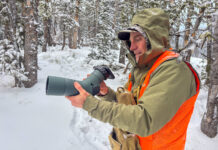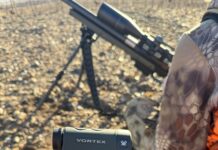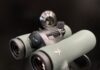










Rural Oklahoma is a new and interesting place for a Montuckian like myself. This spring I took a trip there with some other writers and content producers to get a look at some of the new items Zeiss Hunting and Nature has coming to the shelves for hunters. We stayed at the historic Cross Bell Ranch and put the upcoming products to good use across the ranch’s ranges, hills, and pastures. Subjects were plentiful with deer, pigs, vegetation-controlling goats, and wild mustangs dotting the landscape in every direction.
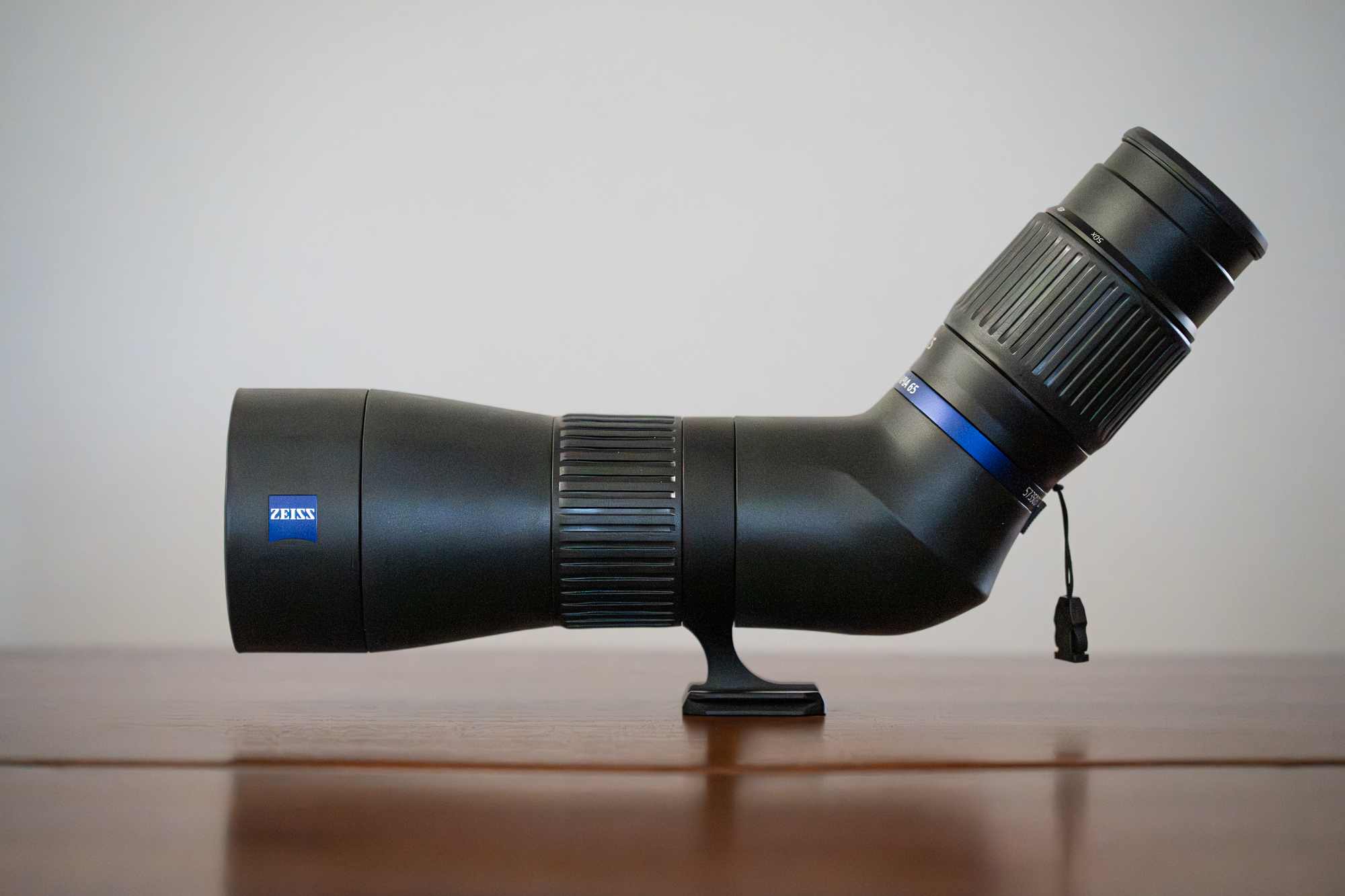
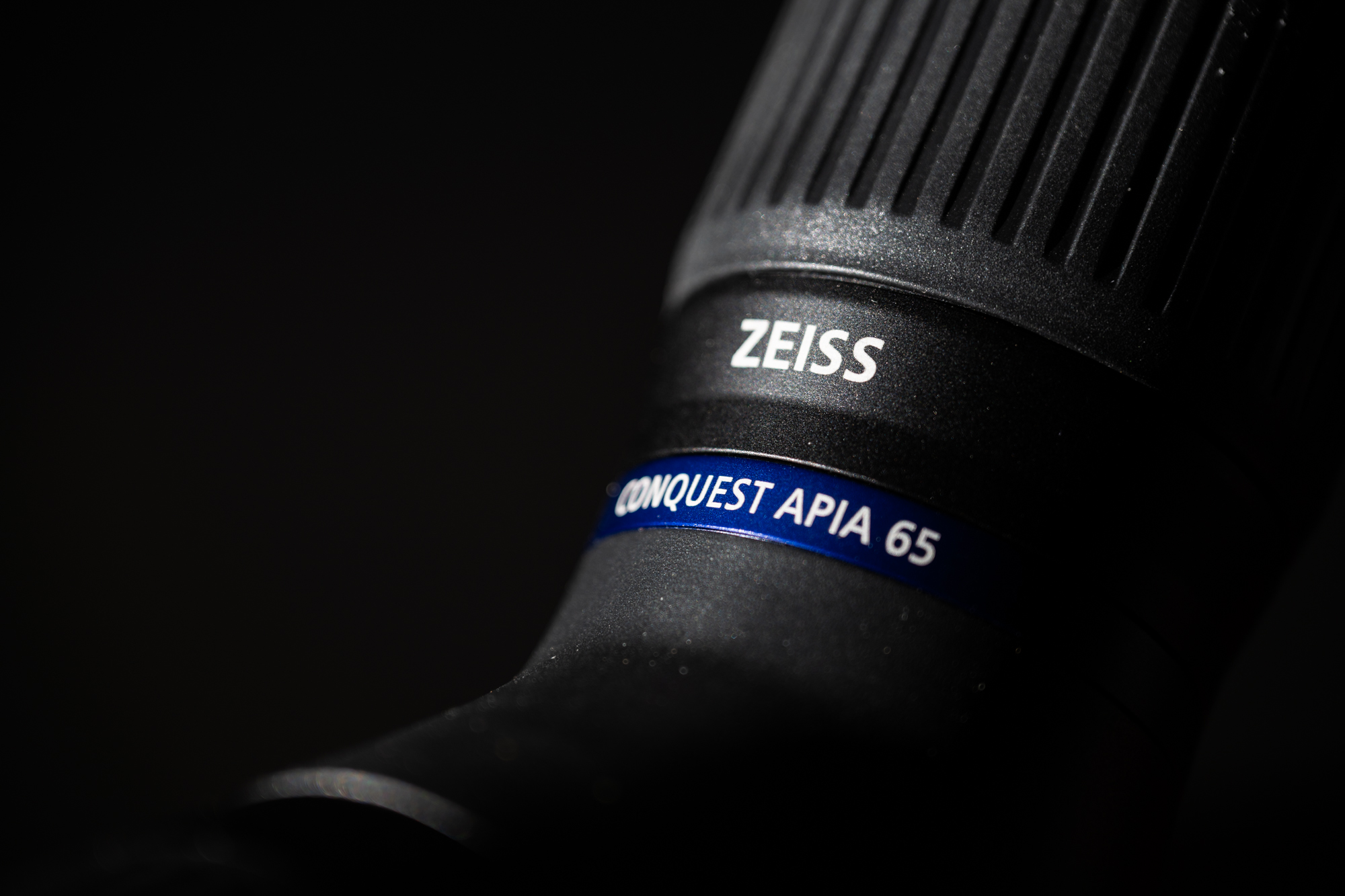
Zeiss Conquest Apia 20-50×65 Spotting Scope
“Zeiss Hunting and Nature” is a new company spinning off from the Oberkochen-based Zeiss that hunters are long familiar with. German investment firm palero has taken over the sport optics wing of Zeiss, and steps in as the new owner. They take Zeiss technology like T* multicoating with them, as well as the engineers and staff. Zeiss Hunting and Nature will stay based in Germany. Zeiss has long produced sport optics around the world, and Zeiss Hunting and Nature will continue to use worldwide resources to produce their new products.
Zeiss Hunting and Nature isn’t slowing down with this change, and has actually increased its product development timeline, with several new products planned for introduction in the near term, even as the business transition continues and should be completed this year.
One of those new products is the Zeiss Conquest Apia 65mm spotting scope with 20-50x eyepiece. I have been able to use this new spotter both here in Montana and while in Oklahoma. I put it to the test in the woods and at home for my usual optical evaluations.
Features
The Apia is a full-featured traditional refractive optic spotting scope with a removable angled eyepiece. Hunters familiar with 65mm spotters will notice the sleek, compact build of the spotting scope vs. the bulk of some competitors.
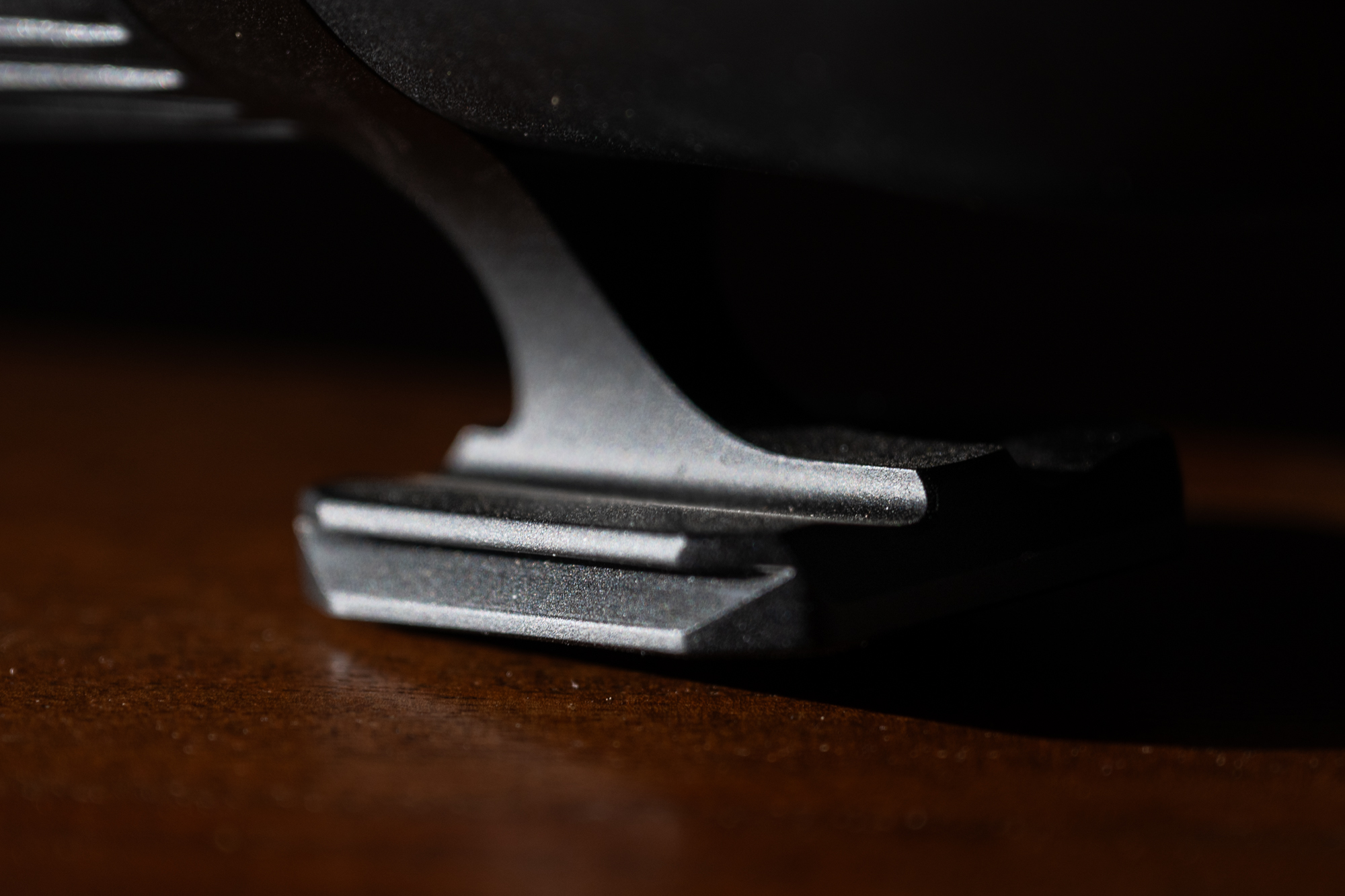
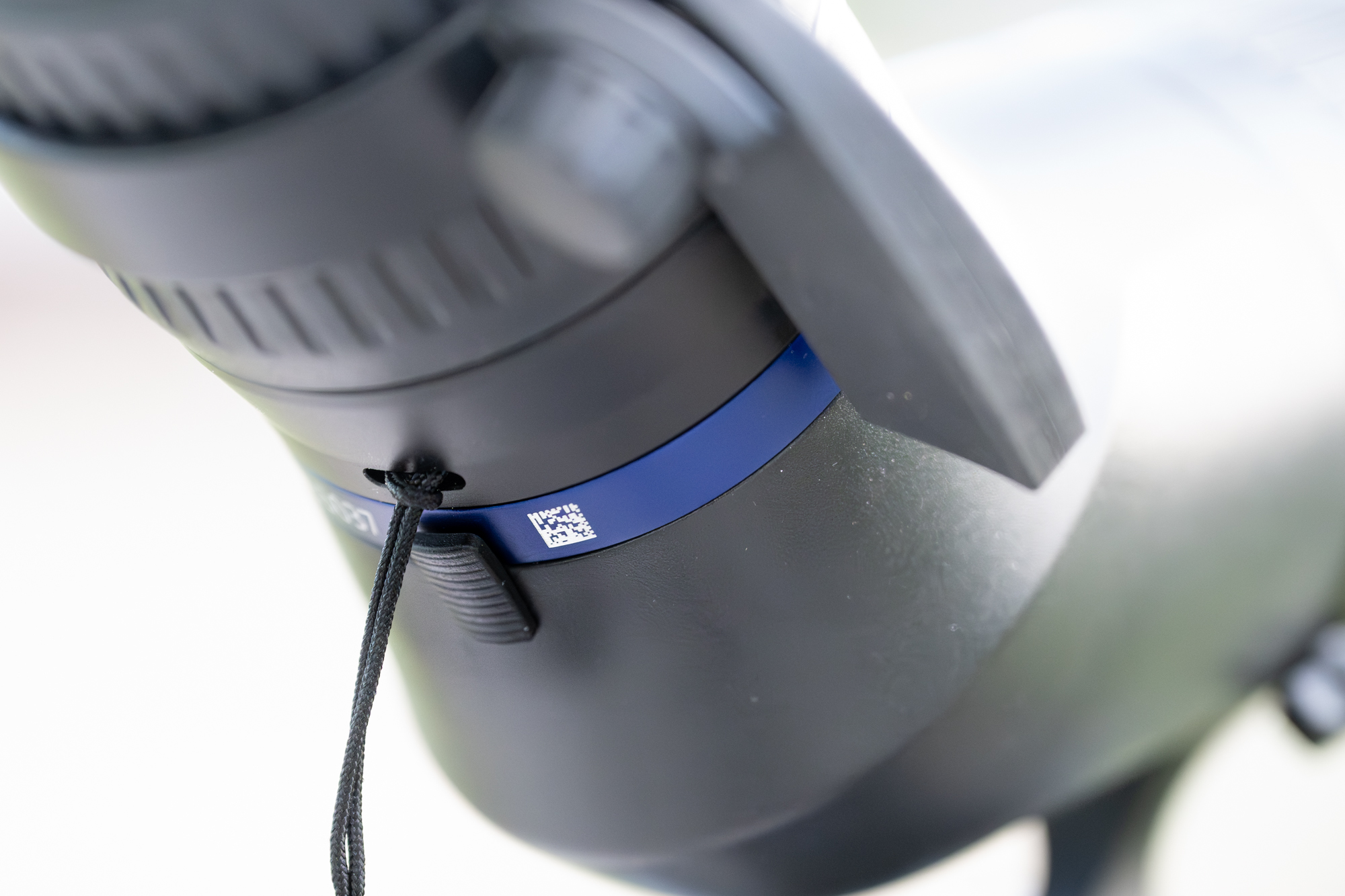
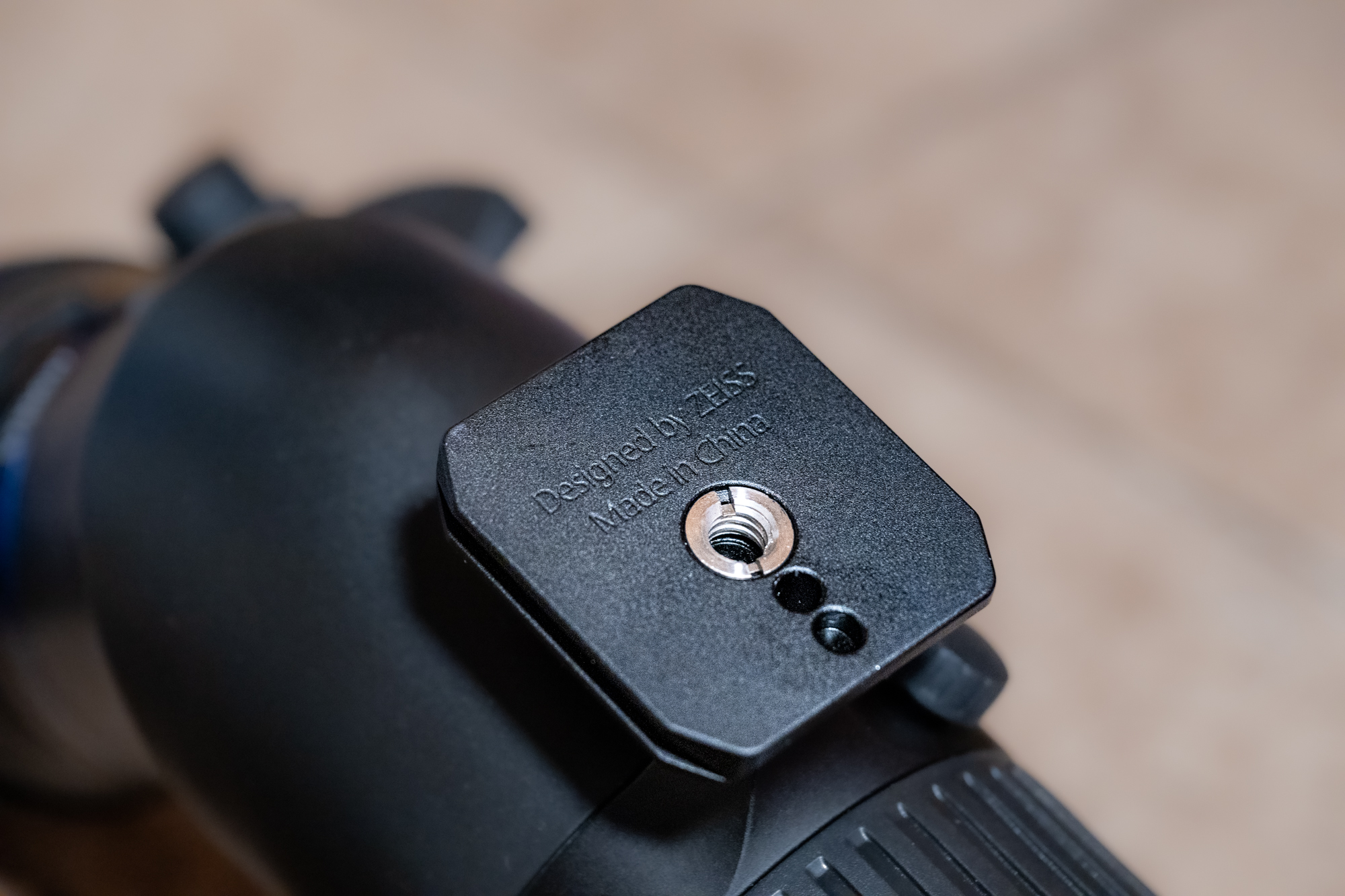
The Apia is fully rubber armored, including the helical focus ring and eyepiece magnification ring, which both feel smooth and damped with firm resistance. The Apia has an effective integrated sliding sunshade. The Apia comes with a detachable throw lever that friction fits with screw adjustment over the magnification collar. The rotating tripod mount collar has audible, tactile clicks every 45 degrees, and the foot is cut with an ARCA-Swiss compatible dovetail. Yes!
The optical system claims 87% total transmission. Zeiss says the design includes ED (extra-low dispersion) glass, aspherical elements, and field flattener technology to minimize various optical aberrations. We will see how they did later in the review.
I like the choice of a 20-50x zoom eyepiece for a 65mm spotter as it allows for a big exit pupil at the low end and high magnification at the high end without getting too small an exit pupil with the 65mm objective. The eye cup screws in and out smoothly and holds sufficiently wherever the hunter leaves it.
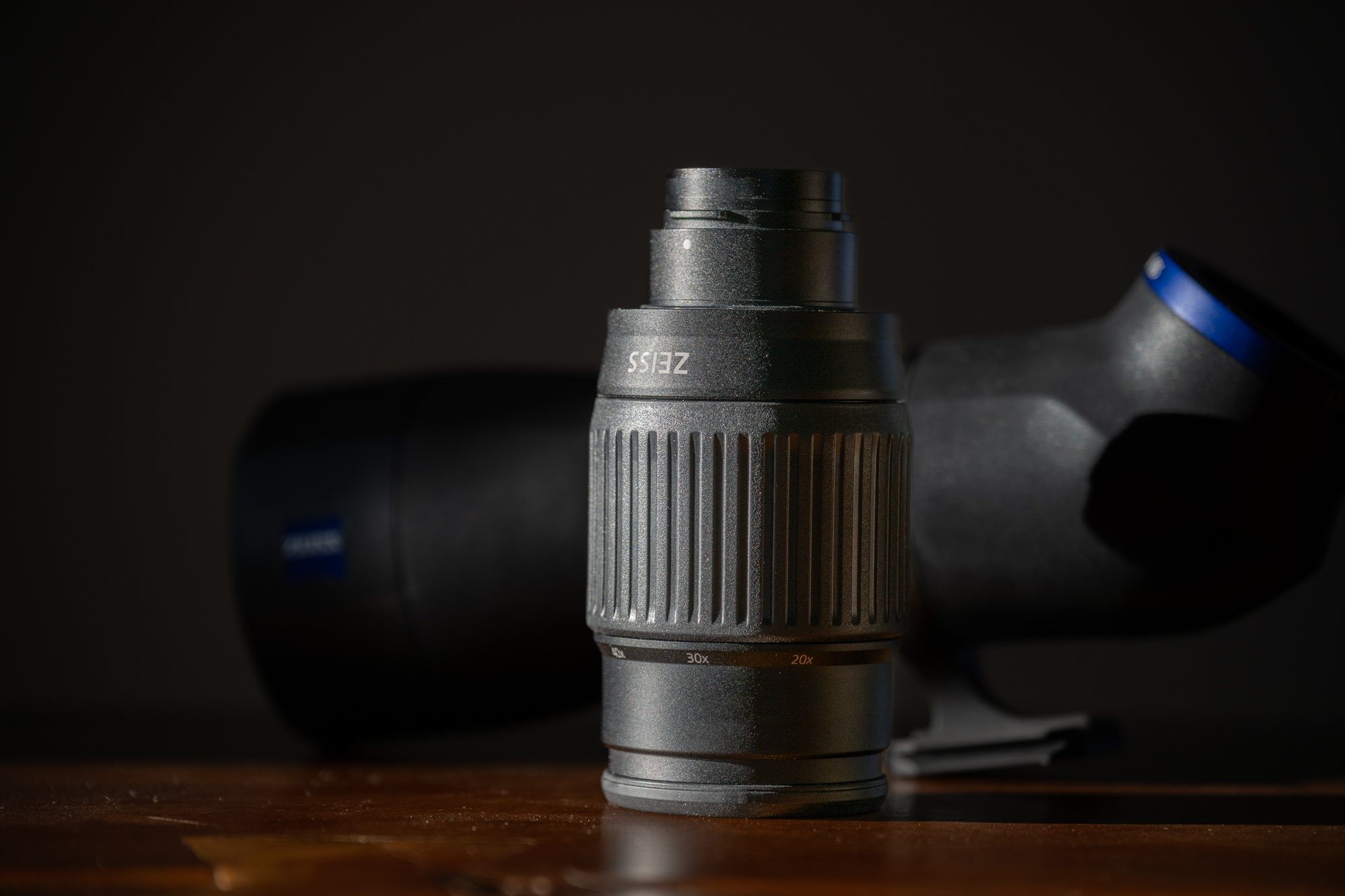
It’s worth noting that although there is only one announced eyepiece for the Conquest Apia 65, the eyepiece is removable with a button-released bayonet mount. This certainly leaves room for future eyepieces for specialty uses and/or expansion of the Apia line with other bodies. We will have to wait and see.
Build Quality
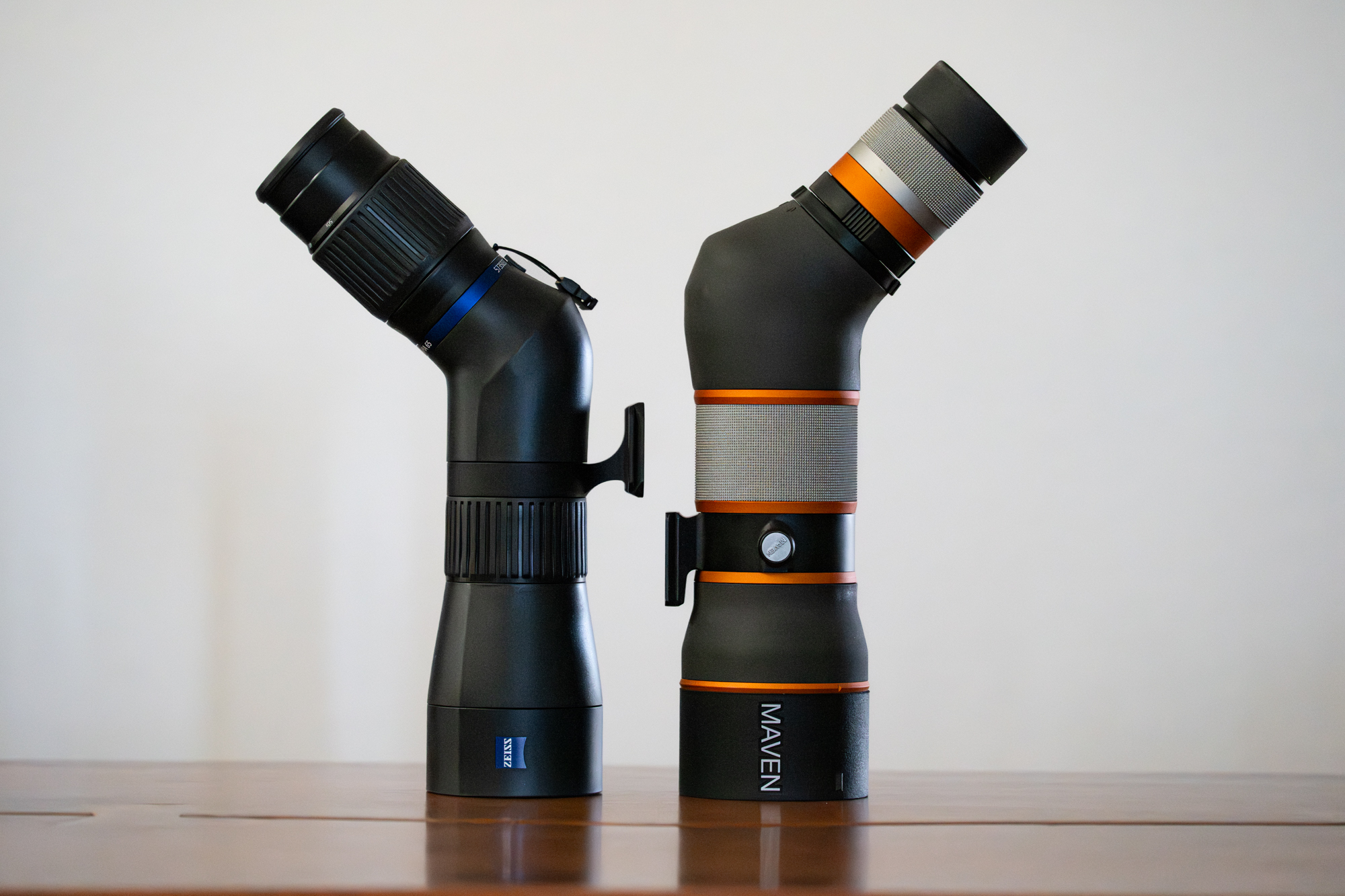
At the listed retail price of $1499.99, the Apia is certainly not an “entry-level” spotter. The spotter is at a competitive price point and faces tough competition from spotting scopes like the Maven S.3A, which I consider one of the best performers in the segment. However, the Apia saves the hunter around $500 compared to the Maven S.3A and differs in other ways, which we will look into ahead.
Like the Maven, the Apia has high-quality rubber armoring over its entire body, including the control rings. The armor is finely textured and smoother than the Maven.
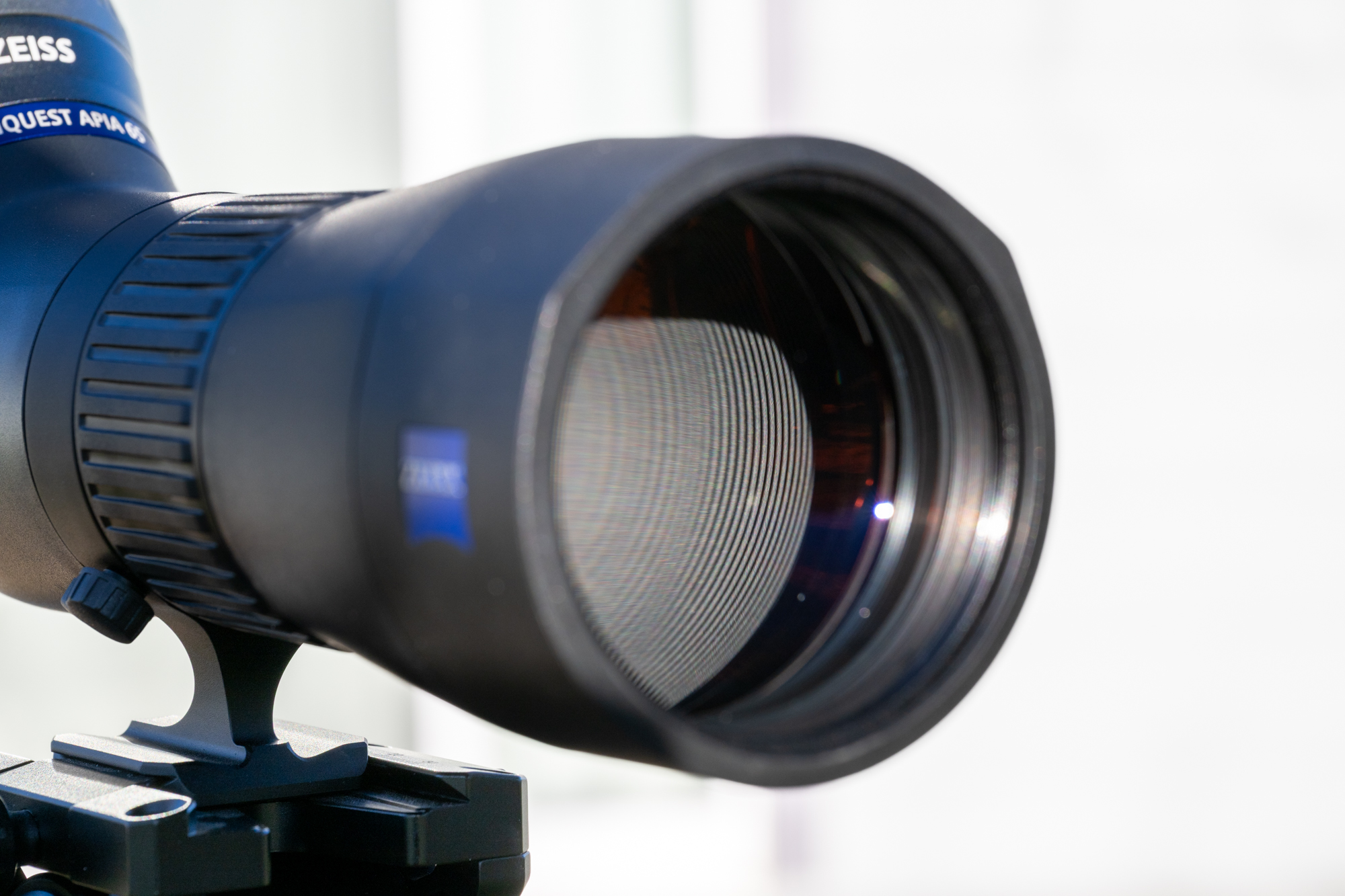
Fit and finish are very tight. Interior examination shows the body is nicely baffled with great blackening applied to prevent stray light. Coatings appear to be of high quality and evenly applied.
Optical Performance
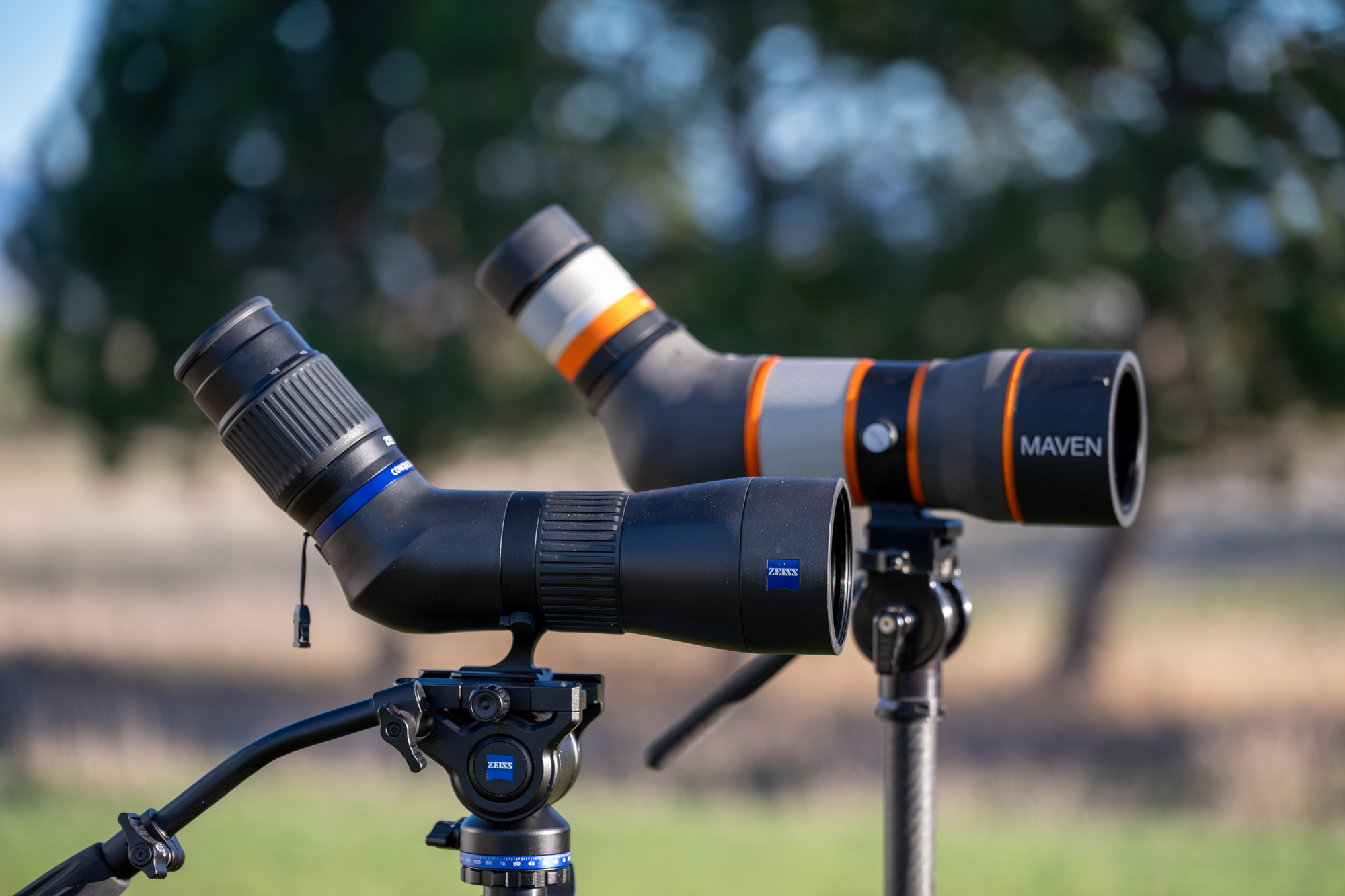
I had a good comparison optic available for the Apia 65 in the Maven S.3A. These two optics have similar feature sets and compete in the same tier of the market, although the Apia is about $500 less expensive than the S.3A.
Resolution Testing
In close-range resolution chart testing, the Apia and S.3A were highly competitive. With both scopes set to 40x magnification, the S.3A and Apia resolved the same element on the chart, although the S.3A did so more cleanly. The Apia was able to resolve one smaller element at 50x. I should note the eyepiece I have for the S.3A is the 20-40x wide angle, and Maven does offer a higher magnification 24-52x eyepiece as well.
At long distance, I set up an 8X11 eye chart at 493 yards. Under partly cloudy conditions with occasional mirage, I resolved one line smaller on the chart with the S.3A with both scopes at 40x, but the Apia resolved that line and one smaller line at 50x.
In low light testing, examining hillside trees at around 1.5 miles, both scopes performed admirably, with the S.3A staying useful for just 2 minutes past the Apia, with both scopes at their maximum exit pupil on 20x.
Distortion
Zeiss advertises field flattening technology in the Apia, and the results are visible with both distortion and field curvature being well controlled in the spotter.
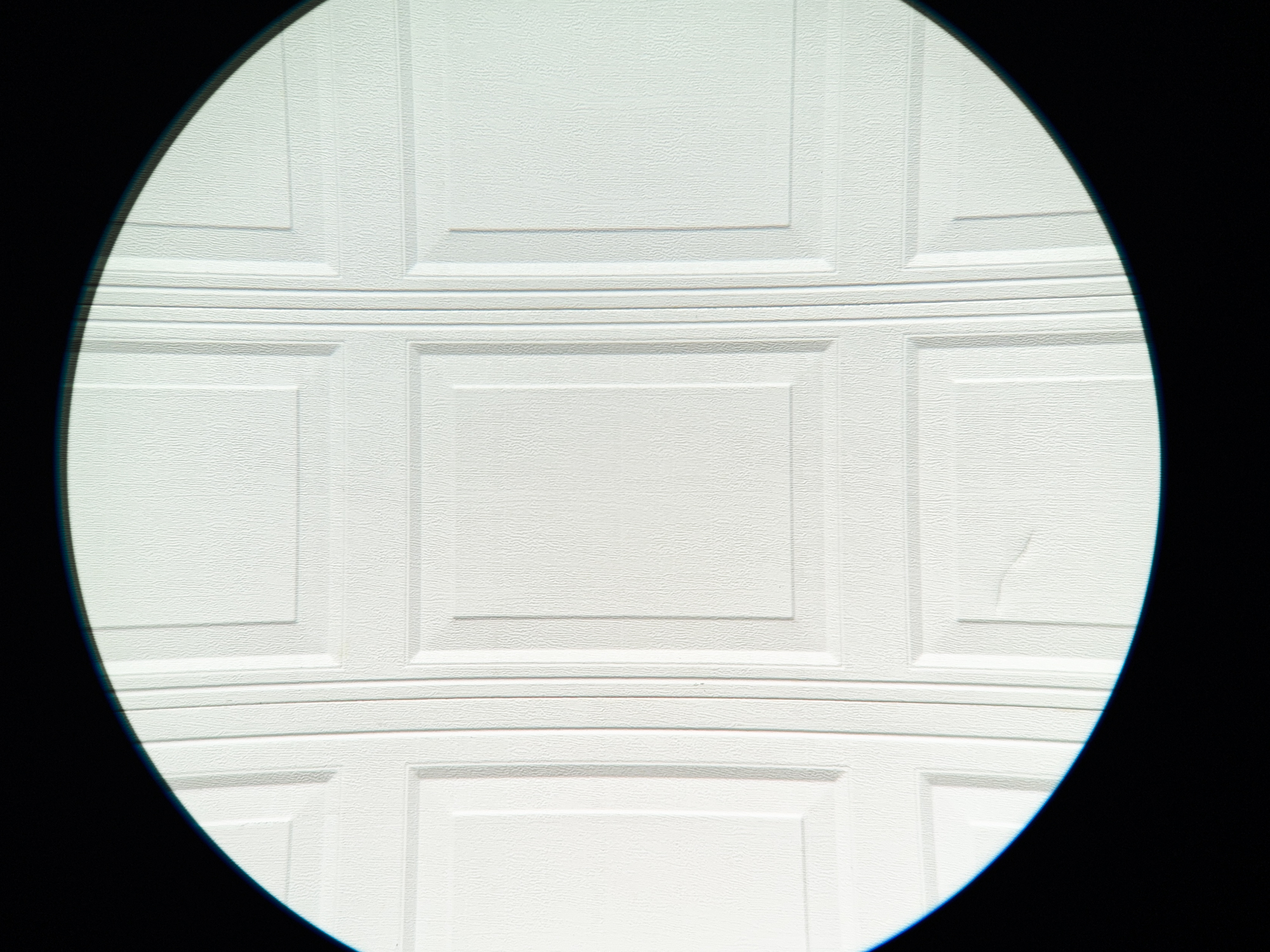
At 20x, pincushion distortion is visible on a target with straight lines, but still well controlled. It is not noticeable during normal viewing.
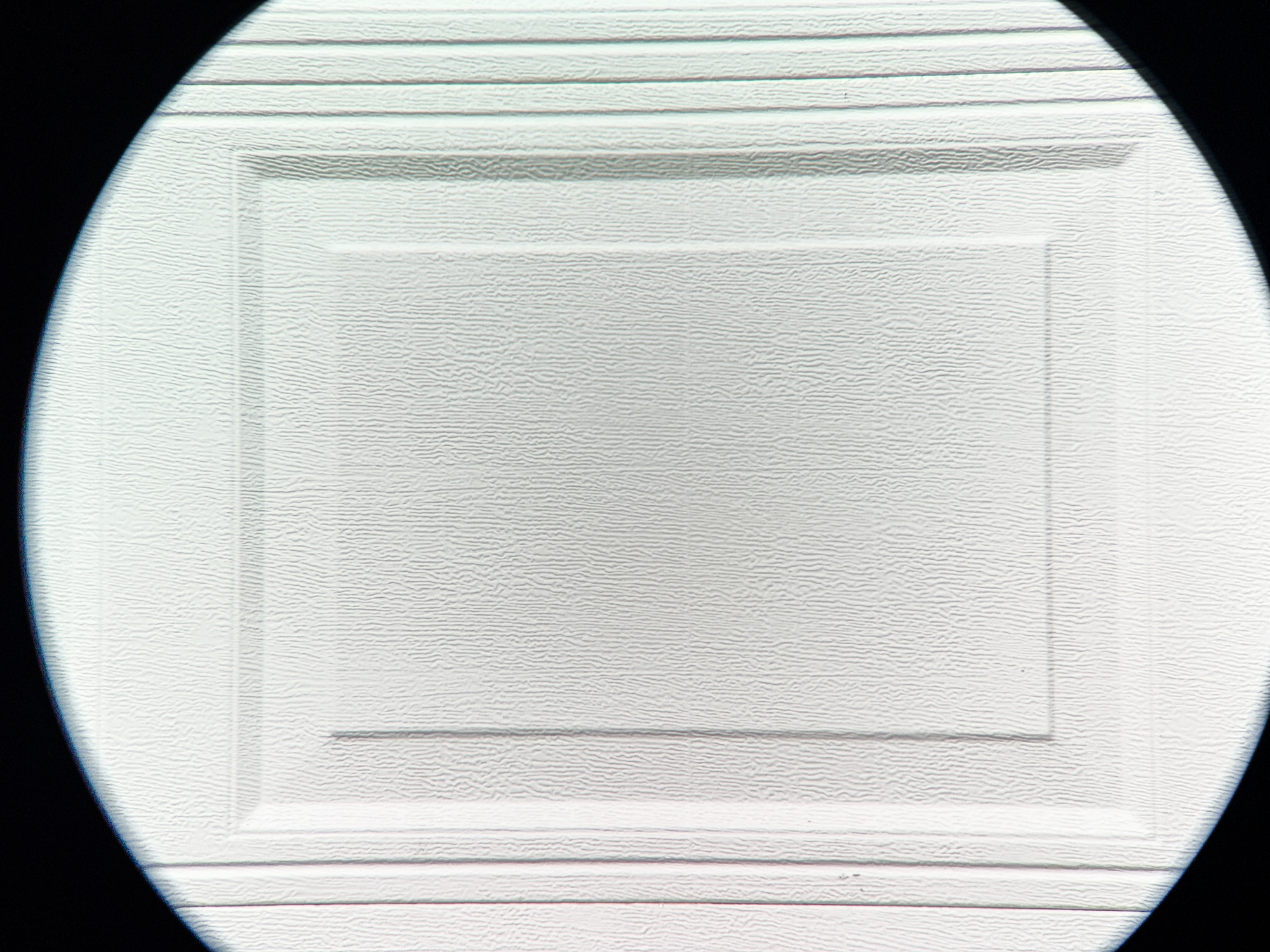
At 50x, pincushion distortion is barely visible even on the straight lines of my garage door pattern.
Chromatic Aberration
Zeiss gives us another good optical performance in the category of color fringing due to chromatic aberration.
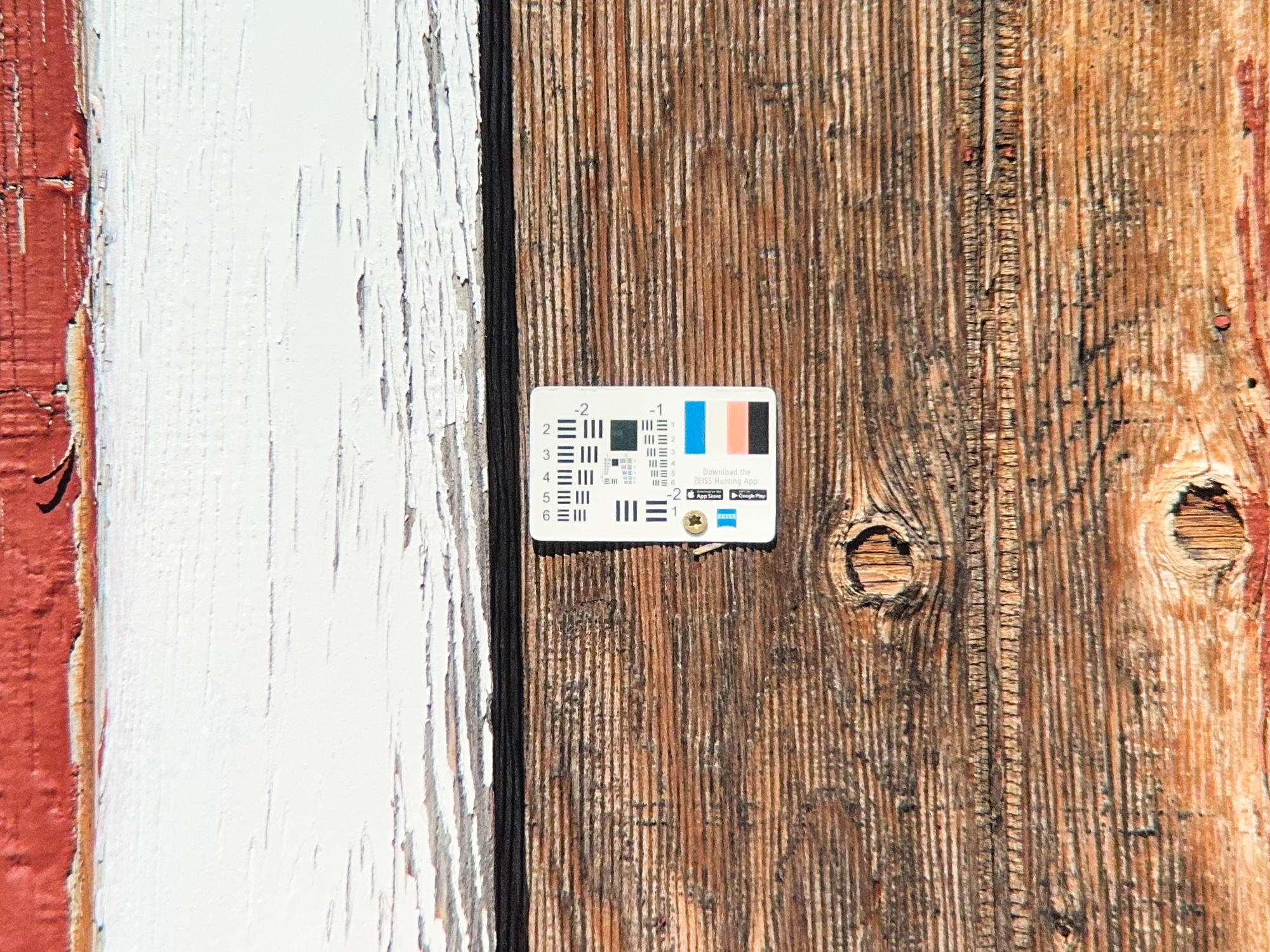
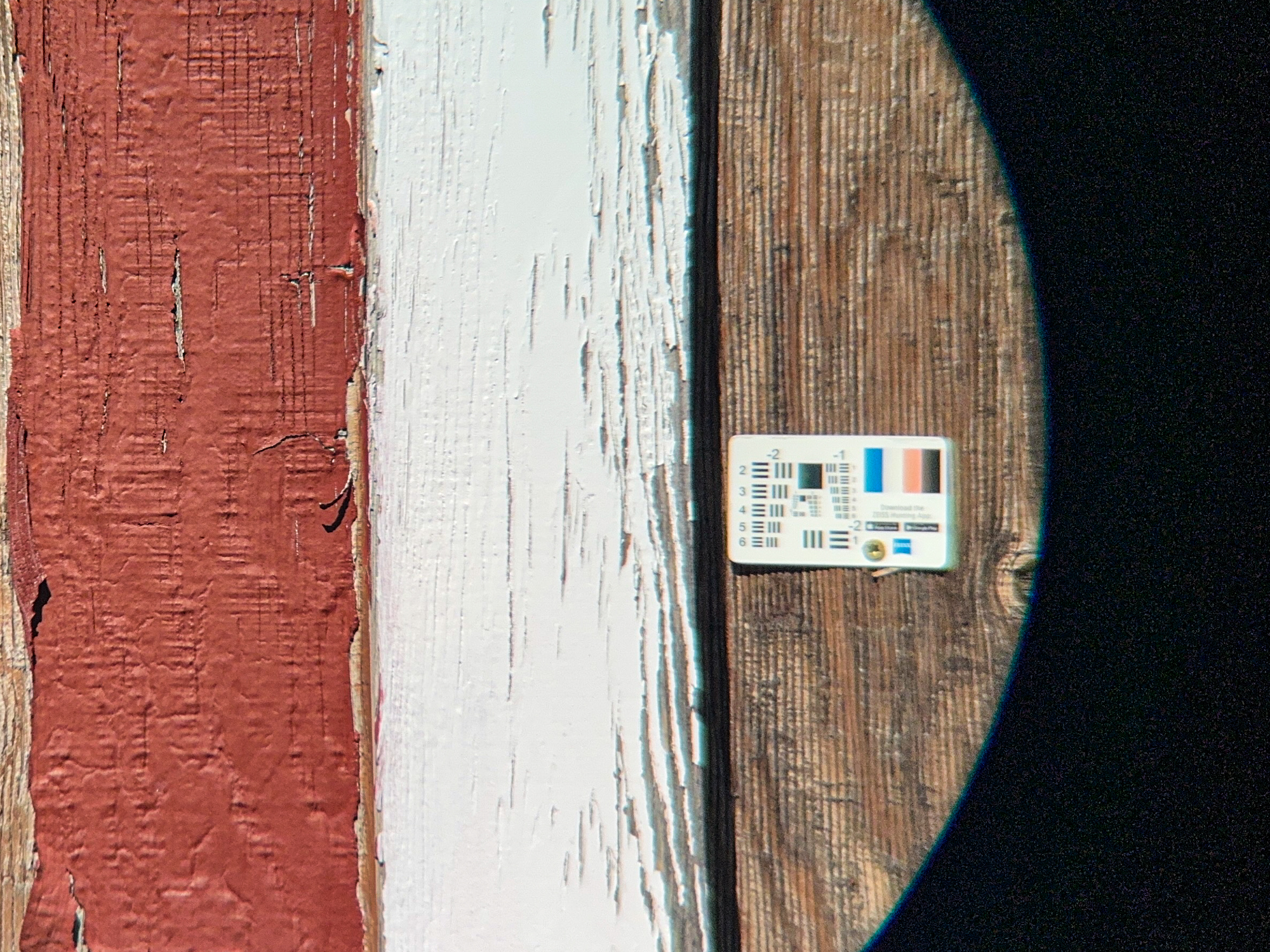
At 20x, fringes are nearly invisible at the center of field, while they are starting to show up at the very edge, although still at a mild level. NOTE: These digiscoped pictures are intended to show relative color fringing, not resolution. The images even at the edges are quite sharp to the naked eye.
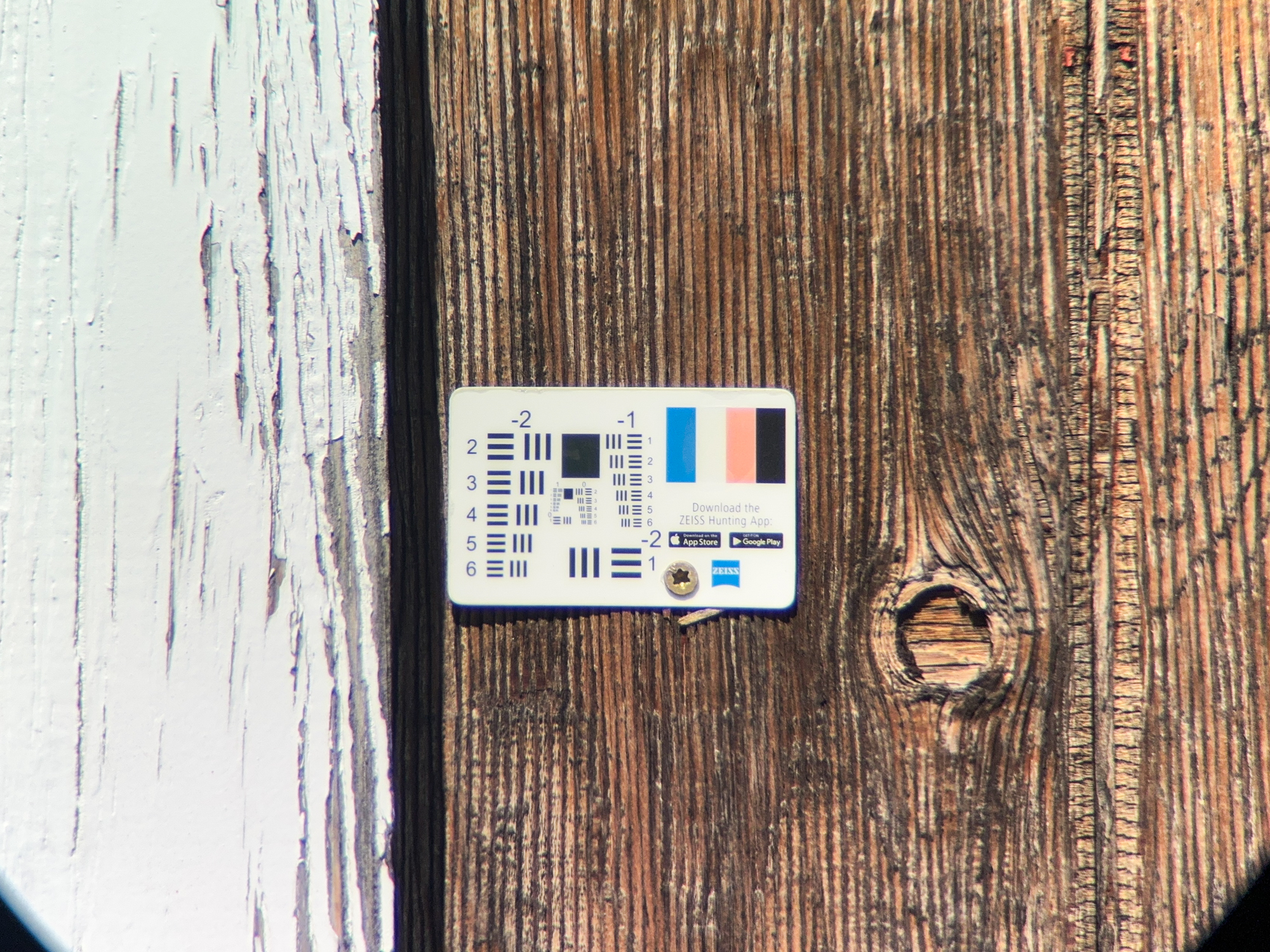
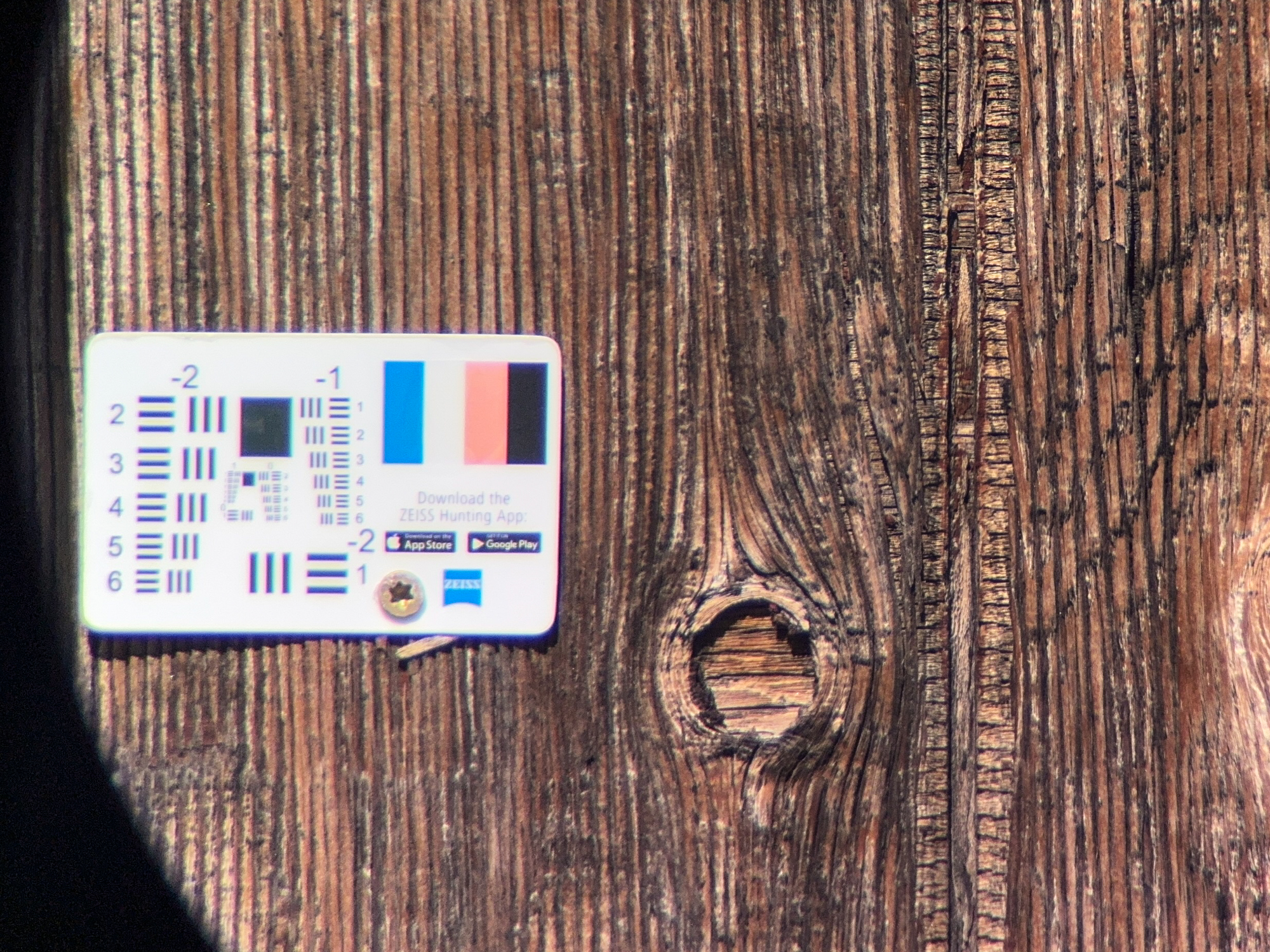
At 50x, fringing is still fairly well controlled, although some very small amounts can be seen in the middle, along with a reduction in contrast. At the edge, fringing is readily visible, although this is common for spotters in this price range.
The contrast issue was interesting and seemed to show up with fringing. The scope is still pretty sharp at 50x, and the extra magnification is useful, but the scope does lose contrast starting around 40x. The eyepiece has very strong optical performance from 20x-40x, and the hunter just needs to know that contrast will go down above that level, but the 50x does offer additional detail.
Field of View / Eye Relief
The field of view spec for the Apia 65 is really good. With a 20x spec of 144 ft. at 1000 yards, the Apia is actually 3 feet wider than the S.3A. Even at 50x, the field is a pretty generous 81 ft. at 1000 yards.
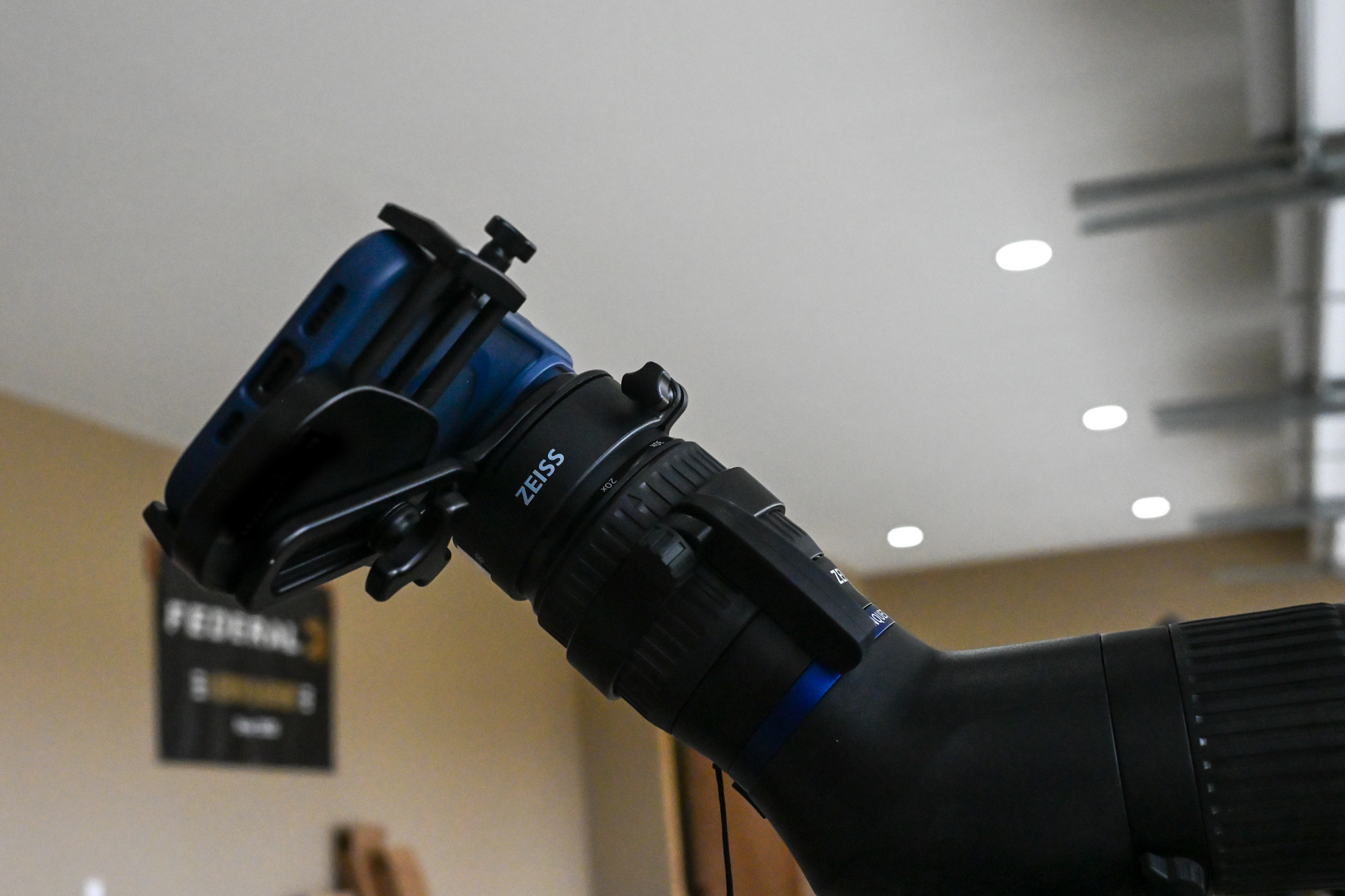
The listed eye relief is a sufficient 17mm. This is pretty standard for 65mm scopes with a zoom eyepiece in this price range. The S.3A is listed at 17-16mm, and the Apia is really similar to get behind. The eyecup is a good design for getting close with glasses, and I didn’t have trouble with either the naked eye or glasses for observation. As far as digiscoping goes, I had no trouble getting a good field of image with the eyecup fully collapsed. This was good given that the weight of my phone tended to collapse the friction eyecup when mounted with a ScopCam digiscoping adapter.
Field Performance
Field use is where the Apia spotter excels the most. There is just no denying the advantages of a smaller and lighter optic when hiking, backpacking, or even horseback riding in the backcountry. The Apia is about a 1/2 in. shorter than the already short Maven S.3A, but the real savings come in the weight where the Apia’s 3 lb. 5.8 ounce measured weight is over 6 ounces less than the S.3A’s 3 lb. 12 ounces.
In the field, this difference seems even larger than it is, with the Apia “feeling” just tiny and disappearing into the spotting scope pocket of my backpack.
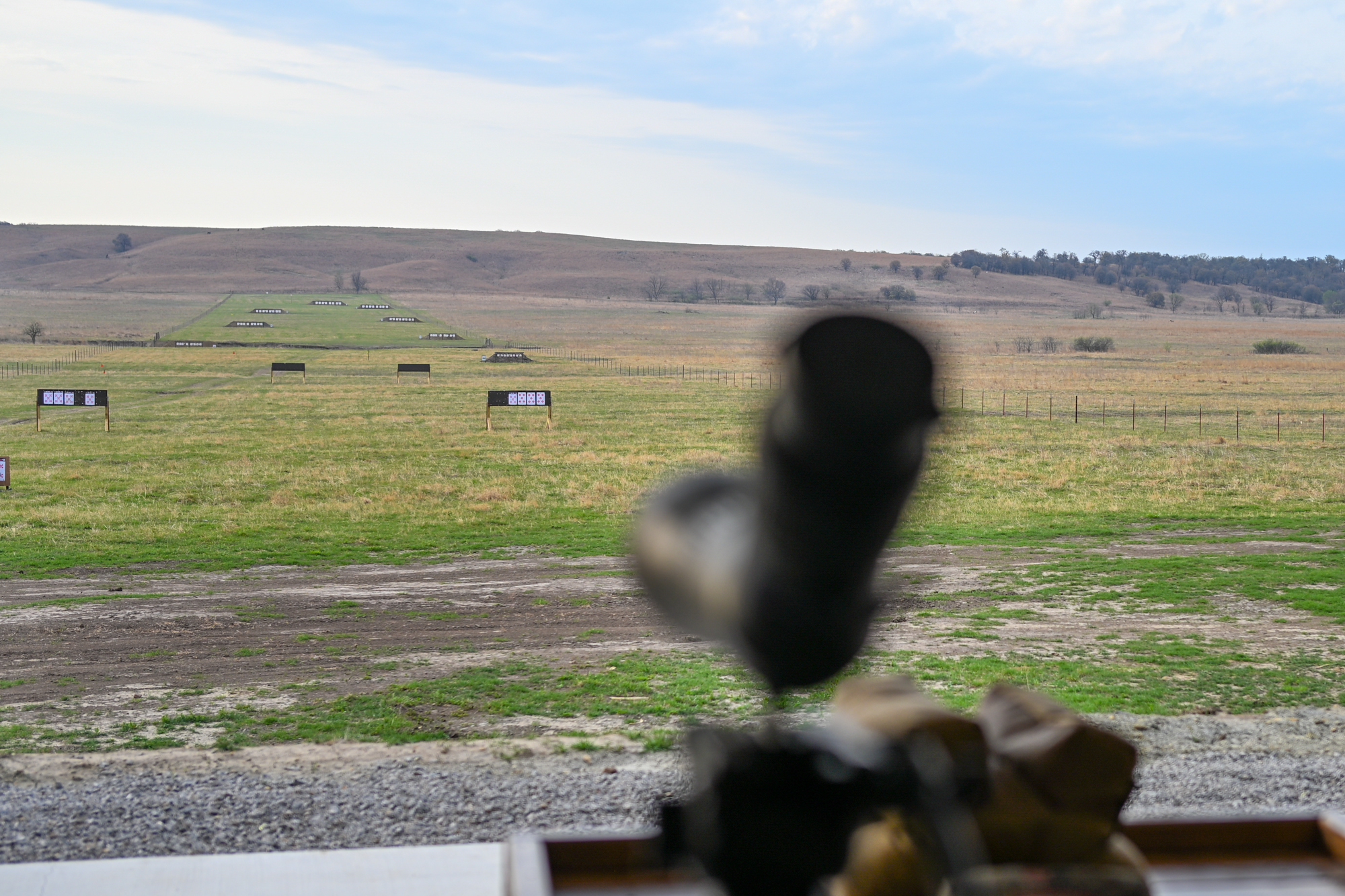
The optics are very good when glassing for animals and antlers. Doing some long-range shooting work, targets were resolved out to 1200 yards without issue, and trace was … traced.
Accessories
Included accessories include a one-piece, pinch-open objective cap, rubber ocular cover with a buckle tether, and a paddle-style throw lever that screws over the magnification ring.
Available accessories include a forthcoming stay-on soft case (Price TBD), two high-quality “Pro” tripod options, and a proprietary digiscoping adapter.
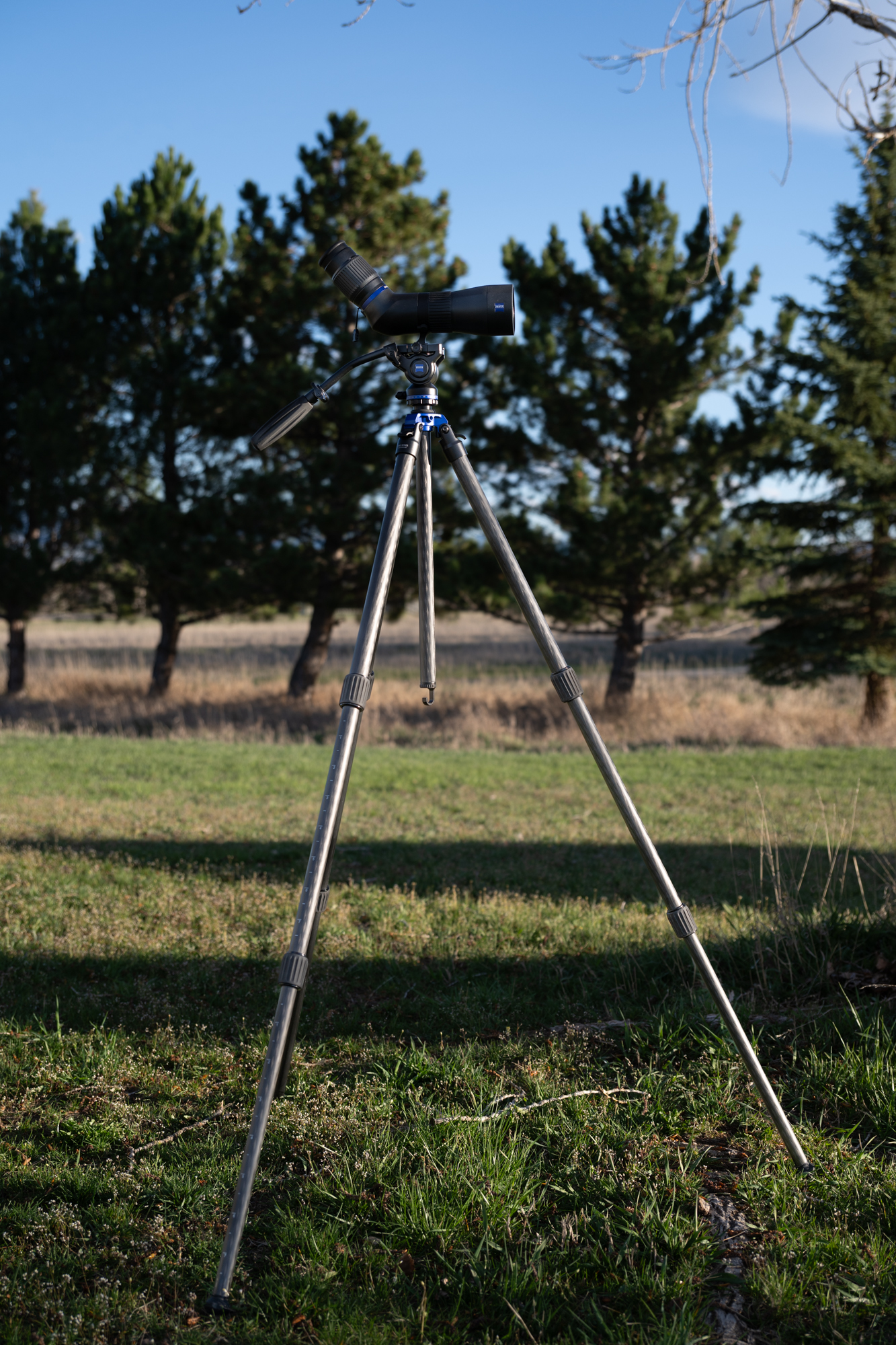
I was able to use the “Pro Lightweight” Tripod (Retail $699,99) kit, which includes sturdy carbon fiber legs and column, quality aluminum hardware, and a smooth, strong Zeiss-branded fluid head. This tripod could probably use its own full review, but I used it for everything from observation to shooting, and it showed a lot of promise.
I only briefly saw the digiscoping adapter at the Oklahoma event, but it was a pretty neat universal system that was easy to adapt to different phones and cases with a clamp and attached to the Apia via a magnetic system. Look for more information on this coming accessory in the near future.
Conclusion
Zeiss is attacking the heart of the market with the Conquest Apia 65mm scope. It offers solid optics, great build quality, expanding accessory options, compact form, light weight, and great value at retail pricing. The Apia’s optical performance is competitive with the Maven S.3A’s class-leading performance while keeping the low 20x magnification for low light and going all the way up to 50x for maximum detail. But perhaps the Apia’s biggest attraction is that it does this at a really impressive weight and size. For backpack hunters wanting full-size 65mm spotter performance without full-size bulk and weight, the Zeiss Conquest Apia 65 hits the mark.
Comment or ask Matt questions here.