







Carbon Tube and 6016 Aluminum Riser
Last year Prime launched a hybrid aluminum and carbon riser bow that consisted of carbon tubes bridging an aluminum top, middle, and bottom riser pieces. The 2025 Prime Form was something completely new to the archery industry with its epoxied-together dual material riser, but I kept hearing the folks at Rocky Mountain Specialty Gear tell me it was a sleeper of a bow.
Prime Divide
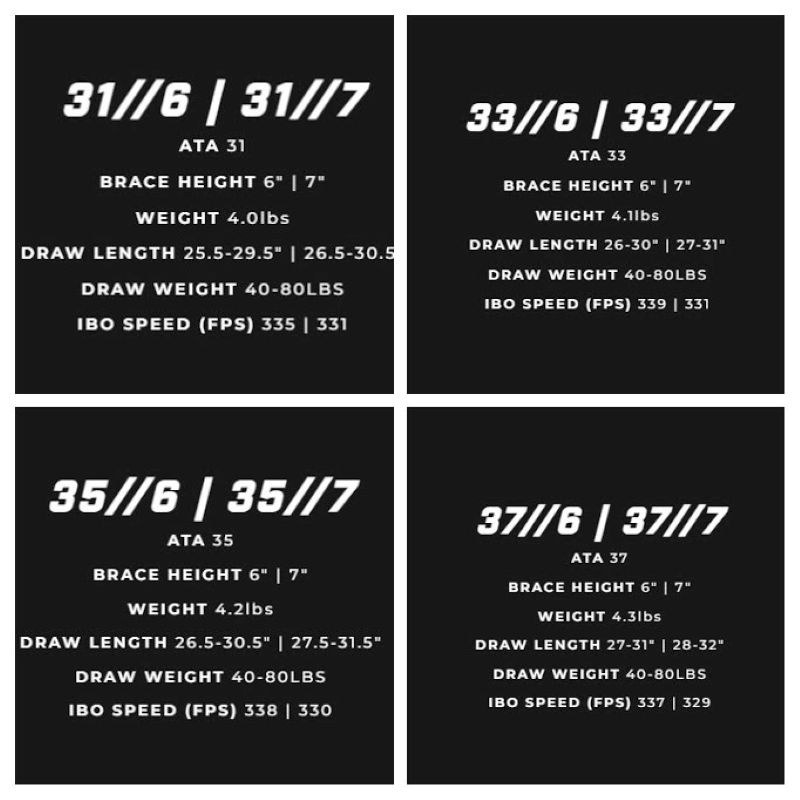
I never shot the Prime Form due to it not being offered in my draw length, but I did take notice when the 2026 Prime Divide series was released. Sporting the same carbon tube and aluminum hybrid riser technology, Prime calls it Advanced Structures Technology (AST), the Divide series is offered in axle to axle lengths of 31”, 33”, 35”, 37”. Unique to the bow world, each axle to axle length is also offered in the archer’s choice of a 6” brace height or a 7” brace height.
Full of Innovation
In addition to the Hybrid AST riser, the Divide brings to the table the draw length specific CORE Cam System found on Prime flagships of the past few years, Center Grip Riser, Nano Grip, and provisions for Picatinny sights, Integrate® rests, as well as Prime’s proprietary TriLite Kickstand and SherpaLite Quiver. To keep stacking on the value, Prime’s Archery Shield Program is activated once the bow is registered, providing a lifetime warranty, free bow tuning help at your local shop, and a new set of strings every other year.
Out of Left Field on Shot One
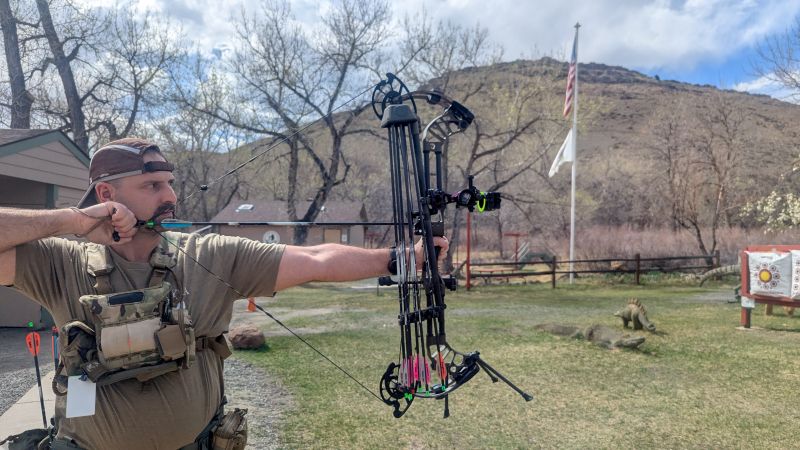
The Prime Divide popped into my line of sight while aimlessly wandering the floor of Western Hunt Expo. The 10’ bow test provided a genuine WTF(flip) moment as the Divide checked all of the boxes that one could imagine, and for me, set itself in a class above the other bows I tried. I ordered one a few days later in the 35” ata / 6” brace height configuration, at 30.5” draw length and 60lb limbs.
Prime’s website has a neat custom bow builder for folks to work through all of the different riser and limb configurations before ordering through Prime’s dealer network. I settled on a Morel colored riser and Bottomlands limbs. Delivery time ended up being a few weeks; I was happy to see Prime’s claimed weight of 4lbs 3 oz was pretty close as mine weighed 4lbs 6oz straight from the box WITH the rubber limb dampers installed.

Dreaded Shimming
I slapped on my ever-trusty Spot Hogg Fast Eddie, ordered up a Hamskea Everest Integrate, and used my Howard’s Total Vise bow press and bow vise to get my Divide set up. Timing was initially off by only ½ of a cable twist, draw length was spot on at 30.5”, and draw weight was equally squared away at 60 lbs.
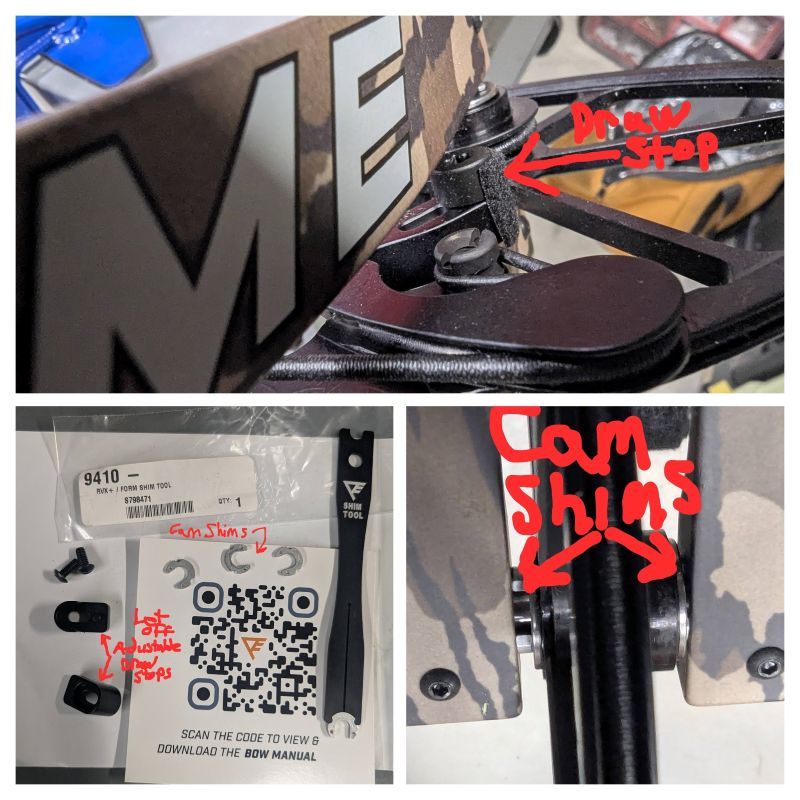
The Divide comes from the factory with cam shims of equal thickness installed on both sides of each cam. Included with the Divide is a thick/thin shim combination for each cam so that the cam can be shifted right or left depending on the archer’s needs. Also included is a set of sliding draw stops for those who wish to fine-tune their let-off and play with slightly shortening draw length to best fit them. What is not included with each Divide is the tool for installing the cam shims.
With both 300 and 400 spine shafts, I was seeing a right tear through paper, and bare shafts were impacted far to the left of fletched shafts. The Divide’s shims are C-style and do not require the axle to be removed; however, I had a bear of a time shimming my cams to the right without the tool. Because the shims are metal and do not flex to fit over the axle like a competitor’s C-style shims, the first shim I would install would fall off while trying to get the second shim on. Prime ended up sending me the shim tool, which solved my problem and shaped my opinion that it should be included.
Bomber Results!
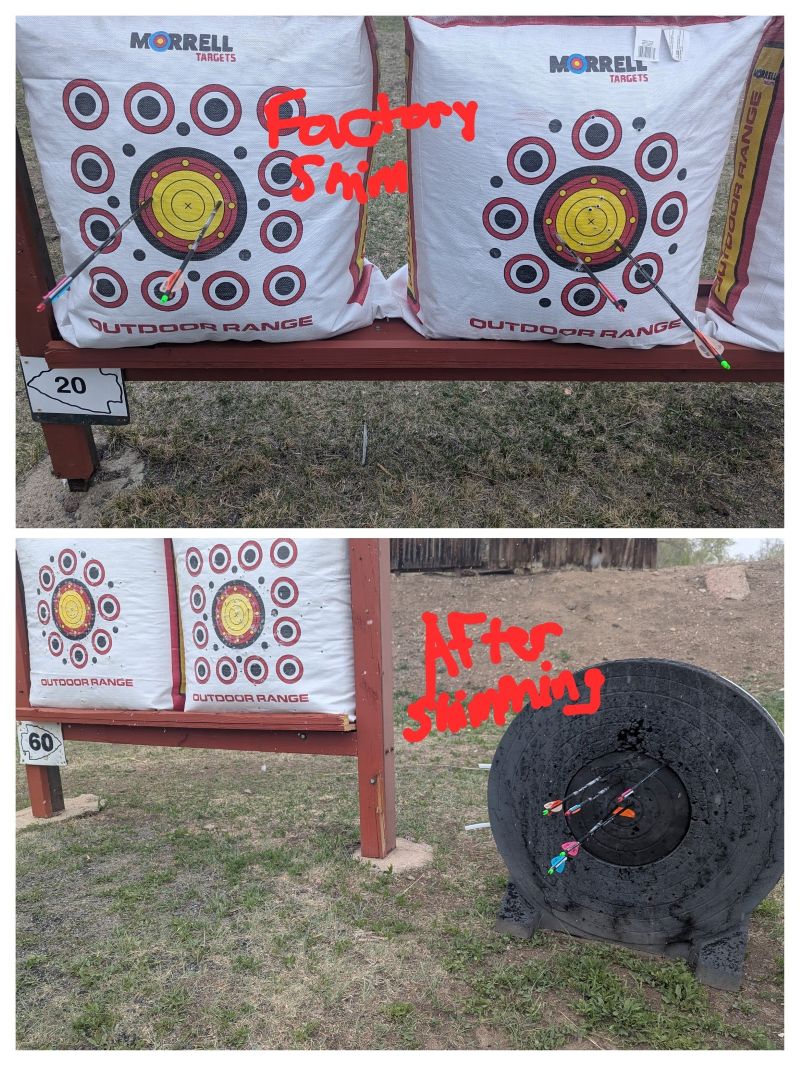
To be very frank, I was bummed about having to shim this bow, knowing that the Divide, and any current Prime bow, does not offer any sort of alternate fine-tuning mechanism like Elite’s SET, Bowtech’s Deadlock, Darton’s Perfect Tune, Mathews’ Limb Shift, or even a finer adjustment range of shims like PSE’s EZ.220 system. REALLY BUMMED. I firmly believe that tuning with and shooting bare shafts offers better results than just broadhead tuning and keeps me, the archer, in check with my form.
Color me wildly shocked when shifting my Divide’s cams to the right to correct the tail right condition produced the cleanest arrow flight I’ve ever shot. All without any other adjustments, and with the original eyeballed centershot and rest height. There’s a huge confidence boost ripping bareshafts downrange to 60+ yards and hitting right with fletched shafts.
Cold Bow Challenge Form Fix
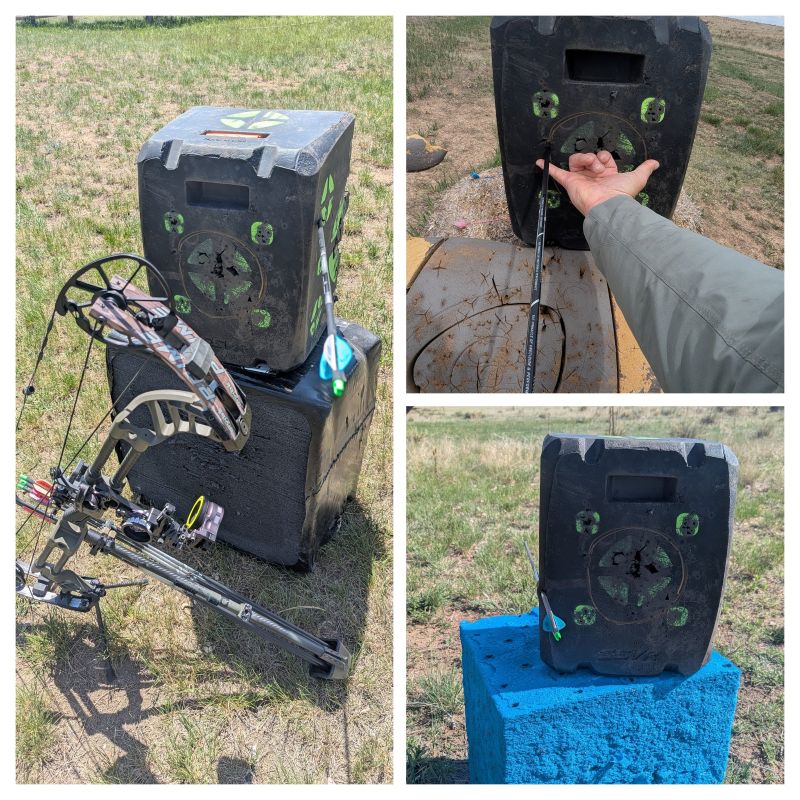
With these tuning results, it was no surprise to me to see my 3-blade and 2-blade Cutthroat Broadheads hitting with the field points and showing unbelievable flight. However, I was getting horizontal misses on both sides of my point of aim.
The Center Grip riser of the divide is just like it sounds; unlike other manufacturers who position the grip below the center of the riser and place the arrow at the center, Prime’s Center Grip places the arrow higher than center and the grip at the perfect center of the riser. I fully agree with Prime that Center Grip offers a more stable float, and more intuition into aiming, but in moving the bow hand position up, it also effectively makes the string angle at full draw (seem) more acute.
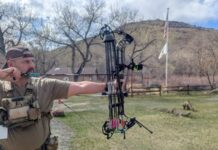
Even though I ordered a 35” bow, I could not rely on a nose to string, three-point (jaw, peep, nose), anchor. My horizontal misses were due to my own lack of consistency in anchor and in aligning eye→peep→sight housing. This clicked with me after the Rokslide Cold Bow Challenge, where I went a pitiful 1 for 3, with, you guessed it, perfectly horizontal misses. Cleaning up my anchor also translated into drastically better back tension, and playing around with Hamskea’s Raptor FS peep size and Fast Eddie’s multiple housing sizes has translated into downrange precision. Right now, I am shooting better than I ever have.
TriLite and Nano Grip For The Win
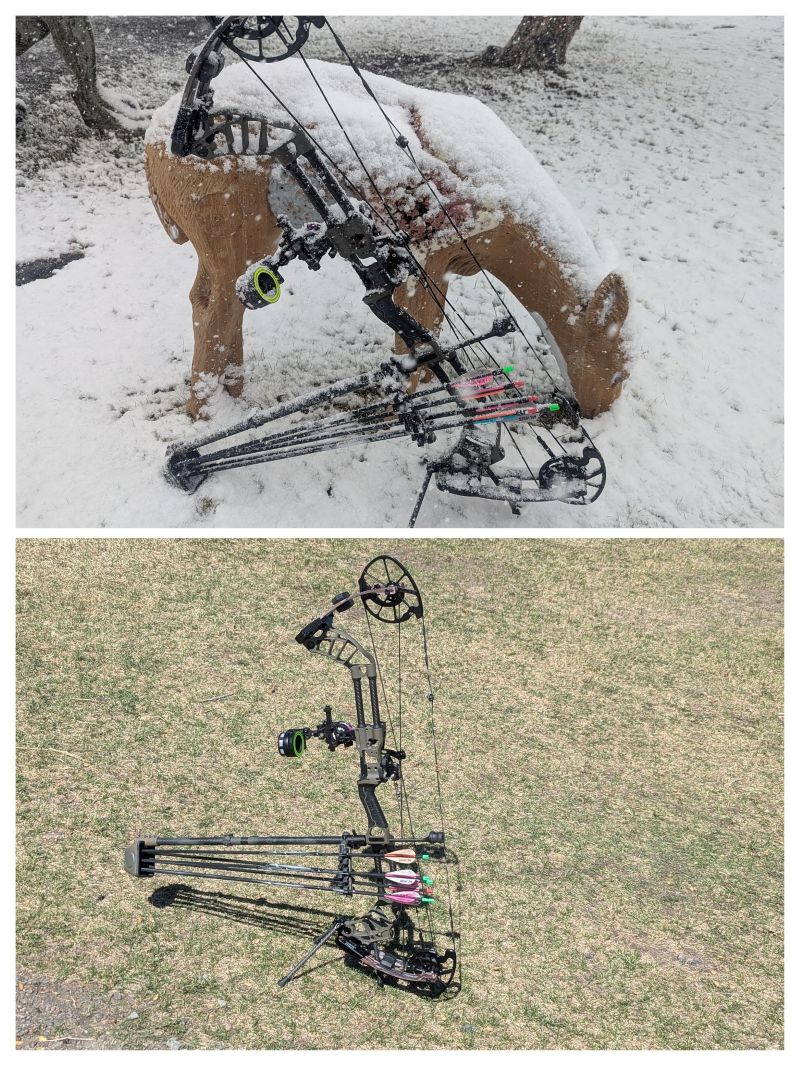
As is typical for Colorado’s Front Range, spring’s wet, sloppy snow showed up a few times to showcase the Divide’s Nano Grip. Nano gel is housed underneath the rubber grip, insulating the archer’s hand from the aluminum and any cold that may be resonating off of it.
The Nano Grip’s rubber strikes the right balance between tackiness that doesn’t make it slippery and excessive stickiness that induces torque. Even better, I found that the Nano Grip angle was spot on for my preference, and the shape was heaven-sent for me. A+ on the Nano Grip Prime.
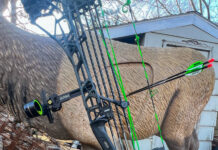
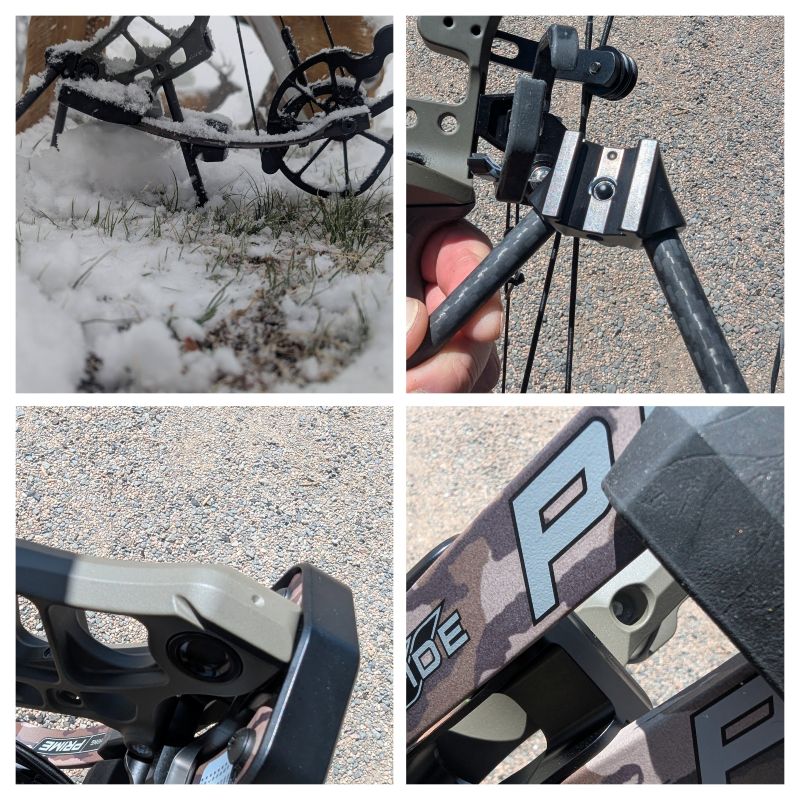
The TriLite bow stand is a must-have for me on this bow and is brilliantly executed. A threaded recess is located in the bottom side of the Divide’s riser that one carbon leg of the TriLite screws into and is left in place. On the front of the Divide’s riser is a machined dovetail with an indent on the face. The second component of the TriLite is a small bipod piece that fits onto this dovetail and is held in place by a thumbscrew inserted into the indent.
Attachment takes a few seconds, weight isn’t more than a few ounces, and the Divide’s cam is kept about an inch off the ground. I figured the small thumbscrew would shoot loose, but I never had any hiccups, and the TriLite stayed secure throughout my shooting sessions.
Lastly, I normally swap out factory strings, but the 452X set that came on my Divide has been flawless. Draw weight, draw length, cam timing, and peep alignment have remained true since they were set.
Can Your Bow Lift a Truck?
I was initially worried about the durability of the hybrid carbon/aluminum AST riser. I am generally not easy on my equipment, and I expressed concern over the carbon tubing popping out of the aluminum portions of the riser assembly.
Prime’s Caleb Sorrells let me know, “There is 0 risk of the carbon rods being abused. We have suspended 8000 pounds from that without failure. Beat the crap out of it! “ I like proof, and ended up finding a video where Prime lifted several thousand pounds with a Divide riser.
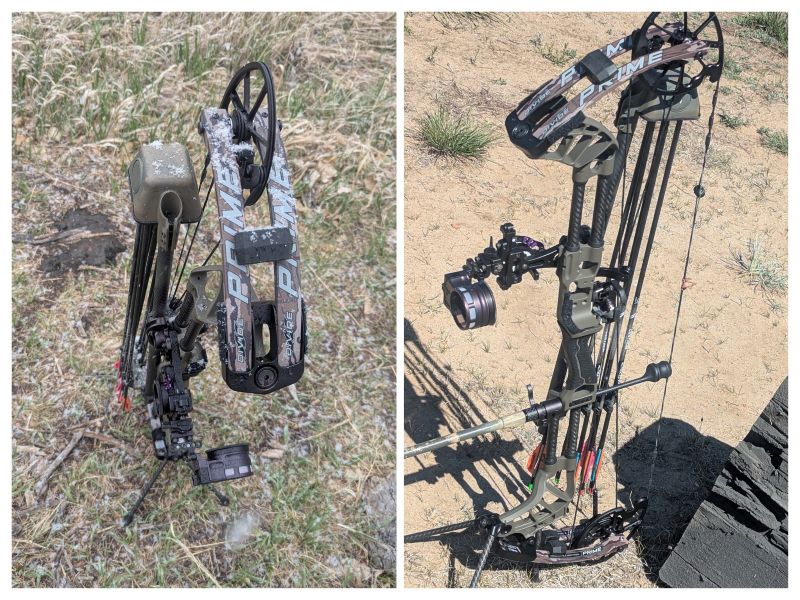
In my eyes, the riser offers weight savings over a traditional aluminum bow and, anecdotally, must be stiff enough to provide me with the best bare shaft flight I have achieved. On top of this, riser-related or not, the Divide is much quieter than my mainstay Omnia, and it isn’t uncommon for someone to comment on this aspect of the Divide when I am shooting at the archery club.
Lastly, velocity is on par with, and at the upper end, of the common flagship bows; I achieved ~269fps with a ~465-gr arrow at 30.5” dl and ~60lbs of draw weight. Within a few fps or equal to my Omnia, LiftX, and Sequel.
Shes’ A Keeper!
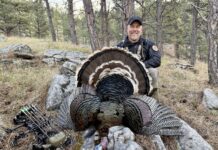
Overall, the Prime Divide is a keeper for me and will be my go-to for this year’s tags. It is relatively lightweight, sends laser beams downrange, is smooth on the draw into the valley, and floats the pin with ease. I finally drew myself a great pronghorn tag and am excited to bring the Divide along with the confidence I have in shooting it onto some sneaky stalks.
Ask Kyle questions about the Prime Divide here
Read more Rokslide Reviews here