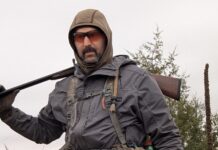

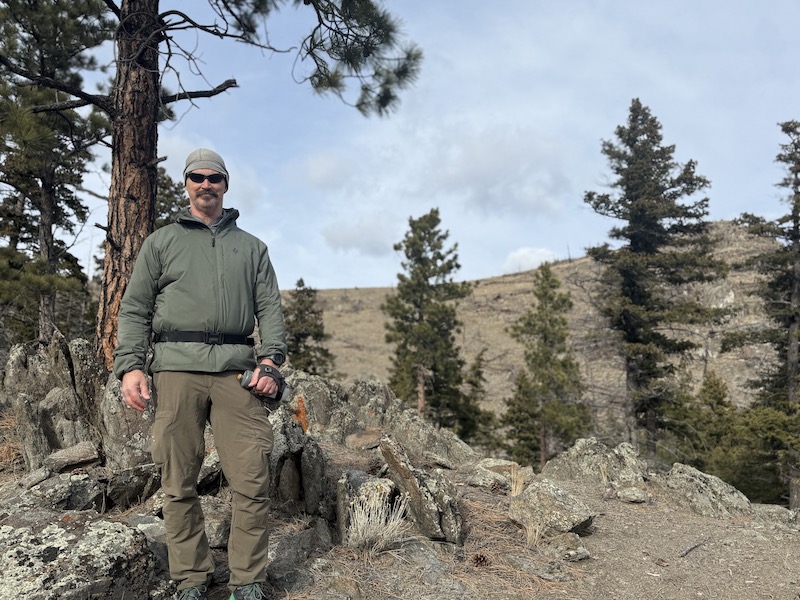
I’ve been using Black Diamond’s Alpine Start hoody extensively for the last ten years. If you search for Alpine Start on the forum, you’ll see my name come up frequently. It’s the wind layer I frequently recommend to other hunters. The Schoeller fabric is a good compromise between wind and light precipitation protection and breathability. It’s also more durable than the very ultralight wind shirts often used backpacking, like the Patagonia Houdini (which I own a couple of and use often when I’m sticking to trails). Recently, I learned that Black Diamond has released an insulated version and was intrigued enough to purchase one.
What Black Diamond says,
“Ideal for north-facing walls, cold-weather backcountry missions, and winter climbing endeavors, the Alpine Start Insulated Hoody provides all-day weather protection with a Schoeller face fabric and mapped Polartec Alpha in key areas for increased insulation.”
Pricing/Colors/Sizing
The jacket comes in a few different colors; the dark green (Tundra) is a good hunting color, and the one I chose. The MSRP is $285. The site claims a weight of 13.1 oz; my Large weighs 13.6 oz (for comparison, the uninsulated version weighs 7.6 oz).
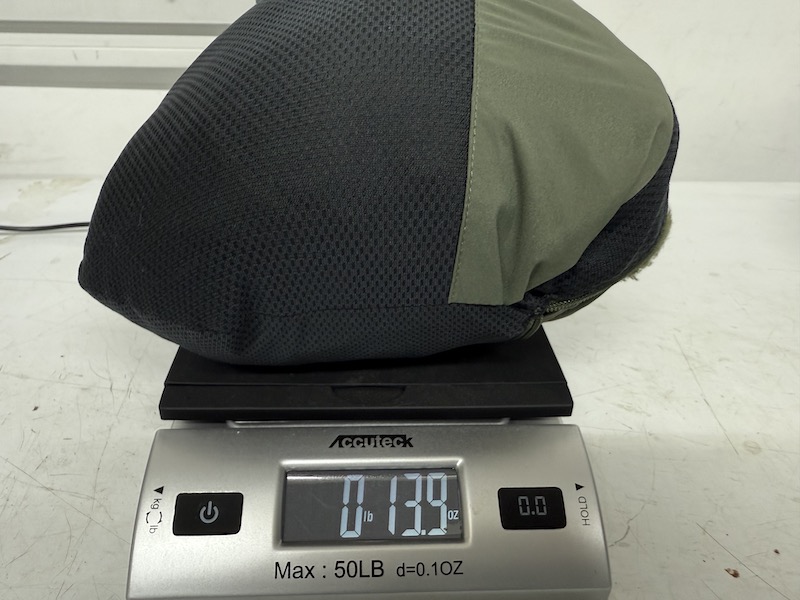
Mine is a Large, which is my normal size, and it fits perfectly. My other Alpine Start non-insulated jackets are both XL, so I can wear them over multiple layers. In this jacket in Large, I can still wear it over a base layer and a thinner mid-layer/puffy if needed.
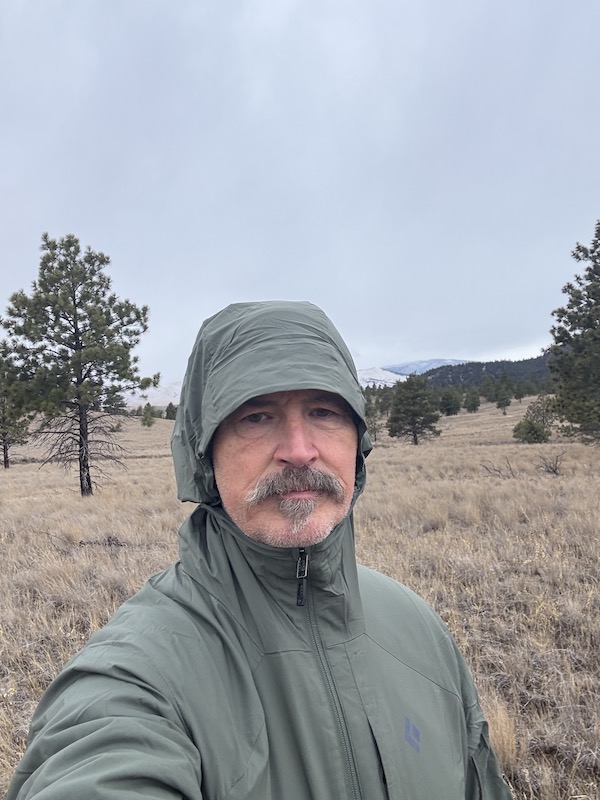
It’s a full-zip jacket with two zippered hand pockets and a zipped chest pocket that also serves as a place to compress the jacket. The jacket has decent length in the back, 28.5”. It also has an adjustable hood, which is needed as the hood is designed to fit over a helmet (they’re a climbing/skiing company). No adjustment at the wrists and waist, just elastic. It doesn’t have an adjustment at the waist, and in my opinion, it should—only adds a fraction of an ounce. I like to be able to seal in the heat when needed; the wrists work fine.
Fabrics
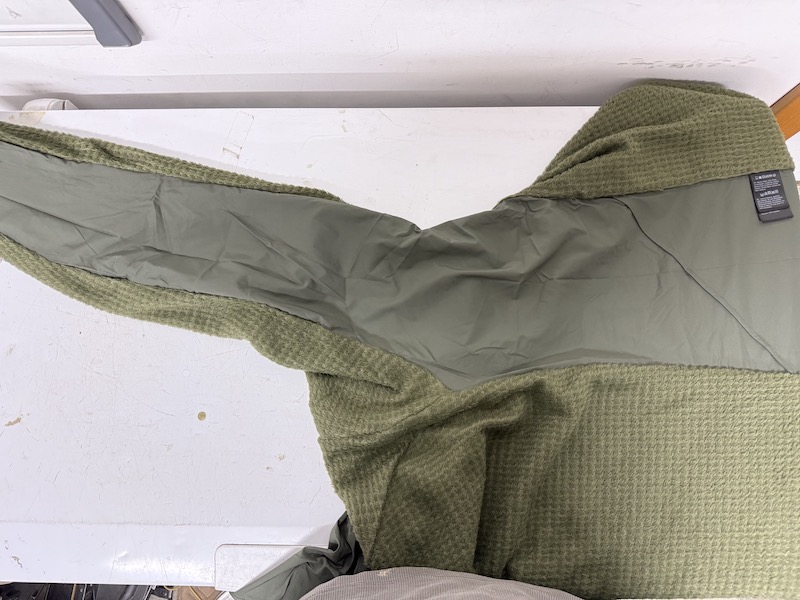
The insulated hoody uses the same 40d Schoeller nylon stretch face fabric as the non-insulated jacket. It then uses body-mapped 120 g/m2 Polartec Alpha on the inner side to provide insulation. The Alpha is used on the chest, shoulders, back, and upper (top of) arms—no insulation in the hood. 120 g/m2 Alpha is pretty warm (for comparison, the old Sitka Ambient UL used 60 g/m2, the Ambient hooded jacket uses 100 g/m2, and their 200 Ambient jacket uses 200 g/m2).
My Use
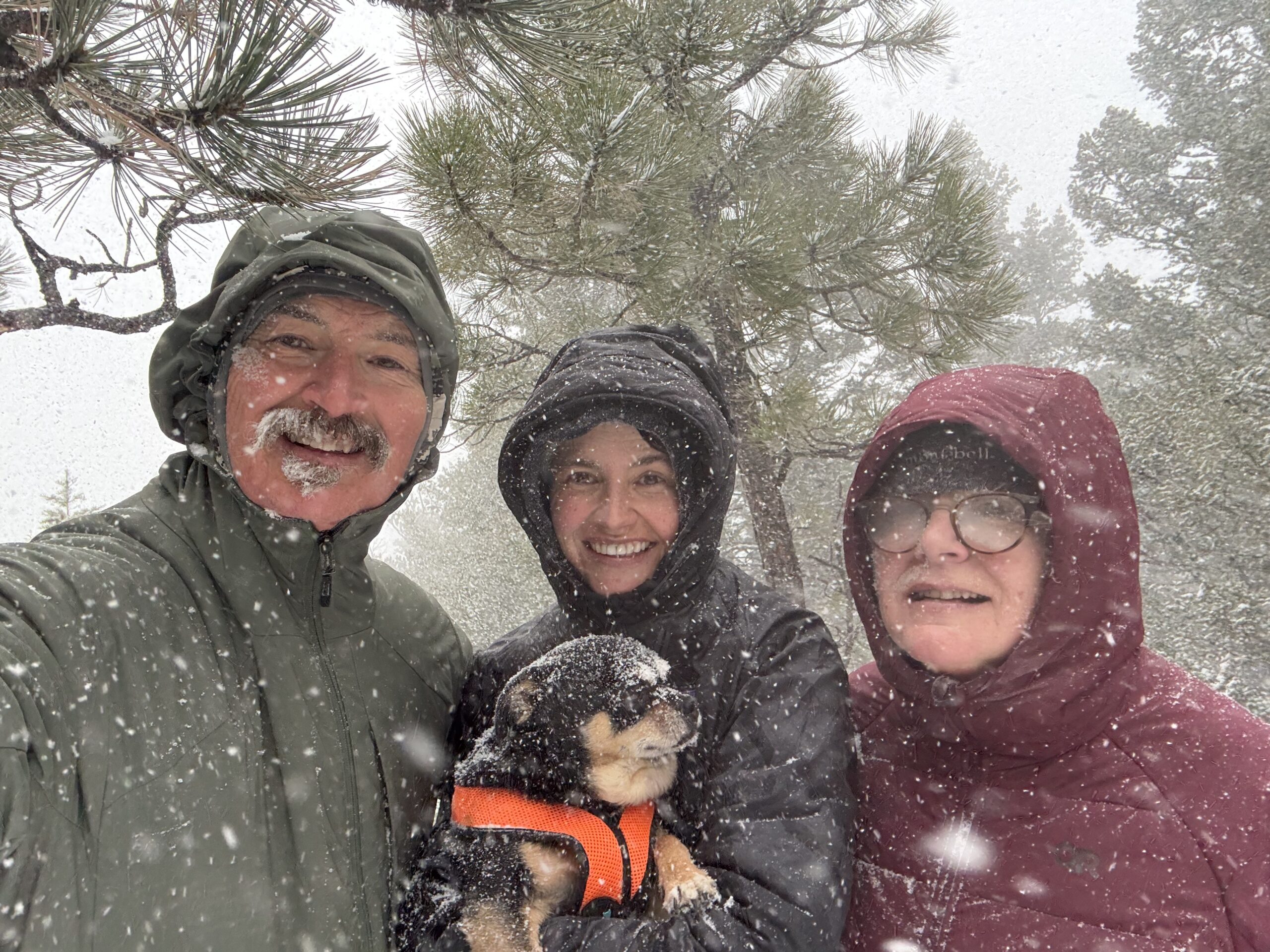
I’ve used this piece almost every day for the last two months hiking our local single-track trails (roughly 300 miles). The weather ranged from 0° to 50°, from calm to windy, and from clear to very stormy. Most of my hiking is done in Zone 2 (not lallygagging, but not full out).
Discussion
I’ve found that 45-50° is the upper comfort level when hiking with this jacket. It’s important to note that everyone has their own unique thermostat. Some run warm, others cold—I tend to run in the middle somewhere. Also, there is variation if the exertion goes up/down, wind is low/high/etc—so use these temperatures with that in mind. My lower comfort level was about 20°—this was with a lightweight base layer on top (Sitka Core LWT hoody).
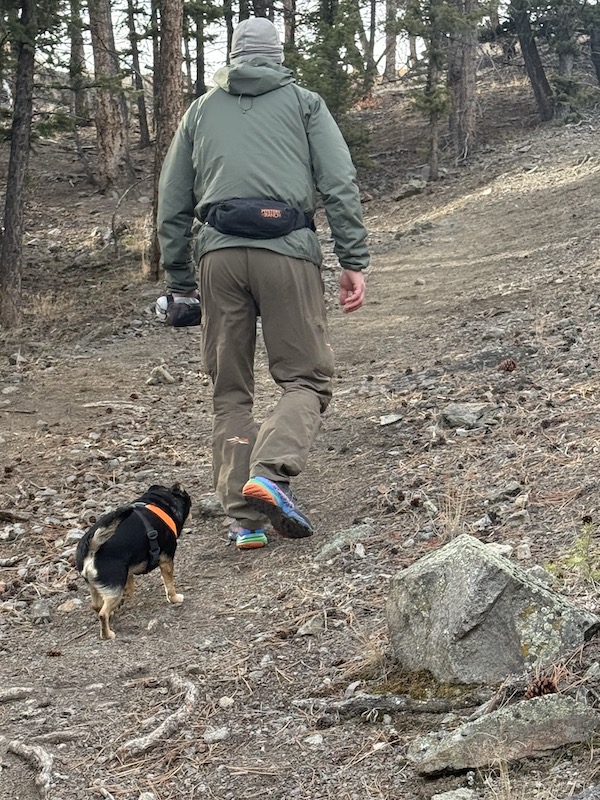
When the temps dipped a little, I would wear a very light fleece vest under the jacket (in addition to the base layer). The vest sufficed until the temps got to around 10-ish, and then I’d use a very light active mid-layer (the new Patagonia Neo Air Ultralight hoody—hope to get a review of it at some point), which was comfortable to 0° (and probably slightly below).
There are now numerous jackets out there that are lined with Polartec Alpha (or Primaloft Evolve), but none that I’m aware of use an outer fabric designed to shed light precipitation and wind. The drawback of using such a fabric is that it won’t breathe as well as most other jackets. Black Diamond purposely voided areas under the arms/sides of Alpha to help it breathe some. While this helps, the bottom line is that it won’t breathe as well as other jackets on the market.
So why did they do it? Well, it does effectively block the wind pretty well and also the precipitation that I was exposed to. They’ve basically combined what would normally be two different jackets—an active layer with a wind/light precip layer into one layer.
Conclusion
I would probably steer most folks toward an active layer, plus a wind/light precip jacket to add when needed—especially for more typical early-season weather (or for backpacking in the summer). This jacket is probably too warm (and doesn’t breathe great) for those conditions, and you have more versatility with two garments. If, however, you hunt (ski/snowshoe/etc) in colder weather, this jacket definitely warrants a look, but don’t plan on it replacing a breathable active layer and a wind/precip layer for much of the rest of the year.
Comment or ask Mike questions here.